
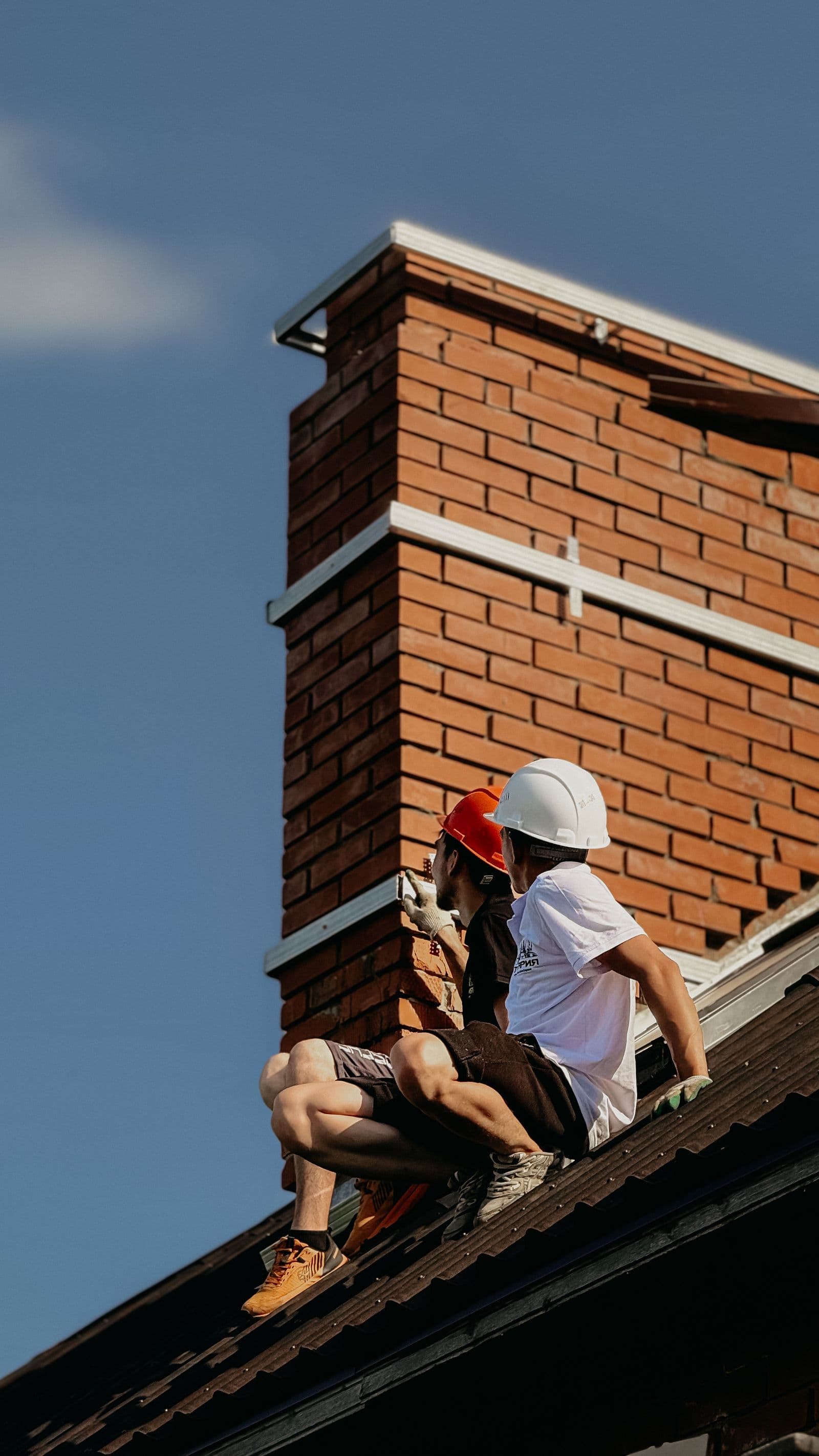
Chimney Repair Company: Diagnose the Failed Part
Rust streaks, water in the firebox, or a stain beside the stack each point at a different part. A technician inspects that part and quotes the repair on site.
Get a Free Estimate
Start With the Problem
A visible symptom is the first clue: not the full diagnosis
Name the first wet mark, the construction (masonry stack or framed chase), and when the rain hit. That triad tells a technician whether to climb for flashing, a crown, a flue cap, or a rusted chase lid instead of guessing from a photo.
When comparing chimney repair contractors, ask each one to name the failed part and the proposed scope. A stain is not a diagnosis.
Tell us what you see, when it happens, and where it appears.
Call (754) 328-2421 or use the free estimate form on this page. Prefer to start from a dedicated form? Use free estimate or book online to request the same technician visit.
Start With the Symptom
What does your chimney problem point to?
The same symptom can come from different parts of the chimney. Use these clues to understand which repair page fits the problem, then have the property evaluated before approving work.
| What you see | Possible considerations | What to ask about |
|---|---|---|
| Water stain or drip after rain | Common entry areas include the flashing, crown, cap, chase cover, masonry, roof interface, or nearby roof. | Ask which chimney component is above the first visible wet area and how the timing of the leak helps narrow the possible source. Chimney leak repair |
| Water inside the firebox | A missing or damaged cap, a cracked crown, a failed chase cover, masonry openings, or wind-driven rain may be involved. | Ask whether the system uses a masonry flue cap or a chase cover and which top components show visible damage. Chimney cap options |
| Cracks across the chimney crown | Open cracks or deteriorated edges can allow water into the masonry below the crown. | Ask how the crack pattern, crown edges, flue-tile joints, and nearby masonry affect the proposed repair. Chimney crown repair |
| Rusted or damaged metal at the top | The affected part may be a cap over a masonry flue or a chase cover over a framed chimney enclosure. | Ask which part is installed and how its corrosion, seams, fasteners, fit, and surrounding chimney top affect the scope. Chase cover repair |
| Mortar is missing or brick faces are flaking | Weathering and moisture can damage joints or brick. The depth and spread of deterioration affect whether the scope is localized or larger. | Ask how much sound mortar remains, whether the brick is moving, and how much of the chimney is affected. Masonry and tuckpointing |
| Chimney is leaning or separating from the building | Visible movement may involve the footing, masonry, attachment, framing, or more than one part of the structure. | Stop using the system and keep people away from the area. Call 911 if falling masonry or another immediate danger is present. Leaning or cracking chimneys |
If there is fire, a carbon-monoxide alarm, falling masonry, or another immediate danger, leave the area and call 911. Do not use the fireplace until the danger has been cleared and the chimney has been evaluated.
Chimney Repair Services
Find the repair that matches the problem
Start with the affected component or the symptom you can see. Each page explains the related repair in more detail.
Experience Across Our Service Area
The chimney construction changes the repair
Our team has completed hundreds of chimney and fireplace jobs across the areas we serve. A masonry stack, a framed chase, and the venting inside them do not use interchangeable repairs. Identifying the system keeps the proposed work focused on the part that is actually damaged.
Masonry chimney
Brick, mortar joints, the crown, and the flue liner have different roles. Repointing open joints does not replace damaged brick, and a new crown does not correct movement in the stack beneath it.
Framed chimney chase
The outer enclosure can hide wood framing and a manufactured chimney. A rusted top cover, deteriorated siding, and concealed rot are separate concerns; replacing the lid alone does not restore damaged framing.
Flue and connected appliance
The path carrying exhaust must suit the fireplace or appliance it serves. A liner or vent component cannot be selected by appearance alone; fuel, model information, existing dimensions, and system condition matter.
Climate and Storm Exposure
Rain, salt air, and idle seasons change the failure
Afternoon storms and wind-driven rain test flashing laps, crown cracks, and chase-cover seams that stay dry in a light shower. Coastal salt thins caps, fasteners, and galvanized lids. Inland humidity keeps mortar and unused flues damp between burns. The Panhandle adds occasional freezes after a wet week. None of that selects a product by itself. It explains why a small opening becomes an indoor stain faster here than in a dry climate.
After a named storm, start with what moved: a missing cap, a lifted flashing edge, a shifted chase cover, or cracked masonry. Then decide whether the job is a focused component repair or a larger masonry scope. Hurricane and storm chimney repair covers that sequence when wind is the event you are describing.
Three Simple Steps
What happens after you contact us
Name the stain and the stack
Share the ZIP, masonry vs framed chase if you know it, and whether water shows in the firebox, beside the chimney, or as rust on the chase.
On-site inspect and quote
A technician inspects the failed part at the house and gives a free estimate for that scope.
Approve if you choose
Every approved paid job requires a deposit. If you cancel after paying it, the company retains the deposit.
Repair or Rebuild?
The extent of the damage changes the job
A single damaged component and widespread chimney deterioration are different scopes. The location, depth, and spread of the damage matter.
A targeted repair may fit
A problem limited to the cap, crown, flashing, chase cover, liner, or a smaller mortar area may lead to a focused component or masonry repair.
Explore chimney masonry repairA larger scope may be needed
Movement, separation, widespread spalling, or deterioration across multiple sections can lead to restoration, a partial rebuild, or a full rebuild proposal.
Learn about chimney rebuildingWhat should you compare in a chimney repair estimate?
A price is useful only when you know what it covers. These questions help distinguish a focused repair from a larger proposal without assuming that the lowest or highest price is the right one.
- Which component and how much of it? Identify whether the work concerns the crown, flashing, cap, chase cover, masonry, or liner, and whether the proposal repairs part of it or replaces it.
- What remains in place? A patch relies on the surrounding material. Ask how its condition affects the proposed repair, and whether moisture or movement elsewhere still needs attention.
- What could change the work? Roof access, compatible parts, dismantling, and damage concealed behind a cover or finish can change the scope. Ask what is included now and which findings would need a separate decision before additional work.
You can start with the symptom rather than a parts list. Use the free estimate form to describe the property and the repair concern.
Frequently Asked Questions
Chimney repair: common questions
How do I choose a chimney repair company near me?
Who should I call for a chimney leak: a roofer or a chimney company?
Can a damaged chimney cap be repaired, or does it need to be replaced?
Does crumbling chimney mortar need tuckpointing or a rebuild?
Can a cracked chimney liner be repaired, or does the chimney need relining?
Why can two chimney repair estimates have different prices?
Does storm rain change how a chimney should be repaired?
Do you repair chimneys only in one part of the state?
Florida Service Area
Chimney repair visits across Florida
Chimney Repair Service visits the property. These pages are local guides for major metros, not a list of offices.
Another city? Browse the Florida service-area directory.
Keep exploring
Related services & helpful guides
Browse related service-request pages and educational homeowner guides.
Helpful guides
- Chimney Repair Cost in Florida: What Drives the PriceWhy Florida chimney repair quotes range so widely: crown, flashing, cap, masonry and relining cost drivers, plus how coastal salt air and storm damage push the number.
- Signs Your Chimney Needs Repair (Florida Homeowner’s Guide)White staining, rust, spalling brick, ceiling stains, a musty smell: the warning signs your Florida chimney needs repair, and which ones can't wait.
- Why Does My Chimney Leak When It Rains? (Florida Edition)Five doors, one stain. How to work out which part of the chimney is letting the rain in before anyone quotes you a repair.
- How to Hire a Chimney Contractor in FloridaHow to vet a Florida chimney contractor before you hire: the estimate, the red flags, and the questions that matter.
- DIY vs. Professional Chimney Work in FloridaThe honest version: what you can safely do to your own chimney, which jobs are gray-zone, and where DIY genuinely ends, with Florida-specific reasons why.
- Does Homeowners Insurance Cover Chimney Repair in Florida?Chimney repair coverage depends on the policy, cause of loss, exclusions, deductible, documentation, and the insurer’s claim decision.
- Chimney Relining Cost in FloridaRelining is the biggest ticket in chimney work. What actually drives the price in Florida, when you truly need it, and when a repair will do.
- Clay, Stainless, or Cast-in-Place? Choosing a Chimney Liner in FloridaThe three chimney liner families compared: how each one works, how long each lasts, and why stainless steel wins most Florida relines.
- Selling a Florida Home With a FireplaceA fireplace can help sell a Florida home, or hand the buyer leverage. How inspections play out, what to fix before listing, and how to stage the hearth.
- Converting a Wood Fireplace to Gas in Florida: Your OptionsGas logs, a gas insert, or a full conversion? What each option really involves in a Florida home: venting, gas supply, the damper, and permits.
Local Service Pages
Choose the service page for your city
Each local page covers this service for that city and links to the matching local estimate request.
Don't see your city? Find your local service page.
Book your chimney repair
Get a free chimney repair estimate
A technician can visit and give you a free estimate.