
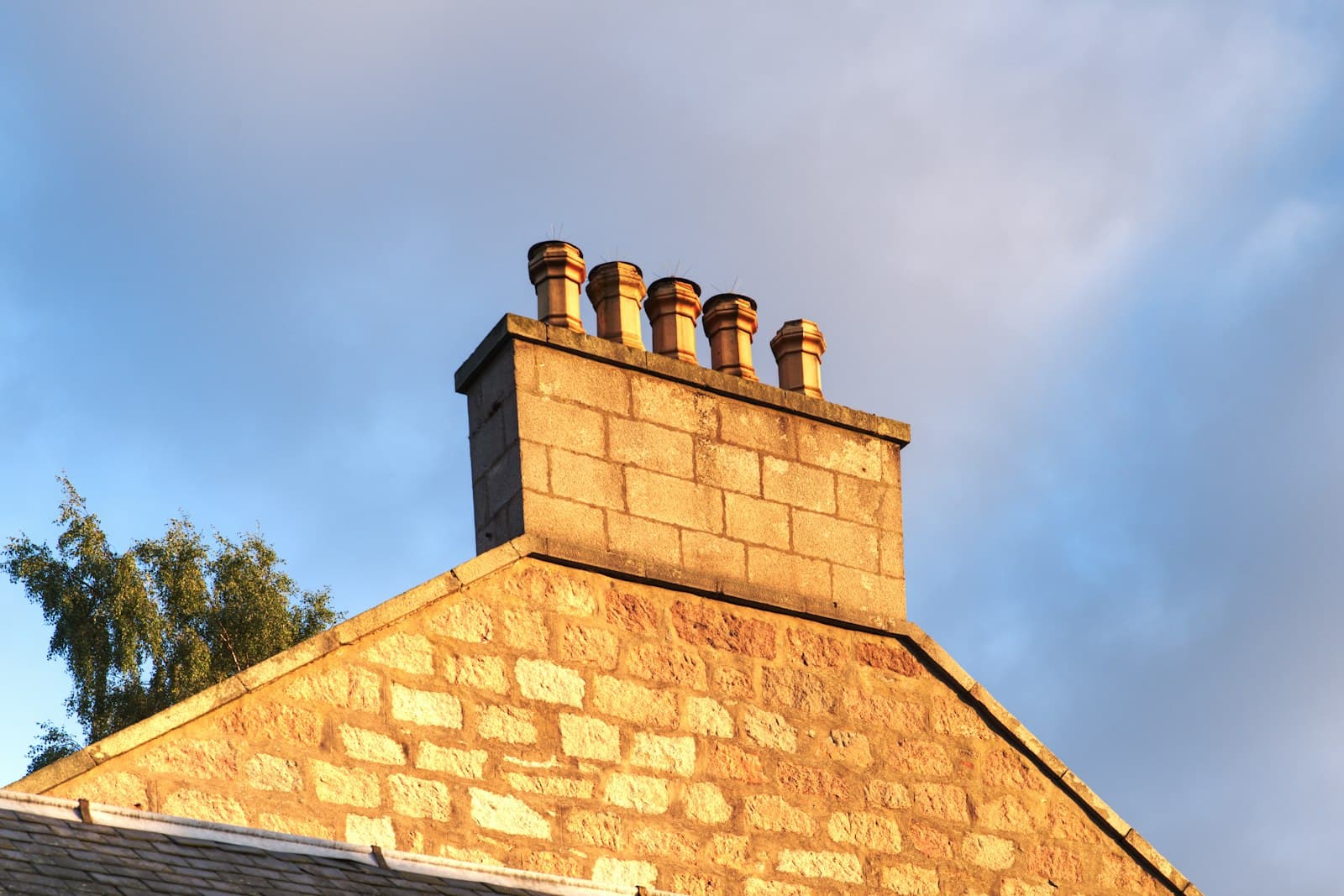

Three ways to line a flue
The liner is the inner channel of a chimney: the surface that smoke, heat, and combustion gases actually touch on their way out of the house. Its job is to keep those gases moving smoothly upward while keeping the heat and the acids off the masonry and the wood framing around it. There are three real ways to build that channel: fired clay tiles stacked in sections as the chimney goes up, a continuous stainless steel pipe run down the flue after the fact, and cast-in-place, a ceramic mortar poured inside the old chimney to form a brand-new flue.
These are not interchangeable products competing on price. Each one has a lane, and the right choice is mostly decided for you: by whether the chimney is being built or already exists, by what appliance it serves, and in Florida, by how close you live to salt water and how the flue spends our long, humid off-season. Understanding the three families is how you read a reline recommendation intelligently instead of taking it on faith.
Clay tile: the liner your chimney was born with
Clay tile is the traditional liner in masonry chimneys, and if your Florida home has a brick or block chimney, this is almost certainly what is inside it. Square, rectangular, or round fired-clay tiles (each section roughly arm’s length) are stacked one on top of another as the chimney is built, with mortar joints between them. Fired clay is a genuinely good material for the job: it shrugs off steady high heat, it is smooth enough to draft well, and at construction time it is cheap.
In a dry climate, with gentle use and a good cap keeping rain out, clay tile can serve for many decades, often for the life of the house. Its weaknesses are structural, not chemical. The flue is only as sound as the dozens of mortar joints between tiles, and those joints are the sacrificial layer: acids and moisture attack the mortar long before the clay. Clay also hates sudden heat shock. In a chimney fire, tiles heat unevenly and fast, and even a brief one can crack tiles the full height of the flue in minutes.
Florida is harder on clay than the national literature suggests. A flue that burns a handful of nights each winter and then sits closed from March to November holds acidic soot in near-constant humidity, and that damp acid works on the tile joints all summer. The deeper limitation is practical: clay cannot realistically be re-installed in a finished chimney. Replacing tiles mid-stack means opening the chimney wall. Clay is the right liner on the day the chimney is built, and almost never the answer afterward.
Stainless steel: the retrofit workhorse
A stainless steel liner is a continuous metal pipe (flexible and corrugated, or rigid and smooth-walled) fed down the existing flue from the roof, connected to the fireplace or appliance at the bottom, and sealed at the top with a new plate and cap. The word that matters is continuous: there are no joints mid-flue to erode, which removes clay’s classic failure point entirely. Flexible liner negotiates offsets and bends; rigid liner offers the smoothest draft in a straight run.
Alloy is the spec that decides how long it lasts. Standard 304 stainless handles wood smoke well inland. Within a few miles of the Atlantic or the Gulf, salt-laden air attacks every metal part of a chimney, and 316 (the marine grade) is the honest choice for the liner, top plate, and cap. Correctly specified and installed, a stainless liner is a decades-long solution, and an insulation wrap around it keeps flue gases warm on the way up, which improves draft and slows creosote in any chimney.
The quiet superpower of stainless is sizing. A liner is not just a barrier: its diameter has to match the appliance it serves. Modern inserts and gas appliances need far smaller flues than an old open masonry fireplace, and an oversized flue is a defect, not a bonus: it cools the exhaust, breeds creosote in wood systems and acidic condensation in gas ones, and drafts poorly. Stainless is the only practical way to give an existing chimney a correctly sized channel without rebuilding it.
Cast-in-place: the specialist option
Cast-in-place relining builds a new flue out of a lightweight, heat-resistant ceramic mortar poured inside the old chimney. An inflatable form is positioned down the flue, the mix is pumped in around it, and when the form comes out you are left with a seamless, round, insulated flue fused to the masonry from top to bottom. It is less an insert than a reconstruction of the chimney from the inside.
Its distinctive strength is structural. Because the cast material fills voids and bonds to the old masonry, it can reinforce a stack whose brickwork has grown fragile, which is why it earns its keep in older and historic chimneys where the masonry itself, not just the liner, is suspect. The trade-offs are real: it typically costs more than stainless, far fewer crews do it well, and it is permanent (the flue cannot later be removed or resized for a different appliance). In Florida, with a comparatively young housing stock and shorter stacks, it is a legitimate niche answer rather than a mainstream one.
Why stainless wins most Florida relines
When an original clay liner has failed, possible repair or relining methods depend on the chimney, appliance, accessible condition, and applicable requirements. Stainless and cast-in-place systems solve different problems, and neither method or installation duration should be selected before the system is properly evaluated.
Florida then stacks the deck further. Our humidity-and-acid off-season shortens clay’s working life, so relines come up here sooner than in dry climates. A large share of Florida relines exist to serve a new gas log set, insert, or appliance whose flue-size requirement no longer matches the old masonry throat, and resizing is precisely what stainless does. On the coast, the availability of a marine-grade alloy means the material can be matched to the salt-air environment instead of merely surviving it. Cast-in-place keeps its narrow lane (the fragile or historic stack that needs structural help), but for the ordinary failed flue in a sound chimney, stainless is the default for good reasons.
What liner failure looks like, type by type
Clay tile announces failure in fragments. Flakes or shards of terracotta in the firebox mean tiles are spalling (shedding their faces) somewhere above. Shine a light up the flue and failing clay shows gaps, offsets, or missing mortar at the joints. A damp, musty, campfire-and-mildew smell in summer points to a flue holding moisture, and after any chimney fire the only safe assumption is cracked tiles until an inspection proves otherwise.
Stainless fails differently: by corrosion and by mechanics. Pinholes eat through the metal from the inside where acidic condensate sits, or from the outside where coastal salt works on the wrong alloy: rust streaks and rusty flakes are the visible warning, and a corroding cap or top plate is often the early messenger for what is happening to the liner below. Mechanical failures are crushed or kinked sections and connections that have separated at the appliance or the top plate. Cast-in-place, for its part, rarely fails once cured; when it does, it is cracking, and it shows up the same way clay joints do, as debris and drafting trouble.
Worsening draft, smoke entering the room, or unusual odors mean stop using the fireplace and arrange the appropriate evaluation. If a carbon-monoxide alarm sounds, leave immediately and call 911 or the fire department from outside; do not re-enter until responders say it is safe. Most of a flue is concealed, so any repair recommendation must follow an appropriate inspection rather than a guess from the ground.
Gas vs wood: the fuel decides more than you’d think
Wood is the high-heat problem. A wood fire runs hot, deposits creosote (which is flammable) and carries the ever-present possibility of a chimney fire. A liner serving wood has to tolerate serious temperatures, be sized to the firebox or stove it serves, and in many setups be insulated so the smoke stays warm enough to keep drafting and to slow creosote formation. Clay handles wood’s steady heat well, which is why it was the construction-time default; insulated stainless is the retrofit norm for the same duty.
Gas is the opposite problem: not too much heat, but too little. Modern gas appliances produce cooler, wetter exhaust, and when that exhaust meets the walls of a big, cool masonry flue built for a wood fire, it condenses, and the condensate is acidic. That acid quietly eats mortar joints and clay tile from the inside, which is how a chimney that never burns wood still ends up needing a reline. Gas relines are usually smaller-diameter and simpler, but the sizing rules are strict and come from the appliance maker’s venting specs, not from guesswork.
One material note for gas: aluminum liners are permitted for certain gas appliances and cost less, but in Florida’s humidity, with acidic condensate in play, thin aluminum is the short-lived choice. Stainless is the durable one. And a caution that applies to every fuel switch: converting a fireplace to gas, or back to wood, is exactly the moment the liner question must be re-asked, because a flue that was right for one fuel is frequently wrong for the other. Requirements and permitting vary by municipality, so verify locally before the work, not after.
Making the call
The decision tree is shorter than the marketing suggests. Building a new masonry chimney: clay tile is the sensible default: protect it with well-made joints, a sound crown, and a good cap, because water management is what decides how long it lasts here. Existing chimney with a failed or mismatched flue: stainless steel, nearly always, alloy matched to your distance from salt water, insulated where the fuel calls for it, sized to the appliance. Structurally tired or historic stack: that is the conversation where cast-in-place belongs on the table.
Whatever the type, the recommendation should follow the evidence. Ask for the proposed liner type, size, insulation, terminations, and reasoning in writing. A technician can visit the property and give a free estimate, with no deposit required for that visit.