
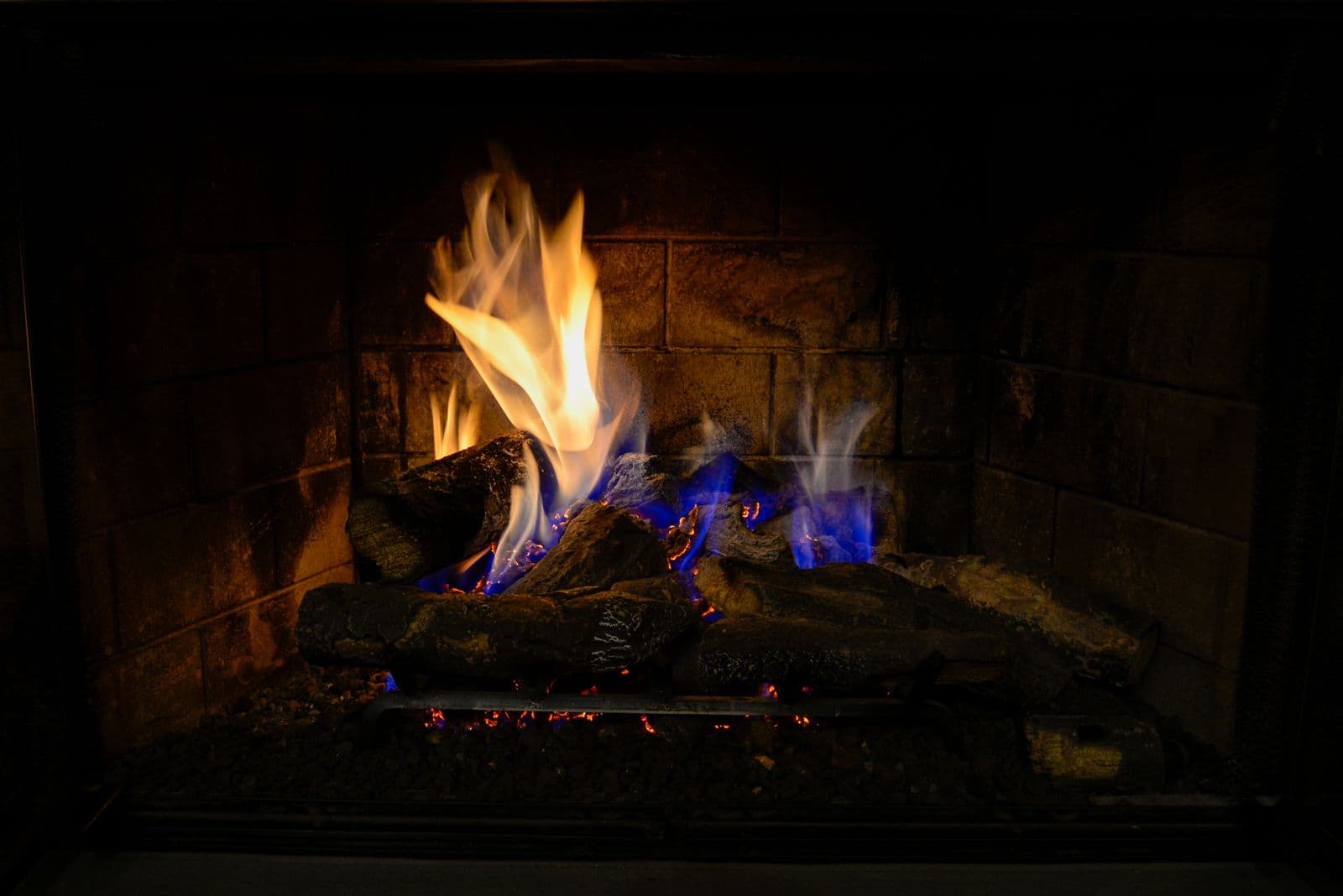
Fireplace repair — what the service actually covers
More homeowners pick up the phone for fireplace repairthan for any other reason, and the category is broad: a small refractory firebrick patch on one end, a full firebox rebuild on the other, with damper service, gas valve replacement, leak-source tracing, and flashing remediation in between. Within the Chimney Repair Service, the fireplace repair service tackles the entire range using a single vetted local crew, and a free estimate always lands in your hands before any work begins.
Damper service tops the list — that metal flap at the top of the firebox that opens and closes the flue. Dampers seize up, corrode, lose their seal, and suffer linkage failures, and what the repair costs hinges on whether it is a throat damper or a top-mount unit. Running a close second is gas system work on gas fireplaces: replacing the pilot, swapping the thermocouple, or servicing the gas valve, each priced according to the exact component and the brand involved.
Fireplace rebuild — when partial repair is not enough
A fireplace rebuild is the call once the damage outruns anything a spot fix could solve. The usual triggers are a firebox refractory cracked in several places, a smoke chamber whose parge coating has failed across most of its surface, structural trouble in the hearth, or a surround so far gone that tearing it out beats patching it.
What a rebuild runs depends on how much of the assembly is in play. A firebox-only rebuild sits at the lower end of the range; an all-in job that takes on the firebox, smoke chamber, hearth, and surround sits at the top. Every rebuild comes back as an itemized quote, so you can read exactly how each component feeds the total, and the work can be split across more than one visit when the timing of the budget calls for it.
Fireplace inspection — routine and in-depth inspections
Fireplace inspection works in tiers. The yearly visual inspection — the routine maintenance level — walks the visible exterior parts, the firebox and damper, the smoke chamber, and the reachable sections of flue. Step up to the in-depth inspection, the right call before a real-estate deal or a major repair, and you add a thorough look at the full flue length along with a structural assessment.
Every fireplace deserves a yearly inspection, busy or barely used. On a gas unit it is because the combustion components wear out on their own clock; on a wood-burning unit it is because creosote buildup has to be documented ahead of each burning season; and on a decorative fireplace that rarely sees a flame it is because the chimney structure keeps deteriorating whether you light a fire or not.
Fireplace restoration — historic and architectural work
Do not confuse fireplace restoration with ordinary fireplace repair. Restoration sets out to bring a damaged or worn fireplace back to its original architectural state — honoring the historic look, reusing original materials, and matching period-appropriate craftsmanship. Plenty of cities your local pro serves include historic-register neighborhoods where this work demands material sourcing and hand skills that routine repair simply never touches.
Plan on roughly 3-7 days of focused work for a restoration, with the exact span tied to scope. What you get back is a fireplace that reads period-correct, runs safely, and keeps the historic value of the home intact. Where a standard repair patches the immediate problem, restoration revives the original character of the structure. Your local pro does both — but the time on site, the sourcing, and the scope are organized very differently for each.
Choosing the right fireplace repair company
Homeowners who search fireplace repair company have usually decided a one-off transactional visit isn’t enough. They are after an ongoing relationship, a documented history with their particular fireplace, and the accountability that comes from a long-term local business standing behind a trusted local brand — exactly what Chimney Repair Service was built to deliver.
Vet any fireplace repair company with four questions: how many years has it traded under the same name in this market; what manufacturer-specific training does the crew carry for your unit brands (Heatilator, Heat & Glo, Majestic, Vermont Castings, Napoleon, Mendota); how is the written warranty structured for the category of work you need; and will it put the price in writing up front before any work starts. The companies worth hiring answer all four without flinching — and your local pro’s pros do.
Why homeowners choose a professional fireplace service
Florida runs a short, concentrated fireplace season tied to the handful of cool snaps that arrive between late fall and early spring — a few weeks of genuine use in most of the state, a longer stretch up in the Panhandle where occasional hard freezes still happen. Repair, cleaning, and inspection bookings climb in the weeks ahead of that window, usually from early fall onward.
In Florida the real variable is not winter — it is location. A salt-battered coastal chimney in Naples is a different job than an inland Orlando chimney fighting humidity and summer thunderstorms, and a Panhandle home near Pensacola is the rare Florida case that sees a genuine hard freeze. Your local pro’s team size every visit to that reality: marine-grade hardware and corrosion checks on the coast, moisture and storm-damage work inland, and freeze-aware detailing up north in the Panhandle.
Search for fireplace services today and you are up against the many homeowners running the very same query this month. Lock in your appointment before the crowd and you typically get a better time slot, more give in crew availability, and — more often than not — a slightly sharper quote than peak-season booking would.
Wood-burning fireplaces
Wood-burning fireplaces fall into two camps in roughly equal numbers: original masonry chimneys built right into the house — common in Florida’s older stucco and concrete-block (CBS) homes, from First Coast bungalows to mid-century Central Florida ranches — and factory-built wood-burning inserts dropped into newer construction. Each one wants a yearly inspection. Each one benefits from a sweep once creosote staging justifies it. And each follows a maintenance rhythm your local pro’s pros know cold from servicing so many of them across so many Florida cities.
Florida weather hits wood-burning fireplaces hardest at the cap and the crown — and the punishment depends heavily on where the home sits. On a coastal property along the Southeast Atlantic, the Southwest Gulf, or the Keys, a galvanized cap rusts through in no time as salt-air chloride eats the metal, while a marine-grade 316 stainless cap shrugs off the salt and keeps going past 15 years. The crown — that flat concrete slab capping the chimney — grows hairline cracks from daily thermal cycling, then takes a beating from year-round humidity and the wind-driven rain that comes with every tropical storm and hurricane. Those cracks are precisely where water sneaks in before it resurfaces as a stain on the living-room ceiling. A yearly fireplace inspection flags both long before they turn into emergencies.
Gas fireplaces
Gas fireplaces keep gaining ground, both as fresh installations and as conversions off existing wood-burning systems. The draw is obvious: flip a switch for a fire, no logs to lug, no ash to sweep, heat — or just the glow — on demand. The unit stays ready through the whole burning season without the lifestyle commitment a wood-burning fireplace expects of you.
The maintenance trade is different, but it is real. With no creosote, gas fireplaces skip the sweep — yet they still need a yearly safety inspection of the gas line, the pilot assembly, the burner, the vent termination, and, on direct-vent models, the sealed glass and gasket. Skipping it is genuinely dangerous: worn combustion parts can throw carbon monoxide that backdrafts into the living space, and that annual check is your front-line defense against it. Your local pro’s team service gas fireplaces from every major maker — Heatilator, Heat & Glo, Majestic, Vermont Castings, Napoleon, Mendota, and the rest.
Fireplace installation and conversion
A new fireplace install usually lands in one of two buckets: factory-built wood-burning inserts — rarer now, and mostly part of a renovation — and gas fireplaces, which dominate the new-install side. Each carries its own permitting and inspection track. The your local pro runs the entire project from the first consultation to the final inspection, covering unit selection, venting design, framing coordination when the wall has to be opened up, and the gas line itself on gas units.
Wood-to-gas conversion is one of the most-requested jobs on the schedule. It keeps the architectural presence of the existing fireplace while finally making it useful through the burning season. The simple version drops a vented gas log set into the current firebox; the more complete version installs a sealed-combustion gas insert, which throws off real heat and burns far more efficiently than a log set. Ambiance alone or actual warmth is the deciding factor, and your pro lays out both routes during the in-home estimate.
Fireplace remodeling and surround replacement
A fireplace remodel generally refreshes one or more pieces: the surround (the brick, tile, stone, or wood paneling framing the firebox opening), the hearth (the floor area out front), the mantel (the shelf overhead), or the firebox itself when its interior brick has worn down. Any of these can be done on its own, though folding them into a single renovation visit tends to yield a cleaner final look.
Tile and surround replacement leads the remodeling requests — owners trading a tired 1980s surround for modern large-format tile, or reviving original 1920s tile buried under coat after coat of paint. Your local pro goes either direction. Figure on 1–3 days depending on how large the surround is and what shape the existing substrate is in. Material costs swing widely (tile alone varies with your selection) and are quoted apart from the labor.
Choosing the right fireplace contractor
Fireplace work bleeds into chimney work, general remodeling, gas-appliance service, and masonry, so homeowners frequently field bids from contractors whose real strength sits in one of those neighboring trades rather than in fireplaces themselves. The price can look attractive, but the finished product still mirrors how much fireplace experience the contractor actually has.
So press fireplace contractors on specifics: how many fireplace installs and repairs have they completed in the last twelve months? What manufacturer-specific training does the crew hold for the unit you are putting in? How does the warranty break out between the manufacturer and the workmanship? And will the price be put in writing up front before any work begins? Genuine fireplace specialists field these without missing a beat — your local pro’s pros do, which is a big part of why homeowners call them back across renovation after renovation.
Annual fireplace maintenance schedule
The right yearly maintenance rhythm comes down to the unit type and how hard you run it. A wood-burning fireplace used steadily through the cool months wants a yearly inspection paired with a sweep, usually rolled into a single 90-minute visit. One that only fires up now and then still earns its annual inspection, but the sweeps can stretch to every 2-3 years based on the creosote staging the pro actually observes.
A gas fireplace needs its yearly safety inspection no matter how little you use it. The gas line connection, the pilot assembly, the burner pan, the vent termination, and — on direct-vent models — the sealed glass and gasket all wear on a schedule that has nothing to do with how often you light the unit. The pro knocks out this check in 45-60 minutes per gas appliance and walks you through the findings before leaving. Owners with both a wood-burning and a gas fireplace generally schedule them together as one annual visit.
Fireplace service for real-estate transactions
Pre-sale and pre-purchase fireplace inspections show up on the your local pro’s calendar all the time. The pre-sale version surfaces anything a buyer’s home inspector would call out and gives the seller a clear picture to share during disclosure. The pre-purchase version flips it to the buyer’s side — an independent read on the fireplace’s condition before anyone commits to closing.
Both run the same thorough routine: a full visual look up the flue, a careful check of every visible component, a gas system safety check on gas units, and a structural look at the firebox and surround. The pro then walks both sides through exactly what was found in plain language, so the buyer, the seller, and the home inspector all share the same understanding. The in-home visit usually books inside 3 business days of the request wherever a crew is available.
What to look for in a fireplace contractor’s portfolio
Few things tell you more about the work you are about to receive than a contractor’s recent portfolio. Watch for before-and-after shots of actual local installations rather than stock imagery; plain documentation of the materials used instead of vague “high-quality materials” talk; tight finish detail at the firebox-surround junction, the first spot where sloppy workmanship betrays itself; and a spread of fireplace types, since a portfolio stuck on a single type may signal a narrowly specialized crew. The your local pro’s recent-work portfolio is yours on request — wood-burning and gas, repairs and fresh installs alike.
Fireplace conversion — wood-to-gas and gas-to-wood
Fireplace conversion ranks among the most-requested fireplace jobs we see, and it runs overwhelmingly in one direction: wood-burning to gas. The typical caller inherited a wood-burning fireplace from a prior owner and barely uses it, because hauling and stacking wood costs more effort than the fireplace gives back in a climate this warm. Wood-to-gas conversion keeps the architectural feature while turning it into something you will actually fire up during the short Florida cool season.
There are two main wood-to-gas paths. The first installs a vented gas log set inside the existing firebox: the wood-burning firebox stays as it is, a fresh gas line reaches the firebox, ceramic gas logs go in, and the original flue keeps venting combustion products. It wraps in a single day and delivers ambiance with modest heat.
The second installs a sealed-combustion gas insert: the wood-burning firebox becomes a housing for a sealed-combustion appliance, a new direct-vent system goes in, and the original flue is capped or relined to match the insert’s specs. Plan on 1-2 days, and the payoff is real heat alongside the ambiance, with far better combustion efficiency than the log-set route.
Rarer, but still on the books, is gas-to-wood conversion. It is uncommon because most owners chase the convenience of gas rather than reverting to wood — but now and then someone wants to bring back an original wood-burning fireplace a previous owner had switched to gas. The job strips out the gas components, returns the firebox to wood-burning specs, and sorts out the flue if it was altered during the earlier gas conversion. Scope swings widely depending on exactly what that original conversion changed.
Fireplace installation — what to expect from the project
Fireplace installation breaks down into two main types: factory-built gas fireplace installation — the go-to for modern construction — and factory-built wood-burning insert installation, which is less frequent and mostly turns up during renovations. Each type carries its own permitting requirements, install procedures, and timeline.
A standard gas fireplace installation usually spans 1-2 days. Day one handles the gas line routing, any framing changes if the wall has to be opened, and the venting system either through the wall or up the existing chimney. Day two covers setting the appliance, making the gas connection, installing the log set where applicable, finishing the surround and trim, and the final inspection. Tack on 3-5 business days of pre-work scheduling for the local building department’s permit and inspection cycle.
Thinking about adding a fireplace, or replacing one past its prime? Scroll back up to the estimate form or call (754) 328-2421 to set up an in-home consultation. It costs nothing and walks through unit selection (Heatilator, Heat & Glo, Majestic, Vermont Castings, Napoleon, Mendota), venting design, surround options, and a timeline mapped to your specific home.
Installation scope ranges widely with the unit and the project. A basic gas log set dropped into an existing firebox is the lightest lift, a mid-range sealed-combustion gas insert is a step up, and a brand-new full-wall gas fireplace with framing, venting, and surround is the most involved of all. Permitting and inspection coordination is handled for you as part of the project.
Top fireplace repair company — what defines the best in any market
Homeowners who type top fireplace repair company have already decided that chasing the cheapest fireplace repair quote isn’t the goal. They want the best company in their market — measured by capability, reputation, and the results the work produces over the long haul. A handful of clear factors separate the top firms from everyone else.
Start with depth of fireplace-specific expertise. The best companies run crews trained on the major manufacturer service procedures (Heatilator, Heat & Glo, Majestic, Vermont Castings, Napoleon, Mendota), stock manufacturer-specific parts right in the service trucks, and cover the whole spectrum from minor adjustments to full rebuilds. Generalists who file fireplace work under one of a dozen home-repair categories rarely reach that depth.
Next comes steady quality across a lot of jobs over a lot of years. The best companies have an operating history you can count in years — often a decade and then some. That track record builds a reputation customers can confirm through reviews, references, and plain community word of mouth, the sort of accountability a one-and-done contractor never matches.
Then there is a documented workmanship warranty. The best companies back their work with terms that actually carry weight: multi-year coverage broken out by service category, transferable to the next owner if the home sells, and underwritten by a stable business still around to honor it years down the line. A spoken “we stand behind our work” is not a warranty — it is just a sentence.
Finally, the quality of the customer experience from end to end. The best companies answer the phone, confirm appointments on schedule, show up when they said they would, write the estimate before any work starts, photograph the job before and after, and circle back afterward to make sure everything still runs right. No single one of those is remarkable; doing all of them consistently, job after job, is what sets the top apart.
Electric fireplace repair — what the service category covers
Electric fireplace repair is a smaller category that keeps growing, as electric units gain favor in newer construction and condos where venting a gas or wood fireplace just isn’t practical. The repair list looks nothing like a gas or wood unit’s — no combustion parts, no venting, no creosote — but electric models still run heating elements, blower motors, control boards, LED flame-effect systems, and remote receivers, any of which can fail and need attention.
A few failures dominate the category: a dead heating element (the flame effect plays on but no heat comes out), typically a fast fix depending on the element; a blower motor swap (heat is made but barely circulated); an LED flame-effect module that quits (the visual flame goes dark); and a control board or remote receiver that stops answering the controls.
Because most of this is component swapping rather than combustion-system work, electric fireplace repair generally moves faster than gas or wood repair, with most visits done in 60-90 minutes on site. Local pros keep the common replacement parts for the major electric brands (Dimplex, Modern Flames, Touchstone, ClassicFlame) right in the truck, so a lot of repairs finish on the very first trip.
Electric unit acting up? Give us a call for same-day scheduling where it’s open. The crews work on the major electric fireplace brands and stock parts for the most common repair scopes.
Wood fireplace installation — masonry and factory-built options
Wood fireplace installation comes up less often than gas, but homeowners still ask for it — especially on new builds and big renovations where someone specifically wants a traditional wood-burning fireplace. It splits two ways: factory-built insert installation, the dominant residential path, and traditional masonry construction, a custom brick fireplace and chimney that’s rare these days but still built for certain architectural projects.
A factory-built wood fireplace install usually runs 2-3 days. Day one covers framing changes, flue venting through the wall or up an existing chimney, and setting the fireplace unit. Day two handles surround framing, hearth construction, and finish work. Day three, if it’s needed, is for inspection and any last adjustments. Add 3-5 business days of pre-work scheduling for permits and inspection. Scope stretches from a factory-built install with a standard surround all the way to full custom masonry, depending on the design and the materials.
Electric fireplace installation is a far lighter job than wood or gas. Most of it is plug-in or hardwired installation of pre-assembled units — no venting, no gas line, no chimney structure to touch. Figure 2-4 hours per unit, with the time hinging on whether it plugs in (the cheapest route) or hardwires (which brings in an electrician for the dedicated circuit). Surround framing, mantel installation, and finish carpentry around the unit are quoted separately by scope.
Fireplace replacement — when replacement is the right scope vs repair
Fireplace replacement is the move once an existing unit has run out its service life, taken damage past what repair can fix, or simply stopped meeting the household’s needs — say a wood-burning fireplace the owner wants turned to gas, or the reverse. It’s a specialized scope, separate from a fresh installation: replacement means pulling out the old unit, repairing whatever damage the surrounding structure took, and setting the new fireplace with new venting and surround work wherever it’s called for.
Replacements tend to sort into three categories. The first is like-for-like — dropping in a comparable gas fireplace after one fails, or swapping a worn factory-built wood-burning insert for a newer model; scope there tracks the unit you pick. The second is an upgrade — trading a basic gas log set for a sealed-combustion gas insert that throws real heat, or putting an electric fireplace where a wood-burning one stood.
The third is a full reconfiguration — tearing out an old masonry fireplace for a modern factory-built unit, or reworking the entire fireplace location into a different layout. Scope rides on the project. A reconfiguration usually needs general-contractor coordination beyond the chimney specialist’s lane, and your local pro teams up with established local GCs on jobs that big.
Ready to swap the whole unit? Call us out for an in-home assessment. The visit documents the existing fireplace, talks through what you want from the replacement, and produces a free quote spanning removal, the new unit, venting updates, and surround work. Same-day scheduling on most replacements where it’s available.
Fireplace smoke problem — why fireplaces smoke and how to fix it
Among homeowners who actually burn fires, fireplace smoke problem is one of the most frequent searches — and the root cause nearly always traces to one of five specific conditions, each with its own diagnostic and its own fix. The first is a cold flue plug: the column of cold, dense air sitting in an unused flue outweighs the warm air at the opening, so the first smoke pushes into the room instead of climbing the flue. The second is a blocked flue — creosote, an animal nest, fallen debris, or a collapsed liner choking off the upward airflow.
The third is weak draft, where the chimney-height-to-firebox ratio is off or the cap design is strangling the draw. The fourth is negative pressure inside the home, courtesy of tight modern construction, a running kitchen exhaust, or HVAC pulling make-up air down the chimney. The fifth is a damaged smoke chamber or damper that won’t let smoke flow as it should.
Diagnosing it begins with the timing. Smoke only at the start that clears in 5-10 minutes points almost certainly to a cold flue plug — beaten by warming the flue with a rolled-newspaper torch before the main fire, or by adding a top-sealing damper that heats the flue from above. Smoke that hangs around through the whole burn leans toward a blocked flue, weak draft, or smoke-chamber damage, which calls for a professional inspection and then the right scope of remediation. Smoke that started right after a change in the house — a new HVAC system, a new range hood, fresh weatherization — usually fingers negative pressure, addressed with combustion-air management.
Repair scope tracks the cause. Cold-flue issues are the lightest — a technique tweak or a top-sealing damper, no structural work at all. A blocked flue means a mechanical sweep plus obstruction removal. Weak draft gets cap modification, smoke-chamber parging, or a throat-damper adjustment. Negative pressure gets a combustion-air kit or an exhaust-fan interlock. And smoke-chamber or damper repair, when structural damage is to blame, varies with how accessible the area is and how severe the damage runs.
Smoke rolling back into the room instead of up the flue? Book a smoke-problem diagnostic visit. The pro observes the smoke behavior, takes draft measurements, gives the flue a thorough look, and walks you through the exact cause along with a quote for the recommended fix. Most cases are pinned down in one visit and cleared within the next 1-2 service calls.

