
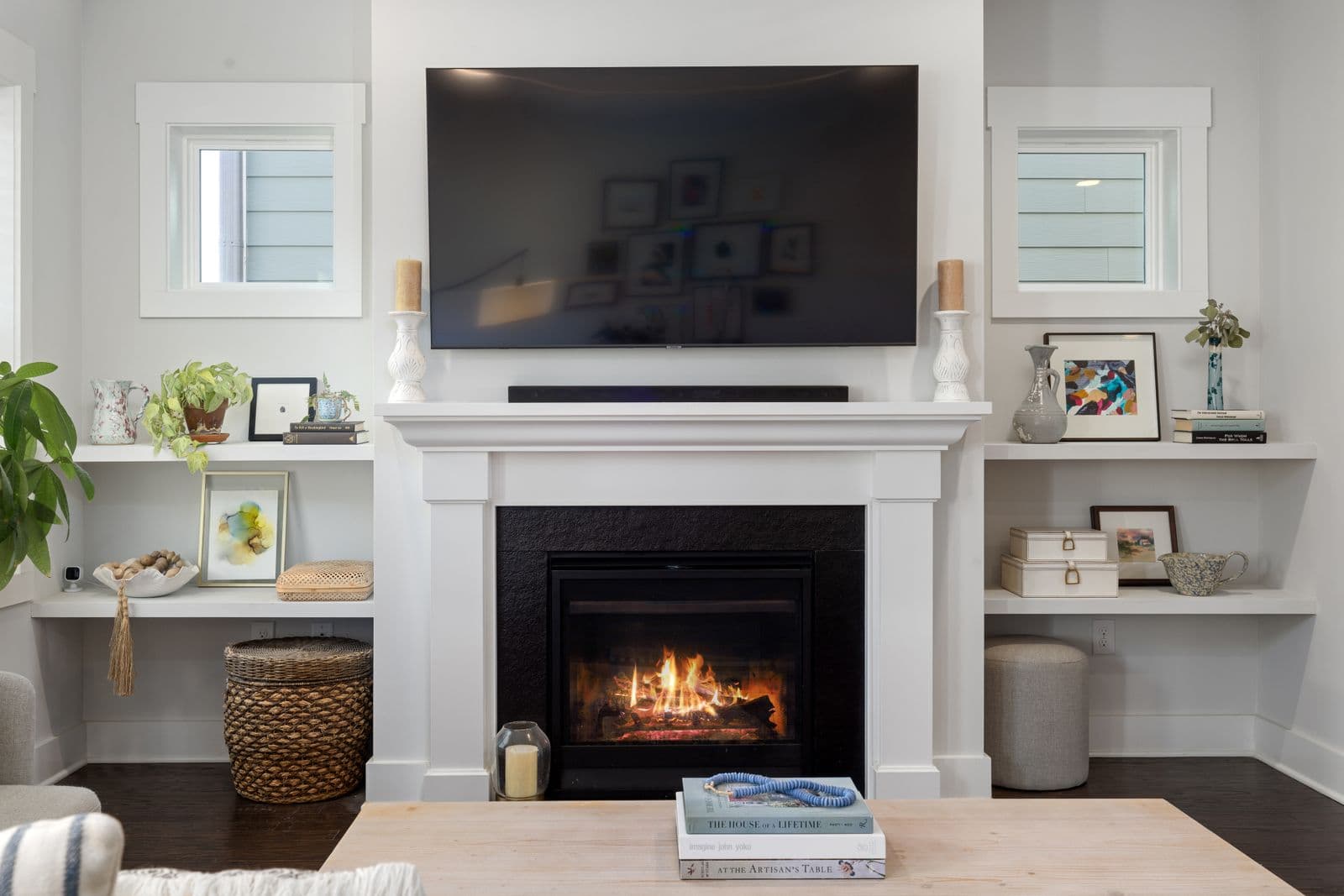

The Florida twist: your fireplace is furniture ten months a year
In most of the country, kids grow up with a fireplace that burns all winter: the rules get learned early and reinforced often. Florida runs the opposite experiment. From roughly March to November the hearth is just another surface: toddlers use the raised ledge as a step stool, kids park toy bins in the firebox, and the cat discovers that the firebox is the coolest, darkest cave in the house. The household spends most of the year teaching everyone, small humans and animals alike, that this object is harmless.
Then comes the first cool snap, and the rules change overnight for an object nobody has treated as dangerous since spring. That transition is the real Florida hazard. It is not that our fireplaces are more dangerous than anyone else’s; it is that the habits around them are formed while they are cold. The fix is to run the safety setup (gates, screens, alarms, distance rules) as a year-round arrangement, not something you scramble to assemble the evening you first feel like lighting a fire.
One more Florida note before the hardware: the hearth itself is a twelve-month hazard for the smallest kids regardless of fire. A raised masonry ledge with a hard, often sharp edge sits at exactly toddler height, and a wobbling one-year-old does not need flames to get hurt on it. Corner cushions and edge padding on the hearth are a cheap, unglamorous fix that earns its keep all year, and comes off in an evening when you outgrow it.
Gates and screens do different jobs: you may need both
The most common mistake families make is assuming the spark screen is a child barrier. It is not. A mesh spark screen exists to stop popping embers from landing on the rug; it gets hot while the fire burns, it tips or slides when pushed, and a determined toddler can move one in seconds. It is fire-side equipment, not kid-side equipment. If the only thing between your crawler and the firebox is a decorative mesh curtain or a freestanding screen, you do not have a barrier. You have a suggestion.
A hearth gate is the actual barrier: a fence-style enclosure that surrounds the hearth and creates standoff distance, the same way a pool fence works. Freestanding versions are fine for pets and for babies who are not yet pulling up; once you have a climber or a big dog, choose a gate that anchors to the wall on both sides so it cannot be pushed over or walked open. Size it generously: the point is to keep the child away from the hot zone entirely, not just away from the flames, so the gate should stand well back from the opening rather than hugging it.
On gas units, there is a third piece of hardware worth knowing: the attached mesh barrier screen that mounts just in front of the glass. Newer gas fireplaces commonly ship with one, and retrofit screens exist for many older units. It does one specific job (putting a cooler mesh surface between small hands and hot glass), and it matters enough to get its own section below. The layered setup for a family with a gas unit is barrier screen on the glass plus a gate for the crawling-and-toddling years.
Gas fireplace glass: the hazard that doesn’t look like one
Gas fireplaces are the dominant style in newer Florida homes, and they look tame: no smoke, no crackle, no flying sparks, a flame that starts and stops with a button. That tameness hides the single most serious burn hazard in the room: the glass front. The glass sits directly in front of the flames and absorbs their heat for as long as the unit runs. It gets hot enough to burn skin on brief contact (far hotter than the modest-looking flame suggests), and it sits at exactly the height where a crawling baby plants a palm to pull up.
The part families most often miss is what happens after shutoff. Turning the fireplace off stops the flame, but the glass and the firebox behind it have been soaking up heat the whole time, and they give it back slowly. The glass stays dangerously hot well after the flames disappear, long enough that “the fire is off now” is exactly the wrong signal to relax on. Treat the glass as hot for a good long while after every use, and build the cool-down into your routine the way you would with a stovetop.
Three habits close the gap. First, keep the mesh barrier screen on the unit: its whole purpose is contact-burn protection, and it should never be removed for looks in a house with kids or pets. Second, use a hearth gate in addition during the crawler years; the screen reduces the hazard, the gate removes the access. Third, treat the controls like matches: wall switches and remotes for gas fireplaces sit at kid height or on coffee tables, and a preschooler can start the fireplace as easily as you can. Store the remote up high, and if your unit has a child-lock or valve-off setting for the off-season, use it.
Carbon monoxide alarms: where they go and why
Anything that burns produces carbon monoxide, and a fireplace has several ways to push it into the room instead of up the flue: a blockage or an animal nest from Florida’s long idle season, a damper closed too early on a wood fire, or a gas unit burning poorly. CO is odorless and invisible, and it mixes with room air rather than pooling at the floor or ceiling, which is why alarm placement is about coverage of the house, not about mounting height tricks.
The working arrangement: at least one CO alarm on every level of the home, one outside each sleeping area close enough to wake people through a door, and one in the room with the fireplace, placed a reasonable distance from the appliance itself rather than directly beside it, so normal startup does not produce nuisance readings, and always following the manufacturer’s placement instructions. If your kids sleep with doors closed, an alarm inside the bedroom is cheap insurance. Test the buttons monthly during burn season and check the stamped replacement date; alarms age out, and the expired unit that came with the house protects no one.
The kids-and-pets angle is why this section is not optional. Early CO exposure feels like a headache, drowsiness, or nausea, symptoms a child may not articulate and a pet cannot. A dog that seems oddly lethargic near the fireplace, or a cat that abruptly avoids a room it usually loves, is not a diagnostic tool, and you should never treat animal behavior as your detector. The alarm is the detector. The animals are one more reason to have it.
Distance rules and teaching moments that actually stick
Fire-safety educators teach a simple, memorable rule: a three-foot zone around the fireplace that kids stay out of whenever it is burning. The trick is making the zone physical instead of verbal. Mark it with something a child can see (the edge of the area rug, a strip of tape during the first season, or the hearth gate itself), because “not too close” means nothing to a four-year-old, while “behind the rug line” is a rule they can follow and even enforce on their siblings.
The adult half of the rule matters just as much: a burning or still-hot fireplace never shares a room with an unsupervised child or pet, full stop. Florida’s short season works against you here: a household that burns a handful of evenings a year never builds the reflexes that daily burners have, so the routine has to be deliberate. A last-adult-up checklist does it: fire fully out or gas fully off, screen in place, gate latched, tools and lighters back up high. Fireplace tools deserve emphasis. A wrought-iron poker set is a toddler magnet and a genuinely dangerous toy, and it should live out of reach, not decoratively beside the opening.
Kids follow routines better when they own a piece of them. Make your child the safety checker: they press the CO and smoke alarm test buttons on the first of the month, they confirm the gate is latched, they announce “hot zone” when the fireplace is lit. Teach the difference between warm and hot with supervised hover-hands at a safe distance rather than making the fireplace a forbidden mystery: the forbidden thing is what gets investigated the moment your back is turned. And keep the matches-and-lighters rule absolute: stored high, locked if you have a curious school-ager, and never treated as a toy even when the fireplace lights with a button.
Pet behaviors to plan for
Pets bring hazards that child-proofing advice never mentions. The one that matters most is that animals do not reliably move away from slow heat. A dog or cat will settle against pleasantly warm glass or stretch out on a warm hearth and stay put as the surface keeps heating: comfort overrides caution, and thick fur delays the warning. The fix is the same hardware that protects kids: the barrier screen and enough standoff distance that a sleeping animal cannot make contact. Keep pet beds outside the three-foot zone permanently, because a bed placed near the fireplace in July is exactly where the dog will head in December.
The Florida-specific pet behavior is the firebox nap. During the long off-season, an open firebox is the coolest, most sheltered spot in the house, and cats in particular claim it. Before the first fire of the season (and honestly before every fire, if you have a cat), check the firebox and make sure the animal, its toys, and whatever it dragged in there are clear. Wood burners should also plan for the startle factor: a popping log can send a dozing pet bolting in a straight line through a spark screen, into a gate, or across a room of guests. Position pets where a panicked exit path does not cross the hearth.
A few animal-specific notes round it out. Dogs at tail height clear coffee tables and fireplace tool sets with one happy wag, another reason the tools live elsewhere. Puppies chew, and remote controls with button batteries or accessible gas-line fittings are bad things to chew; keep the first out of reach and have the second checked during your annual service. And birds are a special case: their respiratory systems are famously sensitive to airborne fumes and particles, so keep bird cages well away from the fireplace room when you burn, and favor good ventilation over proximity to the ambiance.
The annual service: the safety layer you can’t do yourself
Everything above is habits and hardware: the layers you control. The layer you cannot see is the system itself, and that is what the annual sweep and inspection covers. A Florida flue sits open and idle for eight or nine months, which is an invitation for bird nests, wasp activity, and debris; any of those can block the flue and push smoke and carbon monoxide back into the room with your family in it. A qualified chimney professional clears what the off-season left behind, checks that the damper opens and closes properly, and confirms the creosote from past fires (the flammable residue wood smoke leaves in the flue) has not built toward chimney-fire territory.
Two checks in that visit connect directly to the kids-and-pets theme. The cap and its mesh screening at the top of the chimney are what keep raccoons, squirrels, birds, and rats out of the flue, and an animal in the chimney is a family problem, from the dog barking at the fireplace at 3 a. m. to the genuine unpleasantness of a trapped animal above the damper. And on gas units, the visit is when connections, burners, and the unit’s venting get looked over by someone who works on them constantly, which is the practical answer to the quiet failure modes a homeowner cannot spot from the couch.
Arrange the appropriate paid inspection or service before the first planned fire rather than using that fire as a test. If repair work is proposed, request its scope and price in writing before deciding whether to approve it. A technician can visit the property and give a free estimate, with no deposit required for that visit.