
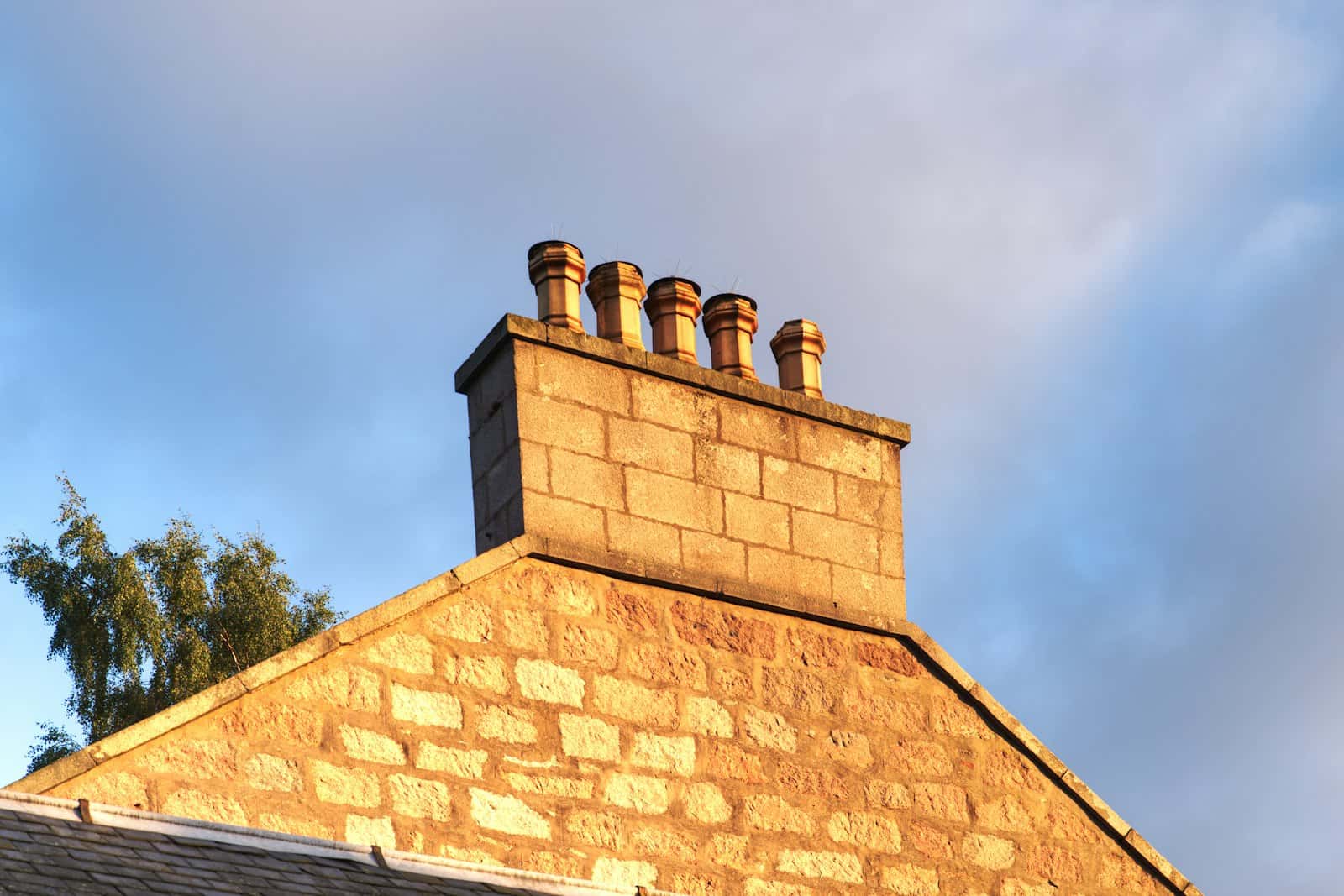
What chimney animal removal actually involves
The first move on any job is figuring out exactly what is in there. Species drives everything that follows, and a humane outcome depends on naming it correctly. To do that, the pro reads the situation from several angles — what is visible at the chimney top from the yard, what can be heard or seen inside (the shuffling, the nest material dropping into the firebox), and the roof-level view when it is safe to climb. A read like this rarely takes more than 10 to 15 minutes.
With the species pinned down, the capture plan takes shape. Animals able to climb out on their own — most birds, a healthy squirrel — get a one-way exclusion door fitted at the top, an exit they can use but cannot reverse; they typically clear the flue inside 24 to 48 hours. Anything that cannot self-rescue — a raccoon that has tumbled to the firebox, a kit stranded without its mother, an injured animal — is handled with a baited live trap or direct extraction in proper protective gear.
Bats sit in a category of their own, since a great many states shield them under wildlife rules during maternity season, roughly spring into late summer. In those months the work is exclusion only — no hands-on removal — so adults can leave while pregnant or nursing females are never cut off from their pups. Once the season passes, the standard exclusion approach resumes.
Why chimney animal removal is time-sensitive
Weather and the time of year set the pace on these calls. A bird stuck in a flue during hot, humid conditions can grow dangerously dehydrated in 24 to 36 hours, where the same predicament in a cool climate might buy it several days. A raccoon dropped into a firebox is its own kind of trouble — it will gnaw at the damper trying to claw free, and in doing so it can wreck chimney components and break through into the house.
For live situations, same-day or next-day dispatch is the baseline. The dispatcher deliberately bumps wildlife calls ahead of routine maintenance, and rightly so: the trapped animal's welfare and the threat of collateral damage both argue for speed. Your local pro shows up inside the promised window carrying the traps, doors, and protective equipment suited to whatever species is involved.
Post-removal exclusion — preventing the next chimney animal situation
Getting the animal out settles only half the problem; sealing the chimney behind it settles the rest. Skip that step and the flue is still an open invitation, so the same animal — or another of its kind — tends to reappear within weeks. The workhorse fix is a solid cap carrying correctly gauged mesh, with 5/8-inch screen being the common spec: fine enough to shut out every climber across most regions, yet coarse enough that creosote will not clog it on a wood-burning fireplace you actually use.
A capped chimney that still let something in is usually a sign the cap is damaged, the mesh has rotted, or it was sized wrong to begin with — in those cases exclusion means repairing or swapping the cap. On a chimney with no cap at all, installing one is the recommended barrier. Either way, the pro lists the exclusion work on a separate line from the removal so you can choose whether to combine them.
Anyone who has lived through a single chimney wildlife episode usually opts to fold the cap work into the removal visit. The alternative is booking a return trip for the cap down the road — often after the same intruder has already come back. Combining the two spares you a second trip charge and ends the recurring problem in one appointment.
Dead animal removal and odor remediation
Pulling out a dead animal is a meatier, messier job than evicting a live one. The remains have to be found first — frequently lodged somewhere hard to reach in the smoke chamber or up the flue — then lifted out without smearing the flue walls and disposed of properly. The protective gear runs heavier here too, given the disease and odor risks that come with decomposition.
Once decay has had enough time to drive its smell into the masonry — usually 3 to 5 days, and quicker when it is hot and humid — odor remediation becomes its own line of work. That means HEPA-filtered vacuuming, enzyme treatments formulated to break down organic decomposition residue, and in stubborn cases an ozone pass. Most odor jobs wrap up across one or two visits, with a few days in between so the enzymes can finish doing their job.
Common animal species in chimneys and their behavior patterns
A bird in chimney is the single most frequent reason homeowners call. Chimney swifts top that list — federally protected migratory birds that weave cup-shaped nests down the flue through spring and summer, which means removal during nesting season follows species-specific timing and method. Sparrows, pigeons, and starlings nest in chimneys too, and those are handled with standard humane procedures any month of the year.
Squirrel in chimney removal is the second-biggest slice of the caseload. The eastern gray squirrel rules across much of the country and finds its way in either to nest or by slipping while running the roofline. A healthy one can generally climb out through a one-way exclusion door on its own; an injured or wedged squirrel needs direct extraction in proper protective gear.
Raccoon in chimney removal lands third by volume and carries the highest stakes. These are powerful animals that do real harm when they linger — chewing through dampers in their bid to escape, shredding nesting material into a fire hazard, and often arriving with a litter that complicates the whole operation. A mother and her kits will typically hold the flue for 6 to 10 weeks during the denning period, so removal inside that window calls for species-specific timing and technique.
Bat in chimney removal comes up less often but answers to far more regulation. A great many states protect bats through maternity season — generally spring into late summer — and during those months only exclusion is allowed, never hands-on removal. Outside that season, standard humane procedures resume. Bat work also demands post-removal disinfection, because their guano can carry genuine health hazards, and the pro brings in licensed wildlife rehabilitators whenever protected-species rules come into play.
Why post-removal chimney inspection matters
No removal is truly finished until the chimney gets a look-over afterward. Animals leave a mark while they are in residence: packed nesting material that can ignite the next time you light a fire, droppings that foul the draft and breed odor, and wear on cap hardware, flue tiles, and damper parts. Skip the post-removal inspection and any of those quietly waits to become a bigger, costlier problem.
For that reason, a standard removal wraps with a visual check of the affected stretch of chimney, with a closer interior look at the flue whenever damage looks likely. That check flags whatever cleanup or repair the animal's stay made necessary — clearing out nest debris, sweeping the flue, and servicing the damper if the components took a beating. As a rule, the inspection and any cleanup it turns up ride along in the same visit as the removal.
Chimney animal removal scope tiers and what each one includes
What a removal entails — and what it costs — shifts with the species, how tricky the capture is, and whether a litter or active nest is in the mix. Grouping the work into a few tiers gives homeowners a clear picture of what the diagnostic call will cover before the pro ever pulls up.
The entry tier, and by far the most common, is a routine bird or small-mammal removal: one adult animal that exits on its own through a one-way door, no young, light nesting debris. It bundles the on-site assessment, fitting the one-way door, a return trip to confirm the animal is gone within 48 to 72 hours, and a cap inspection once it has cleared. The bulk of wildlife calls land right here.
The middle tier handles mother-and-litter removals, trapped animals that need extraction, and any species requiring hands-on work. It covers the on-site assessment, direct extraction in protective gear, relocating young where that applies, clearing out nesting material afterward, and a cap inspection to close it out. Raccoon families and stuck squirrels usually fall in this band.
The top tier is reserved for the genuinely complicated: decomposed-carcass recovery, bat-colony exclusion under maternity-season restrictions, multiple species at once, and after-hours emergency dispatches. Work at this level is quoted case by case against the specific complexity involved.
Why local chimney animal removal matters
On an animal call, what you want is a community-rooted contractor rather than a faceless national wildlife franchise — and there is sound logic in that. Response time carries more weight on animal calls than almost any other chimney work, since a distressed creature cannot sit for days, and a pro stationed physically closer to your address simply gets there sooner.
We meet that need with vetted local pros spread across each metro for quick turnaround. During business hours, most addresses see a dispatch within 1 to 3 hours of the first call; after hours, figure 4 to 6. And rather than hand you a vague same-day promise, the dispatcher commits to a realistic arrival window right on that first call.
When a job calls for it, local pros work alongside general pest control and wildlife removal outfits. Encounters with large animals or snakes that need to be identified before anyone reaches in sometimes warrant a joint dispatch — a wildlife specialist makes the call on the animal while the pro owns the chimney-specific side of the work.