
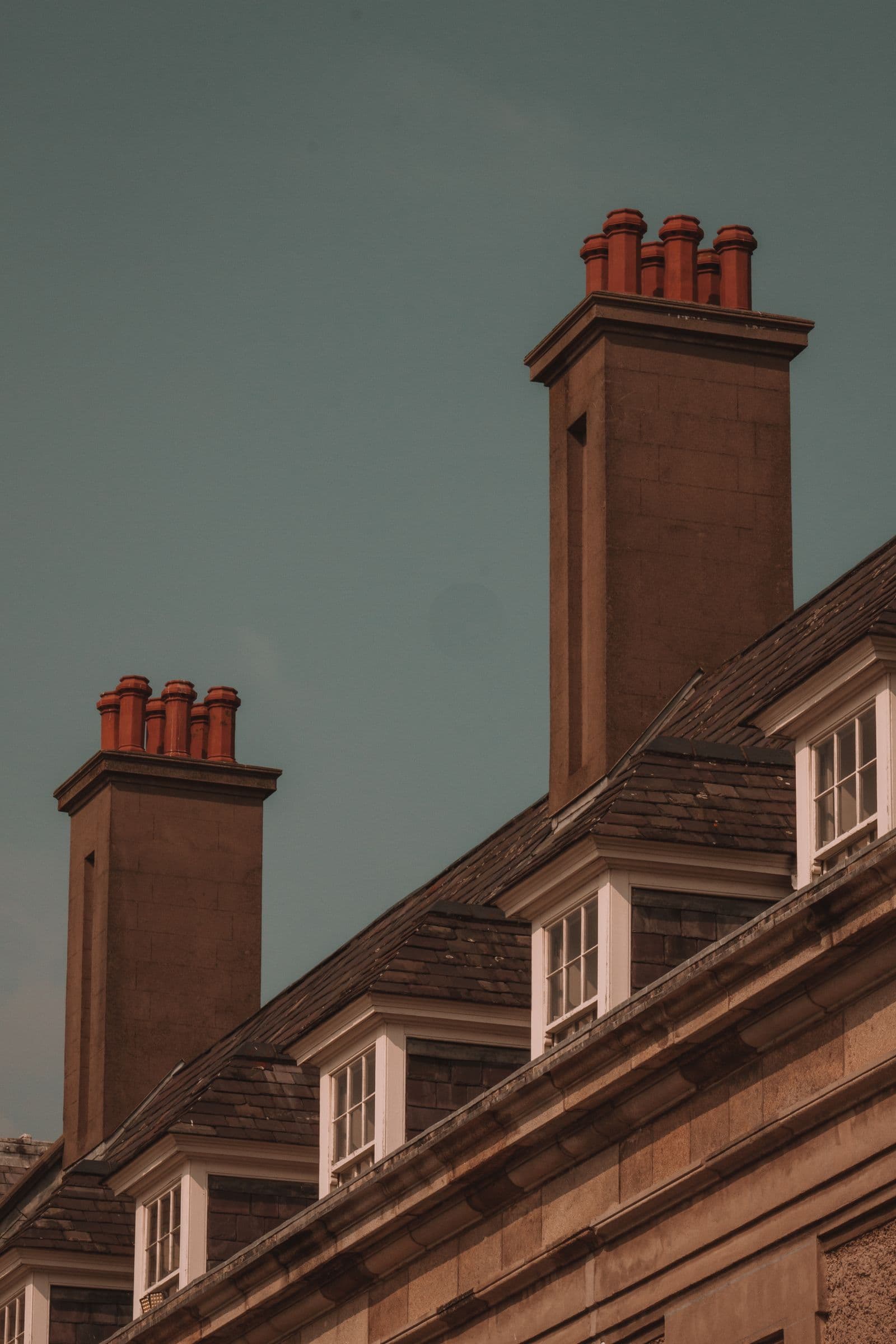

What a chimney cap actually does
A chimney cap is the small, often-overlooked component that does an outsized amount of work. It is the covering over the top of the flue, and it earns its keep in four ways: it keeps rain out of the flue, it stops leaves and debris from clogging it, it blocks birds, squirrels, and raccoons from nesting inside, and its spark-arrestor mesh keeps embers from drifting onto your roof. For something so small, a cap prevents a remarkable share of the chimney problems homeowners eventually pay to fix.
In Florida the cap matters even more, for two reasons. Our rain is heavy and frequent, so a missing or undersized cap means water down the flue all wet season: soaking the smoke shelf, rusting the damper, and feeding the musty smell so many Florida fireplaces develop by August. And our wildlife is enthusiastic: an open flue is prime real estate for nesting animals, which is one of the most common reasons a Florida fireplace suddenly will not draw. A good cap is cheap insurance against both.
The types: single-flue, multi-flue, and specialty
A single-flue cap fits over one flue tile and is the most common configuration on a masonry chimney. It clamps or bolts to the tile that sticks up from the crown. A multi-flue cap spans two or more flues, or the entire top of the chimney, mounting to the crown or chase instead of an individual tile; it is the usual answer when a chimney serves both a fireplace and, say, a water heater flue.
Beyond those two, there are specialty designs: taller caps engineered to improve draft on chimneys with weak draw, models with reinforced animal guarding for persistent raccoons, and top-sealing damper-caps that combine the cap with an airtight damper at the flue’s top, an interesting option in Florida, where a leaky old throat damper otherwise lets your air conditioning drift up the flue all summer. For most homes, though, the choice is really about material and fit rather than exotic features.
Chase covers: the other lid
If your chimney is a framed, siding-clad chase (common in newer Florida construction), the top is sealed by a chase cover: a large fabricated metal pan spanning the whole chase, with the flue pipe passing through it and a cap on the pipe itself. The chase cover, not the cap, is the primary water barrier on this style of chimney, and a rusted-through cover is one of the most frequent leak sources we see on homes built in recent decades.
The tell is a ring of rust staining bleeding down the siding just below the chimney top, or standing water visible on the cover after rain. A properly made cover is cross-broken (slightly peaked) so water sheds off. If yours pools water or streaks rust, plan on a replacement in stainless before it perforates; once it does, water drips inside the chase where you cannot see it, and the first symptom is often a stained ceiling.
Materials, compared
Material is where the real decision lives. Galvanized steel is the cheapest and the worst choice for Florida, especially near the coast, where it rusts quickly: its zinc coating is exactly the sacrificial layer salt air eats first. Aluminum resists rust but is light and can deform in high wind, which matters in a state where every summer brings violent thunderstorms and every few years brings worse.
Stainless steel and copper have different cost, appearance, and corrosion characteristics. Material choice should follow the exposure at the property, cap design, and written specification rather than a blanket lifespan claim.
The Florida fit: wind and salt
Two local stresses should steer your purchase. The first is wind. A cap in Florida must be mechanically fastened (clamped or screwed to the flue tile or chase), never just friction-fit or glued with sealant. Hurricane-force gusts create suction over the roofline that peels loose caps off, and a departing cap does double damage: it leaves the flue open to a tropical downpour and becomes a projectile. Ask specifically how the cap will be anchored.
The second is salt. For a coastal home, stainless is not optional: the salt air that corrodes everything else near the water makes any lesser metal a short-term fix, and the sheltered underside of a cap collects salt that rain never rinses away. Spending a little more on stainless at the coast saves a repeat replacement within a few seasons. Inland, stainless is still the smart default; Florida humidity alone is hard enough on galvanized coatings.
Do not assume "inland" means "calm," either. Florida’s daily summer thunderstorms produce downbursts strong enough to strip a poorly fastened cap in Orlando just as surely as a tropical system does in Tampa. And the spark-arrestor mesh earns its keep statewide during dry-season burn windows, one more reason to glance at the mesh yearly, since on a heavily used fireplace it can slowly clog with soot and choke the draft.
Getting the size and fit right
Fit matters as much as material, and it is where bargain caps go wrong. A cap that is too small lets wind-blown rain in around the edges (Florida rain rarely falls straight down). A cap whose mesh sits too close to the flue outlet can restrict draft or clog faster with soot. One that is poorly secured becomes a hurricane projectile. And a multi-flue cap mounted to a cracked crown is only as good as the crown under it, which is why a pro checks the crown before installing anything on top of it.
This is why a cap is one of the few chimney items where professional measuring and installation genuinely pays. The flue tile’s outer dimensions, the height needed above the outlet, and the anchoring method all have to match your specific chimney. A correctly fitted, properly fastened stainless cap simply outperforms a bargain cap bought to the wrong dimensions and set on with sealant.
Cost context and the smart way to buy
What actually moves the price, framed as market observation rather than a quote: a stainless single-flue cap is a stock-sized part, fitted and fastened in one trip up the ladder, the smallest job at the top of a chimney. Multi-flue caps sit above that because they are larger and often custom-sized to the crown. A fabricated stainless chase cover is its own project entirely: measured on site, cut and bent to your chase, then carried up and installed on the roof. Copper sits above all of these, on the strength of the metal rather than the labor. The real number for your chimney comes from a free estimate: roof pitch, chimney height, and flue configuration all move it, which is why phone-quoted prices for caps are guesses at best.
It is tempting to grab the cheapest big-box cap and call it done, but that is usually a false economy in this climate: the bargain option is typically galvanized, sized approximately, and set on with sealant rather than fastened. Three strikes in a state with salt air, sideways rain, and hurricane-grade suction. The cap that costs a bit more, fits exactly, and bolts down is the one still on the chimney in ten years.
The practical path is to have a qualified chimney professional measure the flue or chase and recommend a cap type, material, and fastening method for the location. Any debris removal, adjacent-component review, or warranty must be confirmed in the proposed work rather than assumed. A correctly fitted cap can reduce water, debris, and animal entry, but no cap prevents every chimney problem. Get the proposed price and terms in writing before approving work.