
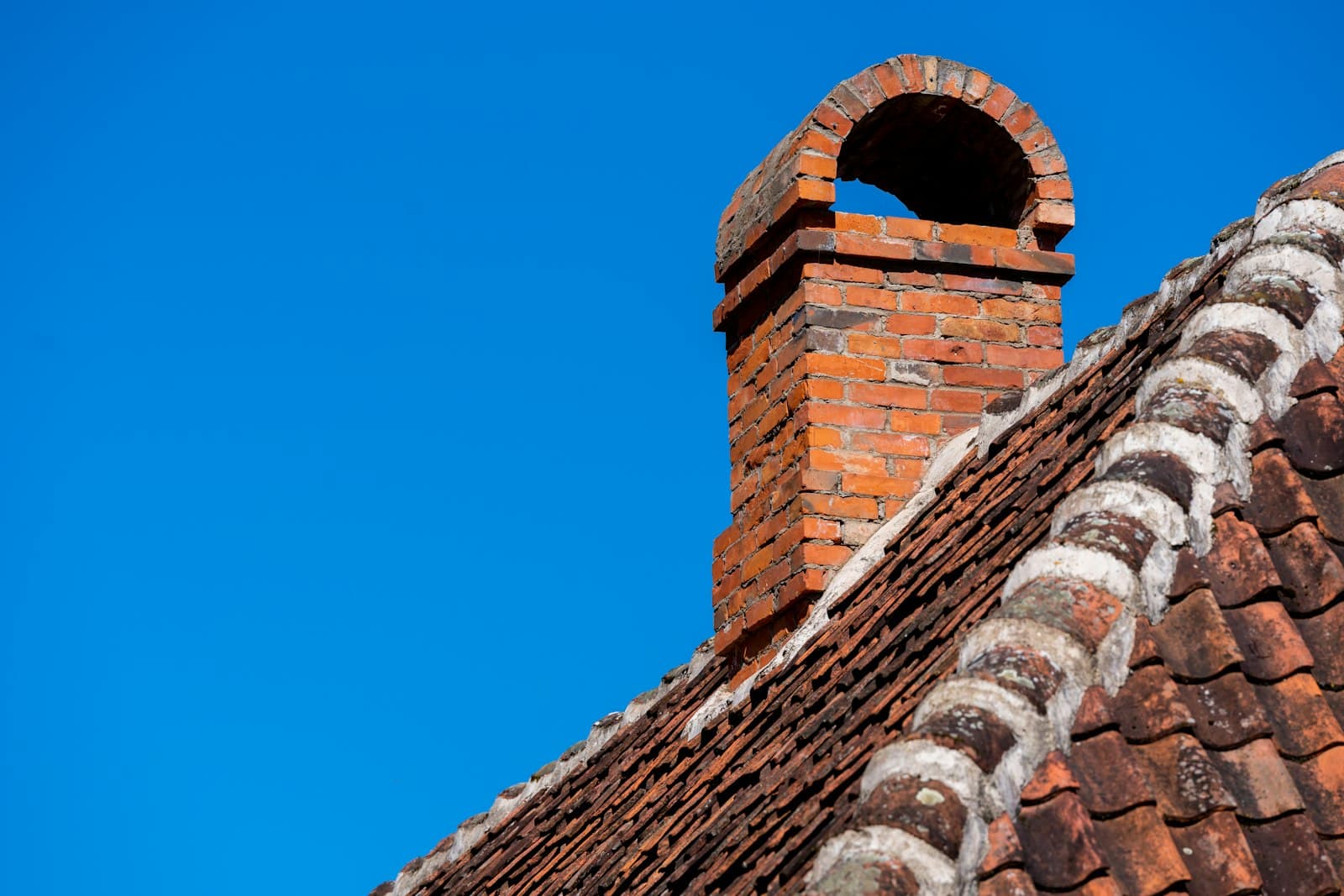

How chimney cap replacement is priced
A cap quote is really three things priced in one line: the part itself, any fabrication needed to make it fit, and the trip to get it onto your roof. Stock-size single-flue caps sit at the easy end; oversized flues, unusual shapes, and multi-flue hoods that have to be bent to your crown pull the fabrication side up. Metal grade and gauge move it again: marine-grade stainless where salt air reaches, and a heavier gauge that will not fatigue at the welds. Access and roof height often swing the total more than the cap itself does.
A complete cap quote says what metal is going on your roof in writing (the alloy named, not just "stainless"), along with the gauge, the measured flue dimensions, how many flues the hood covers, and how it will be attached. It states whether removal and disposal of the old cap is included, whether the crown is being touched, and whether a chase cover is in scope or excluded. A vague quote hides exactly those lines: "supply and install chimney cap" tells you nothing about what arrives, and leaves the fastening method (the part that decides whether it stays on) entirely to chance.
When one cap quote is much lower than another, compare the metal, gauge, sizing, and fastening method rather than assuming the scopes match. Galvanized or thin-gauge steel can look much like marine-grade stainless when new but behave differently in salt air. Ask which alloy and gauge are proposed, how the cap would be anchored, whether mesh is included, and whether the written agreement includes any job terms.
- Flue count and shape: a stock single-flue cap is a smaller job than a multi-flue hood bent to fit your crown.
- Grade and gauge are separate specs: ask for both named on the estimate, and expect marine-grade stainless if you can smell salt from the driveway.
- Mechanically fastened to the flue or collar, not friction-fit: ask which, because it decides whether the cap survives storm wind.
- A chase cover is a different part from a cap and is quoted separately. Confirm which one your estimate actually covers.
- Bundling the cap with a sweep, crown work, or a flashing check into one visit costs less than separate trips up the same ladder.
What a cap replacement actually involves
The chimney cap is the lid on top of your flue: a hood that sheds rain, with mesh sides that can help keep out animals and embers. Replacement scope depends on the flue, existing hardware, roof access, weather, and the condition found at the chimney top; no fixed visit duration applies.
The reason this small part earns its own cost guide is what happens without it. An uncapped Florida flue is an open pipe into your house during the wettest residential climate in the country. Every afternoon storm from June through September sends water straight down onto the damper, the smoke shelf, and the firebox. Rusted dampers, musty smells, spalled flue tile, and animal nests are all downstream of a missing or failed cap, and every one of them costs more to fix than the cap did.
Fit details matter more than they look. The mesh has to be sized right (fine enough to stop embers and animals, open enough not to clog with soot and choke the draft), and the hood needs clearance above the flue so smoke exits freely. A cap that is technically installed but wrong in these details shows up later as a smoky fireplace or a screen packed solid with creosote. Getting the small part right is most of what you are paying a pro for.
Where a cap job sits in the scale of chimney work
Cap replacement scope depends on flue size and count, proposed material, existing fasteners and crown condition, roof access, weather, and safe working conditions. The visit duration and material should be confirmed in the job-specific proposed work rather than promised in advance.
The job gets bigger when it is bigger than a cap. Multi-flue caps that cover two or three flues under one hood are a larger, often custom part, and custom-fabricated chase covers (the full metal pan that tops a framed prefab chimney chase) are a fabrication job rather than a shelf item, which puts them in a tier of their own. If the old chase cover has been rusting for years, there may also be rotted wood underneath to deal with, which is a separate line on the estimate.
One honest note before you buy anything: sometimes you do not need a new cap at all. A sound cap that a storm knocked loose can often be re-fastened for far less than a replacement, and a pro who intends to earn the second call will tell you so. Replacement is the right answer when the metal is rusted, the mesh is torn, or the cap was undersized from day one, not merely because it moved.
What moves the price
Size and configuration come first. A single 8x8 or 13x13 flue takes a stock cap; an oversized flue, an unusual shape, or several flues sharing one chimney means a larger or custom unit. Custom fabrication is the main reason two neighbors can pay very different amounts for what they both call “a new chimney cap. ”
Material grade is the second lever, and in Florida it is the one worth understanding. Galvanized steel caps are the cheapest and rust fastest: inland they may last some years; near salt water they can be showing rust streaks in a couple of seasons. Standard 304 stainless is the sensible inland default. On the coasts (anywhere the Atlantic or Gulf air reaches), 316 marine-grade stainless or copper is the honest spec, because chloride in the air attacks lesser metals relentlessly. The price difference between grades is small compared to the cost of doing the job twice.
Access is the third lever. A walkable one-story roof is quick. A steep two-story with barrel tile takes more time, more care, and sometimes more equipment, and honest pricing reflects that. Trip logistics count too. Having the cap replaced during another scheduled visit, like a sweep or a crown coating, often trims the cost, because the ladder is already up and the roof is already being worked.
Cap styles that change the number
Beyond size and metal, the style of cap you choose moves the price, and in Florida, one upgrade deserves a serious look. A top-sealing damper cap combines the rain hood with a gasketed damper that seals the flue at the top of the chimney, operated by a cable from the firebox. For a fireplace that burns a handful of nights a year, that seal works for you the other 350: it keeps humid outdoor air out of the flue all summer, keeps conditioned air in, and blocks the damp-creosote smell that haunts so many Florida fireplaces in July.
Standard throat dampers (the metal flap just above the firebox) rarely seal well, and rust in our climate makes them worse every year. A top-sealing model costs more than a basic cap, because it is a damper as well as a hood, but it replaces two failing parts with one good one. Outside-mount caps that clamp over the entire chase, and copper caps chosen for looks and longevity, are the other common upgrades; both are priced case by case on an estimate.
The hurricane-season angle
Blown-off caps are one of the most common chimney calls after any named storm crosses Florida, and the failure is usually the attachment, not the cap. Friction-fit and lightly screwed caps that survive a decade of ordinary weather leave the roof in one strong gust. A properly installed cap is mechanically fastened to the flue tile or liner collar: it is the difference between a cap that rides out a storm and one you find in the pool.
If you are replacing a cap between June and November anyway, it is worth having the crown and flashing looked at in the same visit. The cap, crown, and flashing are the chimney’s whole rain defense, and a storm that takes the cap has often stressed the rest. One trip up the ladder covering all three is cheaper than three trips.
When the cheap cap costs more later
The false economy here is precise and predictable. A bargain galvanized cap near the coast buys you a rust-streaked chimney (those orange stains bleed onto the crown and masonry and are ugly to remove), followed by a rusted-through hood and a second purchase within a few years. An undersized or badly fastened cap buys you a wind-borne projectile and an open flue in the middle of the rainy season.
The other quiet cost is skipping the mesh, or crushing it flat to “help draft. ” Open sides invite birds and squirrels, and a nest in the flue is a blockage and a fire risk that costs far more to remove than the cap cost to buy. Spend once on the right alloy, the right size, and a mechanical fastening, and this becomes one of the longest-lived parts on your roof.
Getting your real number
Cap pricing depends on flue size and count, proposed material, existing conditions, and roof access. A technician can visit the property and give a free estimate.
Call to ask about current availability. If the customer cancels after paying the deposit, the company keeps it. Proposed work, price, material, payment terms, and job terms belong in the job-specific paperwork.