
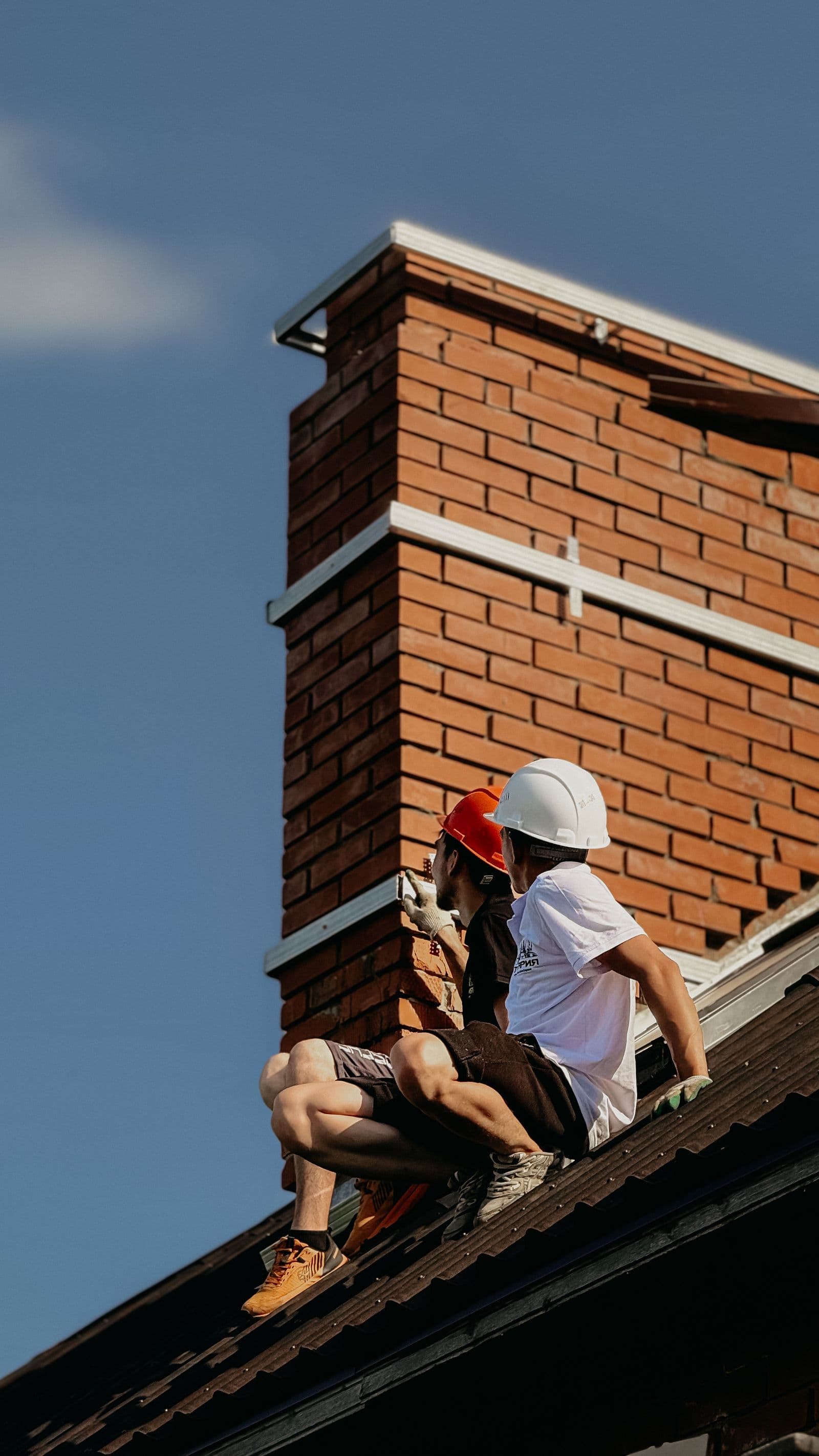

How chimney repair is priced in Florida
Chimney repair is a category, not a job, so the price tracks which component actually failed and how far the failure has already traveled. Sealing a crown that has just begun to check is a smaller job than rebuilding one that has been feeding water into the masonry for seasons. That is why diagnosis has to come before any number: what a pro finds once they are on the roof (soft mortar behind a sound-looking face, a corroded liner above a tidy firebox) is what sets the scope, and scope is what sets the price.
Access is usually the single biggest driver after scope. Getting a pro, tools, and materials safely onto a tall stack on a steep roof is a different day's work from reaching a low chimney on a gentle slope, and every quote carries that reality whether it says so out loud or not. Material grade is the next lever: near salt air a pro specs corrosion-resistant stainless because ordinary steel gives up early. Timing is the last: when crown, cap and flashing all need attention, handling them under one mobilization beats paying to set staging up again next season.
Read the quote for what it names. A complete one identifies the component, the failure, the fix, and the material, line by line, so you can phase the work or compare bids honestly. A quote that says only "chimney repair" hides which of those it actually covers. On this job, the corner that gets cut when a bid comes in far under the others is nearly always diagnosis: sealant smeared over a cracked crown or a lifted flashing seam, no one having looked at the liner, and the same water back through the same path by the next rainy season.
- Which component failed, and how far it has progressed: a crown reseal is a smaller job than a crown rebuild, and only an on-site look separates them.
- Access and height: roof pitch, stack height, and how materials get up there often separate one quote from another on the very same repair.
- Material grade: corrosion-resistant stainless near salt air, versus ordinary steel that has to be replaced again later.
- Shared mobilization: crown, cap and flashing addressed on one visit rather than as separate call-outs spread across the year.
- Ask what happens if the pro opens the work and finds more than the quote assumed: how added scope is approved, and whether it goes in writing before it is done.
Chimney repair · Signs your chimney needs repair · Free estimate
Why there is no single Florida chimney repair price
The first thing to understand about chimney repair cost in Florida is that no honest pro can give you a real number over the phone for an unseen chimney. A loose chimney cap is a minor job. A cracked crown that has been letting rain into the masonry for three summers is a major one. The two can sit on the same roof, and only an on-site look tells you which you are dealing with. That is why a free estimate exists in the first place: to turn a guess into an property-specific estimate before any work is scheduled.
Florida adds its own twist. The same crack that would sit quietly for a decade in a dry climate gets driven deeper every afternoon by our humidity and our daily summer downpours. Water that gets in does not just stay. It freezes nowhere except the Panhandle, but everywhere else it dissolves mortar, rusts steel, and spreads. So two chimneys that looked identical at install can need very different repairs five years later depending on how long water has been working on them.
The common repairs and what moves the price
Chimney cap installation or replacement is usually the smallest line item. A cap is the lid that keeps rain, leaves, and animals out of the flue. Replacing one is fast; the cost mostly depends on whether you need a single-flue stainless cap or a custom multi-flue chase cover. On the coast, stainless is worth the small premium because galvanized steel surrenders to salt air within a few seasons.
Flashing repair sits in the middle. Flashing is the metal-and-sealant seam where the chimney meets the roof, and it is the single most common source of the leak that shows up as a brown stain on a Florida ceiling. Re-sealing is cheap; rebuilding flashing that has corroded or pulled loose costs more because it is roof work as well as chimney work.
Crown repair and masonry work (tuckpointing, brick replacement, rebuilding the top courses) is where the range widens fast. A small crown patch is affordable. A full crown rebuild, or repointing a chimney where the mortar joints have washed soft, is a larger structural job. Relining sits at the top of the scale, because installing a new stainless liner down the full height of a flue is labor-intensive and the material is not cheap.
How the jobs rank, smallest to largest
Repair scopes vary in size. Cap replacement and minor flashing work may involve a limited component, while a flashing rebuild, crown rebuild, or extensive tuckpointing involves more preparation, access, materials, and labor. Duration depends on chimney height, roof pitch, weather, safe access, and how far deterioration has spread; confirm it for the specific proposed work.
The big-ticket items are relining and rebuilding. A full stainless liner is in a class of its own, because it covers the entire height of the flue in specialized material and takes the better part of a day even when nothing goes wrong. Rebuilding the top courses of a storm-damaged or badly spalled chimney varies the most of anything on this list: what you pay depends almost entirely on how many courses come down and whether matching brick is easy to source.
Two things sit underneath all of it. First, access matters: a short chimney on a gentle single-story roof can involve less setup than a tall stack on a steep two-story. Second, related work may reduce duplicated access or mobilization, but it should not be assumed to cost less. Compare the combined and separate proposed scopes and prices in writing before deciding.
How Florida conditions change the number
Coastal exposure can change material requirements because salt air accelerates corrosion of many metals. Ask the contractor to identify the proposed alloy or coating and explain why it suits the component and location. No material choice should be treated as a guarantee against future corrosion or repair.
After a hurricane or strong tropical storm, common concerns include shifted caps, cracked crowns, and lifted flashing. Call to ask about current availability.
A technician can visit the property and give a free estimate. Every approved paid job requires a deposit. If the customer cancels after paying the deposit, the company keeps it. Scope, price, payment terms, and job terms are provided in the job-specific paperwork.
Repair, rebuild, or reline: how a pro decides
When a quote surprises a homeowner, it is usually because the chimney has crossed one of two thresholds. The first is the point where patching stops making sense. A crown with one hairline crack gets sealed; a crown that has cracked into a map of fragments gets rebuilt, because sealing it is paying twice for a fix that will not hold through a Florida summer. The same logic applies to mortar joints: spot repointing works until so many joints have softened that a broader tuckpointing pass is the cheaper move per year of life gained.
The second threshold is the liner. If an inspection finds gaps, cracks, or heavy corrosion in the flue lining, the conversation shifts from cosmetics to safety, because the liner is what keeps heat and combustion gases inside the flue where they belong. That is when relining enters the estimate. A trustworthy pro will show you what they found, explain why a smaller repair will not solve it, and put both paths in writing so you can compare, not pressure you toward the bigger job.
How to read a chimney repair estimate
A good estimate is itemized. You should be able to see what the cap costs versus the crown work versus the flashing, so you can phase the work if you need to. Be wary of a single vague lump sum, and be equally wary of a bid that comes in far below everyone else: in this trade, the suspiciously cheap quote usually means a cosmetic smear of sealant over a problem that will be back by the next rainy season.
Ask what is included in writing: the scope, the materials, the required deposit and payment terms, and any terms that apply to the specific job. If the scope later changes, the added work and price should be explained and approved in writing. If a pro cannot explain why a line item exists, that line item deserves a second question.
Timing the work to keep the cost down
In Florida, the cheapest repair is almost always the earliest one. Water damage compounds: a flashing seam that would have been a re-seal in March becomes a rebuilt flashing plus interior ceiling repair by September, after a summer of daily storms has run water through the gap a hundred times. If a sign of trouble shows up (a stain, white deposits on the brick, a musty smell), the free estimate costs you nothing and pins the problem while it is still small.
Season matters too. Late spring, before hurricane season ramps up in June, is the smart window to fix a vulnerable crown or loose cap, because those are exactly the components a tropical system exploits. And if a storm has already come through, have the chimney looked at even if nothing looks obviously wrong from the ground: lifted flashing and hairline crown cracks are invisible from the yard and very visible on your ceiling three rains later.