
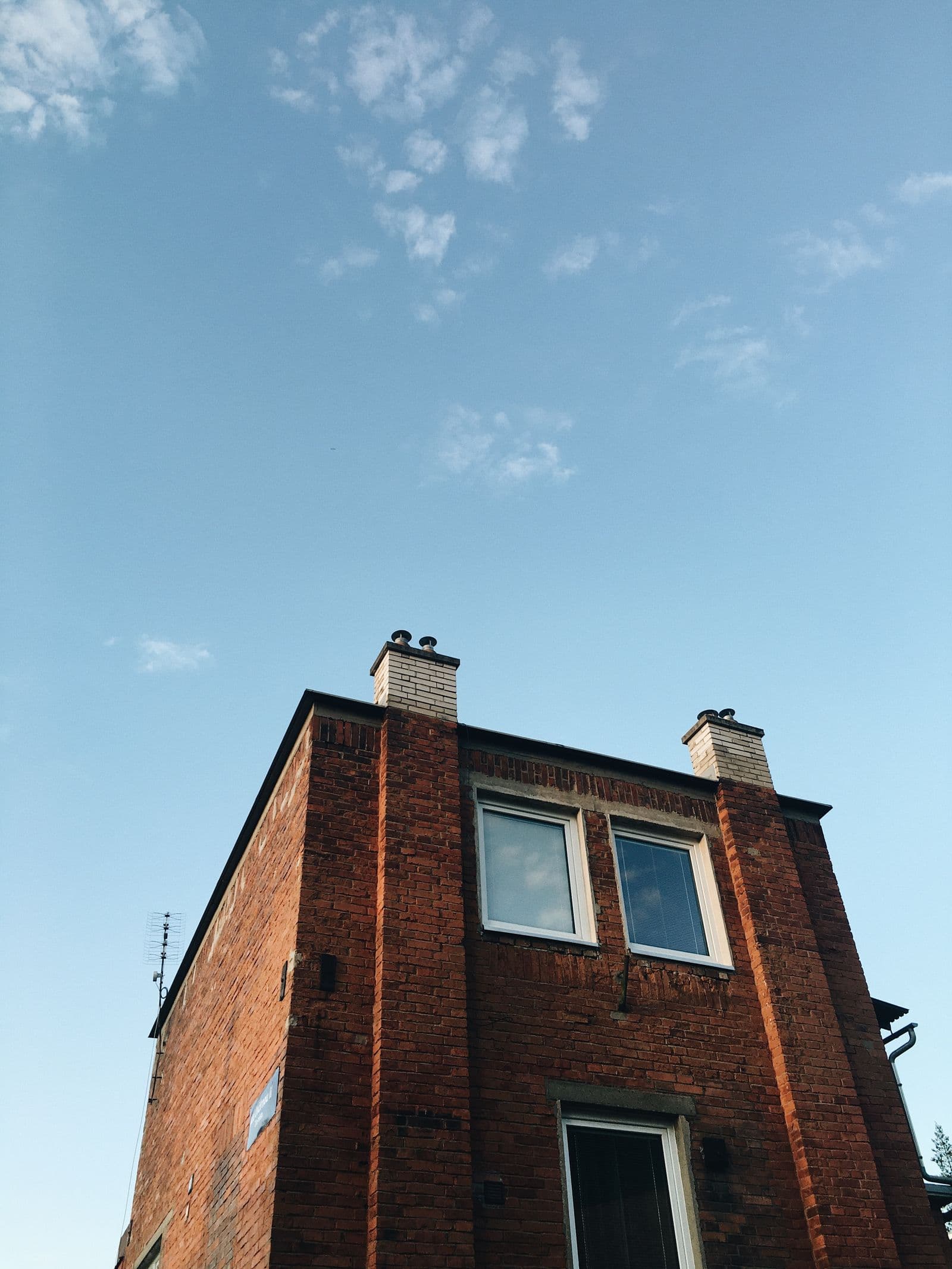

The signs you can see from the ground
You do not need to climb on the roof to spot the early warnings that a chimney is in trouble. Stand back in the yard and look at the masonry. White, chalky staining on the brick, called efflorescence, means water is moving through the masonry and leaving mineral deposits behind as it dries. In Florida’s humidity that is one of the most common signs a chimney has started taking on water it should be shedding.
Spalling is the next stage. When water gets into brick or mortar and the surface starts to flake, pop, or crumble, that is spalling, and you will often see chips of brick on the roof or in the gutters. Cracked or missing mortar joints, a leaning chimney, or a crown you can see has split are all visible-from-the-ground signs that the structure is losing its battle with water. None of these fix themselves. They accelerate.
Roofline tells: what the cap, crown, and flashing are saying
With a pair of binoculars from the yard, the top of the chimney tells its own story. A cap that sits crooked, is visibly rusted, or is simply missing means the flue has been open to Florida rain (and to nesting animals) for however long it has been that way. Rust streaks bleeding down the masonry from the cap or chase cover are the coastal classic: salt air has been eating the metal from the top down, and the streaks are the evidence running downhill.
Look at the seam where the chimney meets the roof. Flashing that has lifted, wrinkled, or pulled away from the brick after a windstorm is one of the most common Florida failure points, and it rarely looks dramatic from the ground: a shadow line where metal should sit flat is enough. Another tell worth knowing: smears of roofing tar around the chimney base. That is the signature of a previous owner’s quick fix, and tar over flashing is a patch that buys months, not years. If you can see tar, plan on a proper flashing repair in your future.
The signs you notice from inside the house
Some of the clearest warnings show up indoors. A brown or yellow stain spreading on the ceiling or wall near the chimney almost always means the flashing or crown is leaking and rain is finding its way inside. In Florida this often appears after the first heavy summer storm of the season, then gets worse with every downpour until it is addressed.
A persistent musty or smoky odor is another. If your fireplace smells like an old campfire on humid days even though no one has lit a fire in months, moisture is getting into the flue and reacting with old soot and creosote. The smell is the symptom; the cause is usually a missing cap, a cracked crown, or a deteriorating liner.
Pay attention to how the fireplace behaves, too. Smoke spilling back into the room, a fire that will not draw, or a damper that sticks and corrodes are all performance signs that something in the flue or its components needs attention. Rust on the damper or firebox is a near-certain sign water is getting in from above.
On a coastal Florida home there is an extra set of tells driven by salt air. Rust streaks running down the masonry from a corroding cap, a damper that has seized rather than merely stiffened, and fasteners that have rusted away are all signs the salt environment has been working on the metal longer than the homeowner realized. These appear years sooner near the water than they would inland, so coastal owners should treat early metal corrosion as a real warning rather than cosmetic wear.
How small signs become big repairs in Florida
It helps to understand the sequence, because every big chimney repair in Florida started as a small sign somebody watched for a year. Stage one: a hairline crack in the crown or a dried-out flashing seam lets a little water in. Stage two: our daily summer storms turn that trickle into a routine: the masonry never fully dries between rains, so the moisture works deeper, dissolving the lime in the mortar and rusting any steel it touches. Efflorescence and the musty smell usually show up here.
Stage three is where the money is. Saturated brick starts spalling, softened mortar joints let more water in, the liner and damper corrode, and interior stains appear. What would have been a crown seal and a flashing re-seal is now masonry restoration plus interior repair. The Florida-specific point is speed: this progression that takes a decade in a dry climate can compress into two or three wet seasons here. The house is not being dramatic. The climate genuinely is that hard on unprotected masonry.
A twice-a-year check any homeowner can do
You do not need to be handy to keep an eye on a chimney. You need five minutes and a calendar. Twice a year, walk the yard and look: once in late May, before hurricane season starts throwing weather at the roof, and once in November, before the first fire of the season. Check the brick for white staining and flaking, the top for a straight and intact cap, the roofline seam for lifted flashing, and the ground and gutters for brick chips. Inside, open the damper and sniff. The flue should smell like nothing much.
Stay off the roof. A Florida roof is steep, often wet, and not worth the risk when everything above the gutter line can be checked with binoculars from the lawn, and anything that needs a closer look is exactly what a pro’s visit is for. The point of the homeowner check is not to diagnose; it is to notice changes early enough that the fix is still the small version.
Take photos each time. Two pictures of the chimney from the same spot in the yard, six months apart, will show you what memory cannot: whether that crack has grown, whether the white staining is spreading, whether the cap has shifted. Chimneys fail slowly and then suddenly; a photo trail catches the slow part, which is the cheap part.
Which signs can wait and which cannot
Efflorescence, a little spalling, and a sticky damper are not emergencies, but in Florida they are not "watch it for a year" problems either. Our daily humidity and summer rains turn small water-intrusion issues into structural ones faster than most homeowners expect. Booking a free estimate when you first notice them is the cheapest path: a flashing re-seal today beats a crown rebuild and a stained-ceiling repair later.
A visibly leaning chimney, falling masonry, or signs of a chimney fire can indicate immediate danger. Leave the area and call emergency services first. Call to ask about current availability.
What happens when you call about a warning sign
A visible sign may come from more than one component, and the appropriate evaluation depends on the symptom and accessible conditions. A technician can visit the property and give a free estimate. Any proposed options and price should be reviewed in the estimate before work is approved.
An estimate lets you compare scope and timing before approving work. Do not assume that minor items will be completed during the assessment or bundled with another service; any work requires approval. Ask whether the job agreement includes job terms and what they cover.