
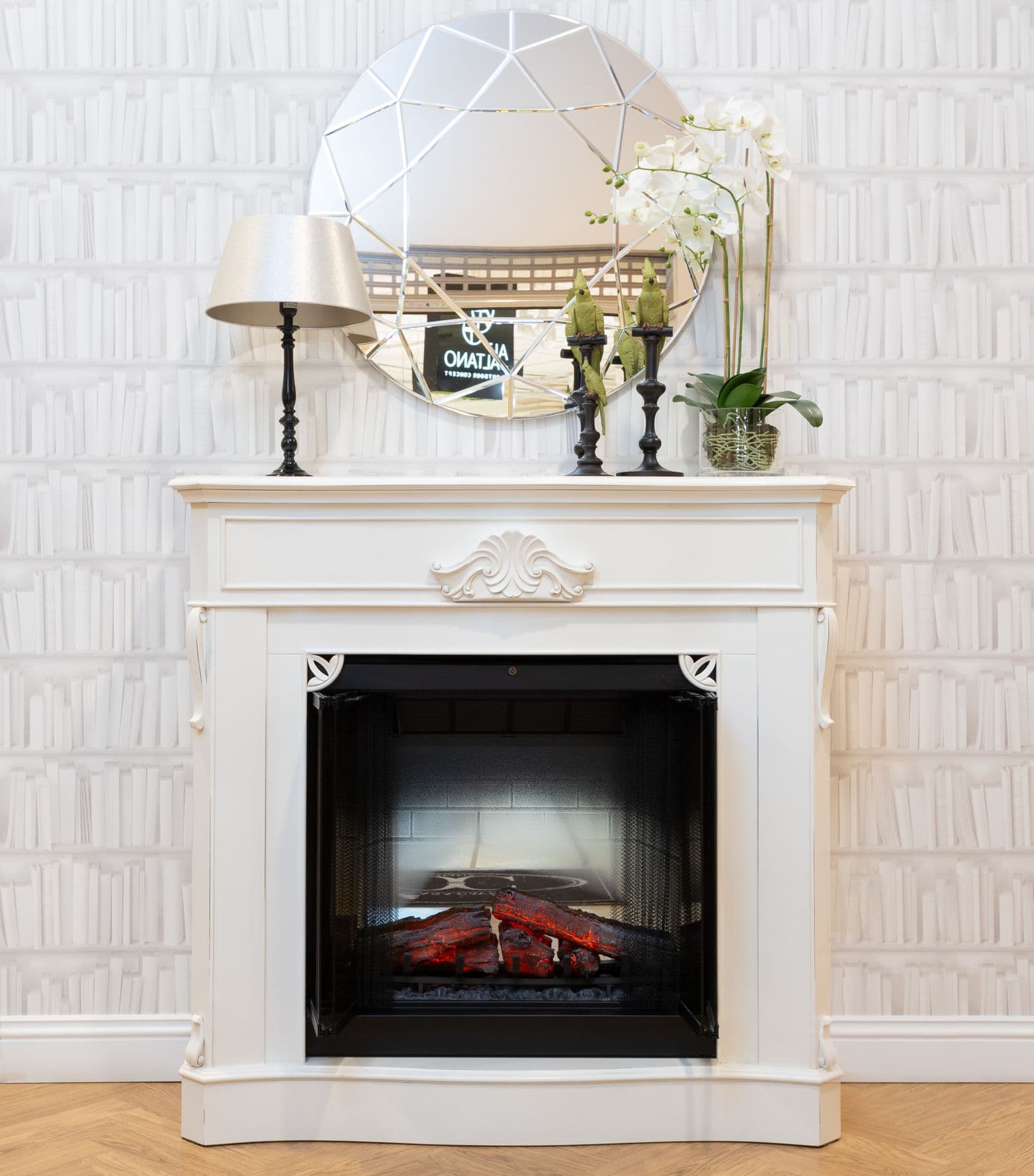

Why Florida flips this comparison
Most electric-versus-gas comparisons are written for cold climates, so they obsess over heat output, efficiency, and cost per hour of warmth. Florida makes almost all of that beside the point. Here the air conditioner does the heavy lifting ten or eleven months a year, and a fireplace earns its keep on a handful of cool evenings plus every night you simply want the look of a fire in the room. When heat is barely the job, the real comparison becomes ambiance quality, installation burden, upkeep, and what the thing does for your home’s feel and value. Judged on those terms, electric and gas split the field very differently than a northern guide would tell you.
There is also a structural reason this question comes up so often in Florida specifically: a large share of the state’s housing stock (concrete-block homes on slabs, plus nearly every condo) was built with no chimney at all. In a house that already has a flue, adding gas is an adaptation. In a house with no chimney, adding gas is a construction project, while adding electric is an appliance purchase. That gap in starting points, more than any feature list, is what decides the matchup for many Florida homeowners. We compared gas against wood in a separate guide; this one is about the choice facing homes where a real chimney may not even exist.
Electric, in plain language
An electric fireplace is not a fireplace in the combustion sense: it is an appliance. A light engine produces a flame effect, usually with LEDs played across a screen or rotating reflector, and a built-in heater about the strength of a plug-in space heater provides optional warmth. Nothing burns. There is no gas line, no smoke, no fumes, no flue, and no vent. Most units plug into a standard outlet; larger built-in models are sometimes hardwired on their own circuit, which is an electrician’s visit, not a chimney project.
The format range is wider than people expect: freestanding mantel packages that work like furniture, slim wall-mounted linear units, recessed built-ins framed into a wall, and electric inserts sized to slide into the firebox of an existing masonry fireplace that no longer gets used. That last option matters in Florida, where plenty of older homes have a wood-burning fireplace that has not seen a fire in years and mostly collects humidity.
The honest part: the flame is a picture of a flame. The best modern effects are genuinely convincing from across a room (depth, flicker, ember beds, adjustable color) and they have left the orange plastic wobble of a decade ago far behind. But there is no radiant warmth coming off the flames themselves, no scent, and no crackle unless a speaker supplies one. Whether that matters is personal, and it is the single question worth answering in a showroom before anything else.
What gas gets you that electric cannot
Gas gives you real fire. The flame is combustion, the heat radiates the way firelight should, and the unit reads as a genuine hearth, a permanent feature of the house rather than an electronic picture of one. For homeowners who want the fireplace to anchor a living room, that presence is the entire argument, and no screen fully replicates it.
The heat is real too, and on the nights Florida actually gets cold (more of them in Jacksonville, Gainesville, and the Panhandle than in the southern half of the state), a gas fireplace warms a room quickly and convincingly. An electric unit’s heater takes the edge off a bedroom; a gas fireplace can make a large open living area comfortable while a cold front passes. If your winters include real cold snaps, that difference is felt, not theoretical.
One more point that belongs in any Florida comparison: the power grid. An electric fireplace is dead the moment the power drops. Some gas fireplaces (particularly standing-pilot models without electric blowers) keep working in a blackout. Nobody should choose a fireplace as a hurricane plan, but in a state that loses power more often than most, it is a genuine point in gas’s favor, and worth asking about for any specific model you are considering.
Installation: an afternoon versus a project
Electric installation ranges from trivial to modest. A freestanding or wall-mounted unit is placed, plugged in, and done: an afternoon, no permits, no trades. A recessed built-in adds framing, finishing, and possibly a dedicated circuit, which makes it a small remodeling job but still one with no gas line, no venting, and no hole in the roof or wall. This is also why electric is usually the only fireplace a condo allows: combustion appliances are commonly restricted above the ground floor and by association rules, though those rules vary by building and municipality, so verify yours before buying anything.
Gas installation is real work. A line must be run from your gas supply (or a propane tank added if the neighborhood has no gas service, which is common across Florida), and the appliance must be vented, either directly through an exterior wall or into an existing flue. In a home that already has a masonry fireplace, a gas insert or log set borrows infrastructure you already own, and the project shrinks accordingly. In a home with no chimney, gas means penetrating the building envelope, which in Florida also means detailing that penetration against wind-driven rain for the next hurricane season.
You will also encounter vent-free gas units, which skip the venting by design and burn room air. They exist, they are cheaper to install, and the rules governing them vary by municipality (some areas restrict them), so treat local verification as step one, and expect many pros to steer you toward vented equipment. Whatever the path, gas work is not a homeowner project: a local pro sizes the line, sets the venting, and leak-tests the connections.
How each one actually gets used here
Here is the pattern that surprises people: electric fireplaces get used far more often than gas ones in Florida, because the flame and the heat are separate switches. You can run the flame effect alone on a July evening with the air conditioning on, and the room pays only the trivial electrical cost of the light show. The fireplace becomes a year-round mood feature instead of a seasonal appliance. Owners of good electric units tend to use them the way they use lamps: most nights.
Gas is the opposite: every minute of flame is heat, so in a cooling-dominated state its use concentrates into the genuinely cool weeks. Run a gas fireplace on a warm evening and the AC spends the night fighting it. You can do it, but you will feel it, and most people simply stop. The result is a fireplace that delivers a wonderful experience a few dozen evenings a year and sits idle the rest, which is exactly the pattern our humid climate is hardest on. If you already know your fireplace would live that seasonal life, it is worth an honest thought about how many nights a year you would actually light it.
The maintenance ledger, side by side
Electric is the lowest-maintenance fireplace you can own, and it is not close. There is no creosote, no venting, no combustion byproducts, and no annual sweep: the upkeep is dusting, and eventually replacing a blower or light component the way you would service any appliance. When an electric unit fails, it is an electronics repair-or-replace decision, not a chimney problem.
Gas is light but not zero. It produces no creosote either, but the venting, gas connections, burner, and ignition deserve a professional look once a year. National fire-safety guidance calls for an annual inspection of any fuel-burning fireplace, whatever it burns. Florida’s long idle season is the quiet enemy: an ignition that will not light after ten humid months, ceramic logs shifted out of position, wasps or birds discovering an unused vent, and, in coastal homes specifically, salt air steadily corroding the metal venting components. Gas problems are quieter than wood problems, with no smoke in the room to warn you, which is precisely why the annual check earns its cost.
The fair summary: if your priority is never thinking about the fireplace, electric wins outright. If you choose gas, budget one professional visit a year and treat it as non-negotiable: a lightly used, long-idle gas fireplace in a humid climate is exactly the appliance that benefits most from being looked at before the first cold night.
Resale: how buyers read each one
Be honest with yourself about what each option is in a buyer’s eyes. A gas fireplace with a finished surround reads as a feature of the house: permanent, plumbed, part of the architecture. A freestanding electric unit reads as furniture, and buyers assume it leaves with you. A recessed, built-in electric fireplace with a proper surround lands in between: it shows beautifully in listing photos and presents as a feature, even though a sophisticated buyer knows it is an appliance.
In the Florida market a fireplace of any kind is a nice-to-have rather than a must-have, so neither option should be chosen as an investment thesis. The sensible frame: buy for how you will actually live, and treat any resale impression as a side benefit. If the hearth is central to how you picture the home (and to how you want the next owner to picture it), gas makes the stronger, more permanent statement. If the fireplace is ambiance for your own evenings, electric delivers that at a fraction of the commitment.
What each one asks of the house, and which Florida homeowner it suits
The two options sit in different categories, and that is what really separates them. Electric is an appliance purchase: a freestanding or wall-mount unit is the simple end, a large recessed built-in adds framing and finish work, and a hardwired model adds an electrician’s visit. Gas is a project, and its scope is set by a short list of drivers: how far a gas line has to run to reach the fireplace, whether propane has to be brought in because the street has no gas service, how the venting gets to outside air, and whether an existing fireplace and flue can carry part of the work instead of the job starting from nothing. That last driver is the big one: an insert or log set into a working firebox is a far smaller undertaking than opening a wall in a chimney-less home. For any gas-side work, a free estimate stating the proposed price is what turns that scope into a real number for your specific house.
The profiles, plainly. Electric suits: condo owners and anyone whose building or association restricts combustion; homes with no existing chimney; households that want flame most nights of the year with the AC running; and anyone whose honest priority is zero upkeep. Gas suits: homes with an existing fireplace or flue to build on; households in the state’s cooler half who want real heat on real cold nights; homeowners who value outage resilience in hurricane country; and anyone for whom only genuine fire will do.
If you are weighing the gas side (a new install, a log set, or an insert into an existing firebox), arrange an assessment by a qualified professional. The written proposal should identify what the setup supports, the proposed venting path, the role of any existing flue, and the price before work begins. Any warranty applies only if the job agreements includes its terms. If you land on electric, confirm the unit and electrical requirements for the installation location.