
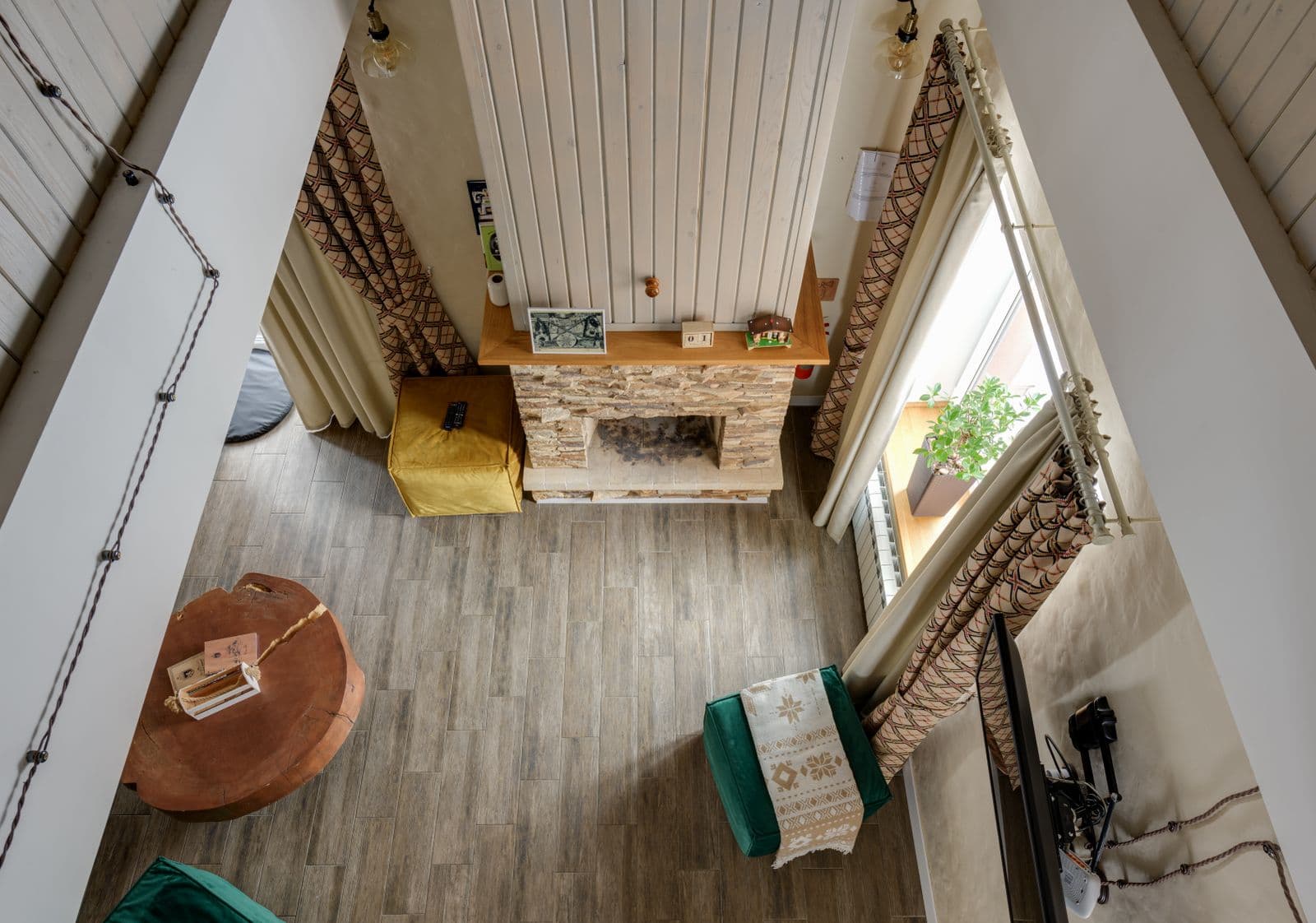

Smoke in the room means the chimney is not doing its job
A fireplace is supposed to send every wisp of smoke straight up the flue and out the top. When smoke spills back into the room instead, something is interrupting that upward draft. The frustrating part is that several different problems produce the same symptom (a smoky living room), so the fix depends entirely on which one you have. The reassuring part is that the list of causes is short and most are straightforward to resolve.
In Florida there are a couple of climate-specific twists worth knowing up front, because they catch homeowners off guard. Our mild winters, our humidity, and our idle-flue wildlife all interfere with draft in ways that a northern fireplace owner rarely thinks about. Keep those in mind as you work through the usual suspects below.
One quick diagnostic before you start: is this new, or has it always been this way? Gray or brown soot staining on the wall or mantel above the fireplace opening is the fingerprint of a long-running draft problem: chronic backpuffing leaves a record. A fireplace that smoked for the first time this season points to something that changed: a seized damper, a new nest, wetter wood, or a house that got tighter. That one distinction cuts the suspect list in half.
How draft actually works, and why Florida makes it harder
Draft is just physics: the column of hot gas inside the flue is lighter than the cooler air outside, so it rises, and that rising column pulls fresh air through the fire and smoke up the chimney. The strength of the pull depends on two things: how tall the flue is, and how big the temperature difference is between the gas inside and the air outside. Taller and hotter means stronger draft.
Now notice the Florida problem: we light fires on evenings that are merely cool, not cold. When it is 65 degrees outside instead of 25, the temperature difference driving the draft is a fraction of what a northern chimney enjoys, so a Florida flue starts every fire with a weaker engine. Add a flue whose walls are damp from months of humid idleness (damp walls cool the rising smoke, weakening the pull further) and you have a chimney that needs everything else to be right to work well. That is why marginal problems that a cold climate would mask show up here as smoke in the room.
The simple suspects: damper and wet wood
The simplest cause is the most common: a closed or partly closed damper. The damper is the metal flap inside the flue that opens to let smoke out. If it is shut, stuck, or only cracked open, smoke has nowhere to go but the room. In Florida, dampers also corrode and seize from humidity, so a damper that worked last winter can stick this one. Confirming the damper is fully open (by look and feel, not memory) is always step one.
Wet or unseasoned wood is the quiet culprit Florida’s humidity makes worse. Damp wood does not burn hot; it smolders, produces far more smoke than a clean-burning fire, and never generates the flue temperature a strong draft needs: a double hit, since you are making more smoke and moving it with less pull. Wood stored uncovered through a Florida wet season is almost never dry enough to burn well, no matter how long ago it was cut.
The blockage problem: nests, creosote, debris
A blocked flue is the next suspect, and in Florida it is often an animal’s fault. An idle flue with a missing or damaged cap is prime nesting territory for birds and squirrels (nine idle months is a long, undisturbed construction season), and a nest chokes the draft just as surely as any other obstruction. If the fireplace worked fine last winter and smokes badly this year with nothing else changed, a nest is a leading candidate.
The other classic blockages are a thick creosote layer narrowing the flue, leaves and debris that came in through a missing cap, and collapsed tile fragments in an older chimney. All of them shrink the passage the smoke must climb through, and a Florida flue running on a weak temperature difference has no reserve capacity to overcome the restriction, so the smoke takes the easier path, into your living room.
The Florida house factor: your home is fighting the fire for air
Here is the cause almost nobody suspects: the house itself. Every cubic foot of air the chimney sends up must be replaced by air coming in from somewhere. Modern Florida homes are sealed tight for air conditioning, so there is not much leakage to draw on, and meanwhile the kitchen exhaust, bathroom fans, and dryer are actively pumping air out. When the house runs at negative pressure, the easiest place for replacement air to come in is the biggest hole in the envelope: the chimney. The flow reverses, and smoke comes with it.
This is why a fireplace can smoke in a tightly sealed newer home with a perfectly clean, unblocked flue: the chimney is losing a tug-of-war with the range hood. The test is simple: if cracking a window near the fireplace noticeably improves things, negative pressure is your problem, and the fix is managing makeup air rather than anything inside the flue.
Design problems: when the chimney was born this way
Some fireplaces smoke because their proportions are wrong. The classic case is a firebox opening too large for the flue that serves it. As a rule of thumb, a flue needs a cross-section around a tenth of the fireplace opening’s area, and an oversized opening simply produces more smoke than the flue can swallow. A flue that is too short relative to the roofline, or one overshadowed by a taller roof section or nearby trees, can also suffer turbulence and downdrafts whenever the wind blows from the wrong quarter.
These design issues have real fixes (a smoke guard that shrinks the opening, a taller cap or flue extension, in stubborn cases a fan), but diagnosing which one applies is measurement work, not guesswork. If your fireplace has smoked since the day you moved in, in all weather, with dry wood and a clean flue, geometry is the likely culprit and a pro visit is the efficient path.
Do not alter the fireplace opening or light test fires to diagnose persistent smoke. Stop using the fireplace and arrange an appropriate professional evaluation. Opening dimensions, flue size, draft, makeup air, blockages, and system condition can interact, so one temporary change does not prove a permanent repair will work.
The fix-it order, and when to call
Work through it in order, cheapest first. Open the damper fully. Burn only dry, seasoned hardwood, built so the fire gets hot fast: a top-down stack or a hot kindling bed establishes draft quickly. Before lighting, warm the flue: hold a rolled, lit newspaper up near the damper for a minute so the column of cool, humid air starts moving upward instead of sitting there like a plug. Turn off exhaust fans, and crack a nearby window if the house is tight. These steps resolve a surprising share of smoking fireplaces with no professional help at all.
Persistent smoke can indicate a blockage, nest, buildup, damper problem, or design issue. Stop using the fireplace and request an assessment. The initial on-site visit used to prepare an estimate is free. Call to ask about current availability.
One last note on urgency: an occasional puff on a windy night is an annoyance, but smoke that pours in every burn, or a smoke smell that lingers days after a fire, deserves the call this week rather than next season. You are breathing the evidence in the meantime.