

The honest framing
A company that does chimney work for a living has an obvious incentive to tell you everything requires a professional. So let’s not do that. Plenty of chimney care is well within a capable homeowner’s reach, costs nothing but attention, and genuinely reduces what you’ll ever need to pay a pro for. The trick is knowing where the line actually sits. And in Florida, the line is drawn by two things: your roof, and water.
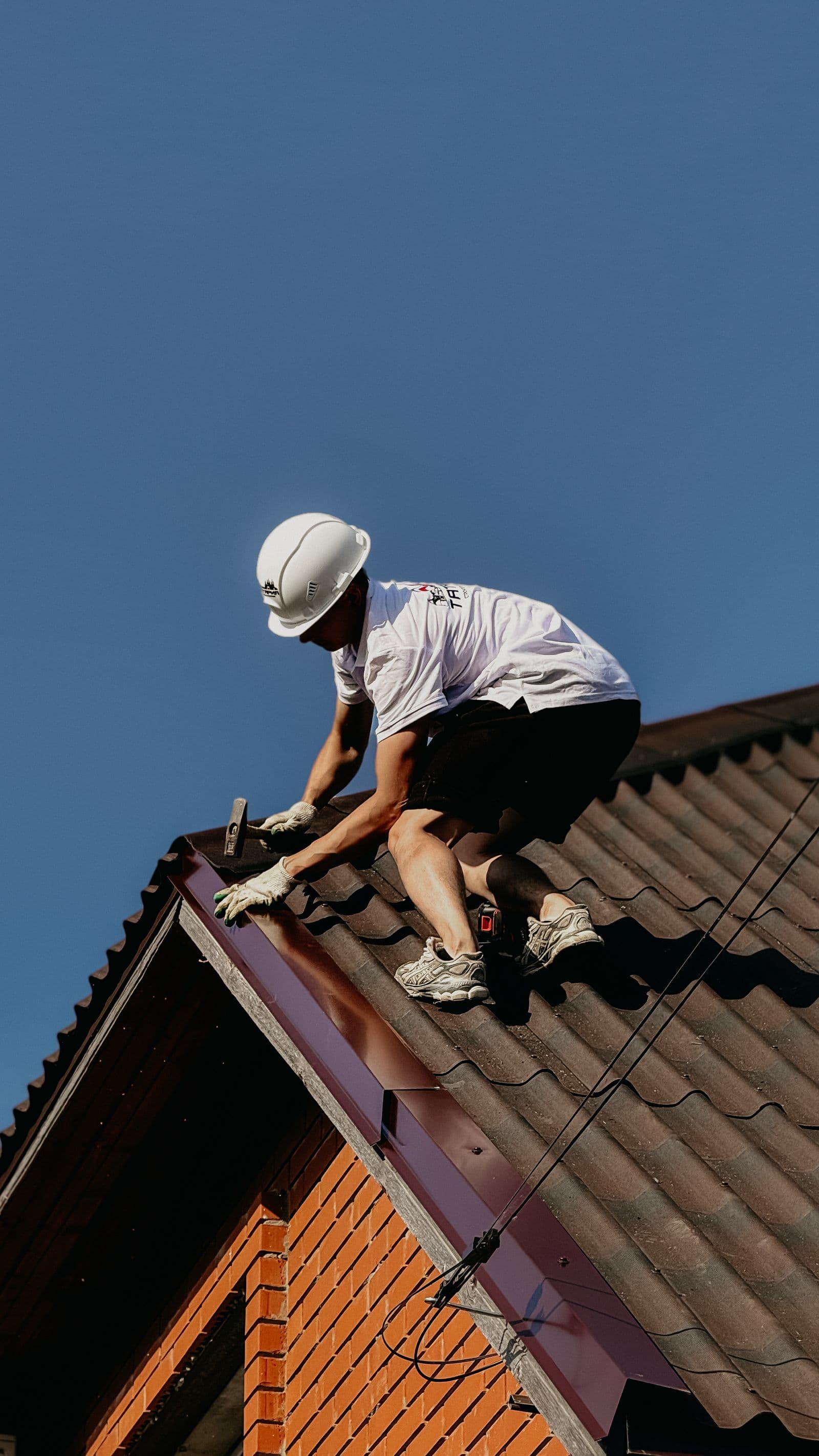
Roofs first: chimney work happens at the highest point of the house, Florida roofs are often steep, frequently tiled (tile is slippery and cracks underfoot), and for half the year the weather can turn violent by mid-afternoon. Falls are the real danger in this trade, not fire. Water second: Florida masonry problems are almost all moisture problems, and several popular DIY “fixes” make moisture problems worse. Keep those two ideas in mind and the rest of this guide sorts itself.
Green zone: what you can absolutely do yourself
From the ground, with binoculars, you can run the most valuable inspection routine in Florida: after big storms and once a month in summer, look at the cap (present? straight? ), the crown line, and the flashing, and scan interior ceilings and walls near the chimney for new stains. This habit catches the majority of Florida chimney problems at their cheapest stage, and it requires zero ladders.
At the hearth, everything is yours: scoop cooled ashes (metal can, metal lid, outside for several days), clean the firebox with a brush and shop vac, wash glass doors with the proper cleaner, and exercise the damper monthly so Florida humidity doesn’t rust it into one position. Test smoke and CO alarms. Store firewood off the ground and top-covered. Keep sprinklers from spraying the chimney base: constant irrigation water soaking into brick is a quietly common Florida self-inflicted wound.
You can also be the person who notices. Smoke behavior, new smells in summer, white staining on brick, a rusty streak below the cap. None of these require expertise to spot, only to diagnose. A homeowner who watches and calls early is worth more to their own house than any amount of amateur repair work.
Make the noticing systematic: snap a dated photo of the chimney from each side of the house once or twice a year and keep them in one album. Slow decline (a crown crack lengthening, mortar joints receding, a rust streak growing) is invisible day to day and obvious across two years of photos. It’s the cheapest diagnostic tool in this entire guide, and it also gives you a before picture if a hurricane ever makes one relevant.
Gray zone: possible, but read the caution first
Sweeping your own flue is the classic example. Brushes and rods are sold everywhere, and a physically confident homeowner with a straight, accessible flue can move soot out of it. The honest caveats: it’s far messier than the videos suggest, glazed third-stage creosote won’t come off with a consumer brush, and brushing tells you nothing about what a sweep’s trained eye would catch: cracked flue tiles, gaps, water damage. If you DIY the brushing, keep the annual professional inspection anyway; NFPA 211 recommends it yearly regardless of who holds the brush.
Replacing a simple slip-in chimney cap is mechanically easy, and physically risky, because it happens at the peak of the roof. If your roof is low-slope shingle and you’re comfortable on ladders, it’s doable on a calm, dry morning. On tile, on a two-story, or in any wind, the math changes completely: caps cost little, emergency-room visits don’t. This is a job where the pro’s fee mostly buys fall protection and experience, and that’s a fair trade.
Small cosmetic mortar touch-ups at ground level (hairline gaps in reachable joints) are gray-zone too. Use an appropriate mortar mix, not caulk, and understand you’re buying time, not fixing the cause. If joints are failing broadly, that’s repointing, and it belongs below.
And a Florida-specific caution: resist the urge to pressure-wash a dingy chimney. High-pressure water erodes mortar joints and drives moisture deep into brick that already spends the summer saturated: you can create the very leak you were trying to prevent. If algae or grime bothers you, a gentle low-pressure rinse with an appropriate cleaner is the ceiling for DIY; anything more aggressive belongs to someone who knows what the masonry can take.
Red zone: what genuinely needs a pro
Anything structural or hot-path: relining a flue, rebuilding or repairing a crown, repointing masonry at height, rebuilding a chimney top, flashing work, and any repair after a chimney fire. These jobs fail invisibly when done wrong: a bad reline or a cracked liner you didn’t spot doesn’t look dangerous, it just quietly channels heat or carbon monoxide where it shouldn’t go until the day it matters.
Anything gas: log sets, connections, valves, venting. Gas work is not a skill-confidence question; it’s a consequences question, and the consequences are leaks and CO. Leave the entire category alone.
Animal removal earns a spot here too, which surprises people. Florida flues host raccoons, squirrels, and nesting birds every off-season, and some birds (chimney swifts among them) are federally protected while nesting, so “smoke them out” is both cruel and legally fraught. Raccoons in a confined flue are a genuine bite-and-scratch hazard. The right sequence is removal by someone equipped for it, then a proper cap so the vacancy is never advertised again.
And, less obviously, leak diagnosis. Water is the great liar of Florida chimney work: it enters at the flashing and shows up two rooms away, or enters the crown and appears as a damp firebox. Homeowners who self-diagnose leaks tend to seal the place the stain appeared, which fixes nothing and hides the evidence. Finding the true entry point across crown, cap, flashing, and masonry is pattern recognition built from hundreds of wet Florida roofs, and it’s the difference between one repair and three.
The Florida special: why DIY waterproofing backfires
This one deserves its own section because it’s the most common well-intentioned mistake in the state. A homeowner sees white staining or damp brick, buys a glossy masonry sealer or paint-on waterproofer, and coats the chimney. The problem: brick and mortar need to breathe. Film-forming sealers trap the moisture that’s already inside the masonry (and in Florida there is always moisture already inside), so the wall now can’t dry outward. Trapped moisture then spalls the brick faces off and rots the joints from within, which is a worse problem than the one being treated.
Professional chimney waterproofing uses vapor-permeable repellents: water can’t soak in from outside, but vapor inside can still escape. The product choice, the prep, and fixing the actual entry point first (a sealer over a cracked crown seals nothing) are what you’re paying for. If you take one thing from this guide: never paint a Florida chimney with anything that forms a film.
How to be a smart client when you do call
Timing is a tool too. DIY-minded homeowners often call only when something visibly breaks, which in Florida means calling during a storm or a December cold snap, when everyone else is calling. Booking the professional visits in the quiet seasons (spring for sweeps and inspections, May for storm prep) gets you better scheduling and calmer pricing conversations, and it turns the pro relationship into maintenance instead of rescue.
The DIY mindset (curious, skeptical, hands-on) makes you a better customer, so keep it. Ask what the professional found and to have it shown or described specifically. Get the proposed scope and price in writing before any work starts, and ask whether the agreement includes any warranty and, if so, its terms. A good contractor welcomes questions; evasiveness about what exactly is wrong is itself an answer.
And use the division of labor this guide describes: you do the watching, the ground-level checks, the hearth care, and the early phone call; the pro does the heights, the diagnosis, the structure, and the gas. That split keeps your total lifetime chimney spend about as low as it can honestly get, which, for a company that answers its own phone, is a perfectly good outcome too.