
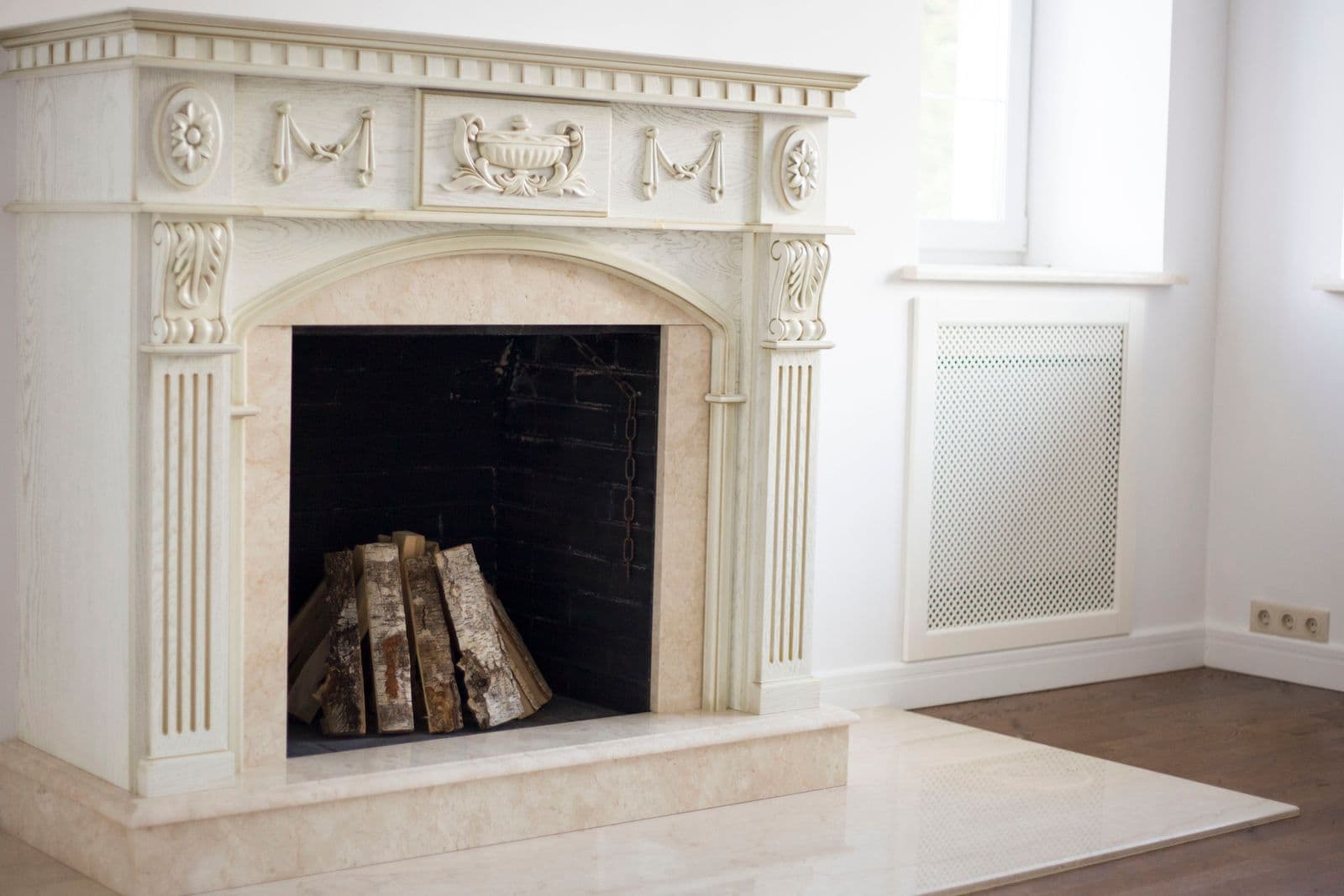

Rain coming down the chimney: what it means, and what to do first
Rain coming down the chimney almost always means the water is arriving at or near the top of the stack rather than through the roof: down an open or failed cap, through a cracked crown, or, on a prefab fireplace, through a rusted-through metal chase cover. Do not light a fire in a wet firebox, and work that short list from the top down.
Finding water in the firebox after a Florida storm is unsettling, but diagnostically it is a gift. A stain on the ceiling near the chimney could be almost anything on the roofline. Water sitting inside the firebox is different: it almost always arrived by one of a short list of routes, all of them in the chimney itself: down the open flue, through the structure at the top of the stack, or wicking through the column around it. The suspect list is short, and each suspect leaves a different signature.
The right way to work that list is from the top down, because water obeys gravity and the highest failure gets first blame. On a masonry chimney the tree runs: cap, then crown, then flashing, then the masonry itself. On a prefab fireplace (the factory-built metal unit inside a framed, stucco-clad chase that much of Florida’s housing stock uses), the top of the tree is the metal chase cover instead. And on gas appliances there is one impostor that involves no rain at all: condensation. This guide walks the tree branch by branch, with the tell for each.
First suspect: the cap, or the hole where one should be
A chimney without a cap is an open pipe pointed at the sky. Every drop that falls on the flue opening goes straight down, onto the smoke shelf behind the damper, and from there into the firebox. The signature is unmistakable: water shows up during or immediately after rain, the puddle sits roughly centered in the firebox, and during a hard storm you can sometimes hear dripping or spattering up in the flue. If leaves, twigs, or evidence of animals arrive with the water, that seals it: the flue is open to the world.
Caps also fail without going missing. A cheap builder-grade cap rusts through from the lid down, a loose cap gets shoved crooked by a named storm’s winds, and an undersized cap sheds vertical rain fine while Florida’s sideways storm rain blows straight past it. After any major storm it is worth standing in the yard and looking: a crooked or absent cap does its damage over the following weeks of daily rain, not the following minutes. The fix (a properly sized cap in a metal that survives Florida weather) is the quickest and least involved branch of this whole tree, which is exactly why it is checked first.
The crown and the smoke shelf: water you never see arrive
The crown is the concrete or mortar slab that closes off the top of a masonry chimney around the flue. Florida sun and heat cycle it daily, and eventually it develops hairline cracks: openings that look trivial from a ladder but sit horizontally, facing the rain, on the most exposed surface of the house. Water entering a cracked crown does not drop cleanly into the firebox. It soaks into the masonry around the flue and migrates downward through the structure, which is why crown leaks feel sneaky: the firebox gets damp hours after the rain, or the next morning, with no obvious drip to catch.
Much of that water lands on the smoke shelf, the hidden ledge behind the damper where the firebox transitions into the flue. Water pools there, steeps in old soot, and then seeps past the damper as a dark slurry. So the crown-leak signature is distinctive: delayed dampness rather than an instant puddle, rust blooming on the damper and its hinges, black streaks running down the back wall of the firebox, and a musty, ashy smell after rain. That smell is wet soot, and it is often the first symptom homeowners notice. The fix path runs from sealing a lightly crazed crown to rebuilding a badly cracked one, and it is usually paired with a cap so the flue and the slab get protected together.
Flashing and saturated masonry: the slow, sideways routes
Flashing (the layered metal seam where the chimney passes through the roof) usually announces its failure on the ceiling, not in the firebox. But not always. On some builds, water that gets past lifted or corroded flashing follows the chimney’s outer face down inside the wall and surfaces low, at the firebox surround or the edges of the hearth. The tell is location: dampness at the sides and margins of the firebox rather than a centered puddle, often with a matching stain where the chimney meets the ceiling or wall above.
The last masonry branch is the column itself. Brick and block are porous, and a Florida summer keeps them working: an afternoon storm soaks the stack, the humid night prevents it from fully drying, and the next afternoon reloads it. A chimney that stays saturated eventually lets water finish the trip, weeping through to the inside during long rain events, or the day after one, with chalky white efflorescence staining the masonry as the calling card. The fix here is sequenced: repair the joints and any spalled brick first, then apply a breathable waterproofing so the masonry sheds new rain while still releasing the moisture it already holds. Sealing saturated masonry with the wrong product traps the problem inside.
Prefab fireplaces: check the chase cover, not the crown
A large share of Florida fireplaces are not masonry at all. They are factory-built metal fireboxes venting through a metal flue inside a framed chase, a hollow column finished in stucco or siding to match the house. There is no crown up top; the chase is closed by a metal pan called a chase cover, with the flue pipe passing through it. On builder-grade installations that cover is typically galvanized steel, and galvanized steel in Florida’s rain and humidity has one long-term hobby: rusting. Near the coast, salt air accelerates the process considerably.
A failing chase cover advertises itself. Rust-colored streaks bleeding down the stucco or siding below the top of the chase are the classic exterior tell. Flat covers without a proper pitch hold standing water after every storm, and that puddle quietly eats through the pan (often at the seam around the flue pipe) until rain drips onto the top of the metal firebox and finds its way inside. Rust stains or orange-tinted water inside a prefab firebox point here first. The fix is replacement, not patching: a new cover in stainless steel or another rust-resistant metal, bent with a pitch so water runs off, with a proper drip edge and a sound storm collar where the pipe penetrates. Done right, it is a once-in-a-very-long-while repair instead of a recurring one.
Gas fireplaces: when the leak is not a leak
One branch of the tree involves no rain at all. Burning gas produces a surprising amount of water vapor, and that vapor condenses on any surface cool enough, including the inside of a flue that is too large for the appliance venting into it. This is common where gas logs or an insert were retrofitted into an old flue sized for a wood fire: the small gas appliance cannot keep that big, cool column warm, the exhaust cools below its dew point on the way up, and the moisture rains back down inside the flue. The result is dampness in and around the firebox that never quite tracks the weather.
The signature: moisture that appears after running the fireplace rather than after storms, damp or flaking surfaces inside the flue, and a persistent wet smell in a fireplace that sees regular use. It matters beyond the nuisance, because this condensate is mildly acidic and works on mortar joints and metal components from the inside. The durable fix is a correctly sized liner for the gas appliance, so exhaust stays warm enough to exit as vapor instead of condensing, a job that also gets checked whenever a pro is diagnosing mystery moisture on a gas unit. If your damp fireplace is gas-fed, say so when you call; it reroutes the whole diagnosis.
Why Florida downpours make small openings act big
The physics of Florida rain explain why a “minor” opening at the top of a chimney produces a startling amount of water at the bottom. A flue opening roughly a foot square catches every drop that falls on it, and an inch of rain on a square foot is more than half a gallon of water, delivered straight down the pipe. A strong summer thunderstorm can drop an inch or more in well under an hour, and in wet season those storms arrive nearly daily. A missing cap is not a drip problem; it is a gallons-per-week problem.
Wind finishes the job. Florida’s storm rain travels sideways on thunderstorm gust fronts and tropical systems, which means it probes surfaces vertical rain never touches: the underside of a cap that is too short, the horizontal hairline in a crown, the lifted edge of flashing, the seam of a chase cover. And between storms, the humidity denies everything a real drying window, so masonry that took on water yesterday is still damp when today’s storm reloads it. In drier climates a small opening leaks occasionally and dries out; on Florida’s schedule it leaks repeatedly and never dries, which is why small openings here behave like big ones and why the damage timeline runs faster than homeowners expect.
The fix path: diagnose top down, repair in the right order
Because the branches of this tree get fixed in completely different ways, the diagnosis has to come before the repair, and it has to run in order. Waterproofing the brick does nothing if the crown is cracked above it; a new cap does not help a prefab whose chase cover has rusted through; sealing a flue will not stop gas condensation. A qualified chimney professional works from the top down (cap, crown or chase cover, flashing, masonry) and matches what they find against your symptoms: when the water appears, where in the firebox it sits, and what color it carries. Your observations are real evidence; note them before the visit.
These are different sizes of job, which is why the source should be assessed before you approve a repair. Cap, crown, chase-cover, flashing, and masonry work vary with measurements, materials, access, and condition. A technician can visit the property and give a free estimate, with no deposit required for that visit. Do not use a wet firebox.