
Commercial chimney repair: one stack, several flues, several households
What separates commercial and multi-family chimney repair from residential work is rarely the masonry itself. A cracked flue tile fails the same way behind a restaurant as it does on a ranch house. What changes is that one stack usually carries several flues, those flues serve people other than the one who called, and everything above the roofline happens on a building that stays occupied.
The complaint and the defect are rarely in the same unit
On a single-family chimney, whoever smells the smoke usually owns that flue. On a stack serving townhomes or apartments, that link breaks. Flues run side by side, separated by a thin masonry divider. Once that divider loses mortar or cracks through, exhaust from one appliance can arrive in a neighbor's firebox. The unit that phones it in is often the receiving end, not the owner of the fault.
The quieter version is the idle flue. In Florida multi-family buildings, a share of residents never light the fireplace. An unused flue generates no complaints whatever condition it is in, while humidity and storm rain still open the crown, cap, or divider. So the reported fault is a starting point, not a complete scope.
Diagnosis steps: map before repair
Diagnosis on a shared stack starts as a mapping exercise. Count the terminations at the crown, then count the appliances underneath. Those two numbers routinely disagree. An extra termination often means an abandoned flue still open at the top and taking rain into the masonry. Fewer terminations than units means something is shared.
Useful ground-level notes before the visit: which unit first noticed smoke or a ceiling stain, whether other fireplaces on the stack sit idle, and whether the roof is membrane or shingle. Call (754) 328-2421 with the property address and those clues. The free technician estimate visit can itemize work flue by flue once the map exists.
Florida climate on multi-flue stacks
Afternoon storms and wind-driven rain load the crown and multi-flue cap as one piece of weather. Coastal salt attacks metal caps and fasteners. Inland humidity keeps mortar in divider walls damp between storms, so a thin joint between flues fails sooner than homeowners expect. Idle units do not pause that cycle. Name whether the stack faces the coast or an inland lot when requesting the visit.
Working on an occupied roof
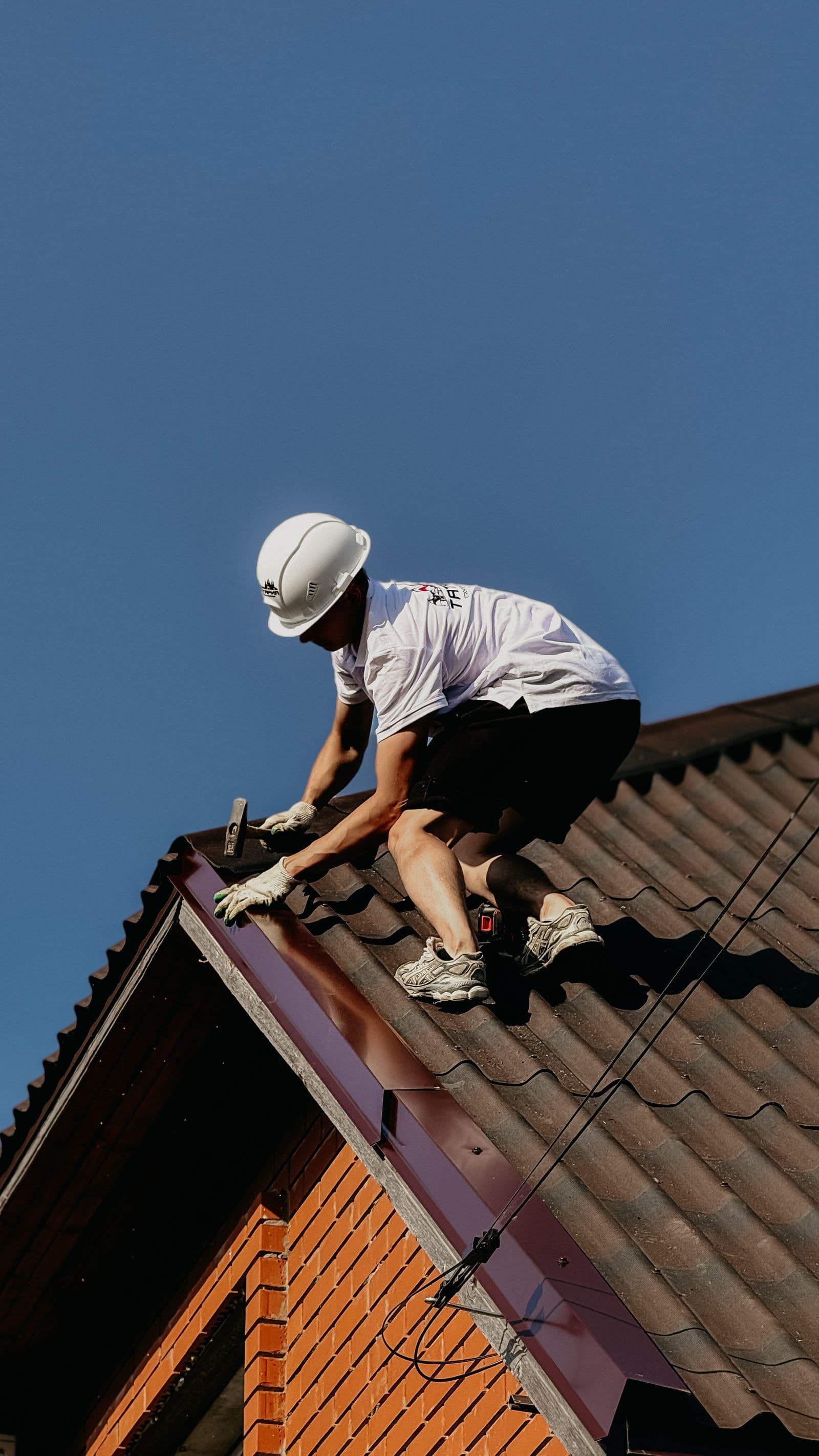
On a house, reaching the chimney is often a ladder question. On an occupied building it is a logistics question: staging may land on parking, an entry walk, or a breezeway, and debris has to be contained because a doorway sits below. across the service area, many low-slope commercial and multi-family roofs are membrane or modified bitumen rather than shingle; those surfaces can be damaged by a ladder foot or falling brick. Ask the building owner or roof contractor about access and fastening restrictions before anyone climbs.
Which page: this one, commercial cleaning, or residential repair
If nothing has failed and the need is soot removed from a set of flues on a schedule, that is planned multi-flue cleaning rather than this repair page — start from chimney sweep and describe the building. If the chimney serves one home and the flue that misbehaved is the flue you use, start at chimney repair. This page is the case in between: something on the stack has failed, it serves more than one household, and reaching it means working over occupied entries. The free technician estimate visit is the next step. Call (754) 328-2421.