
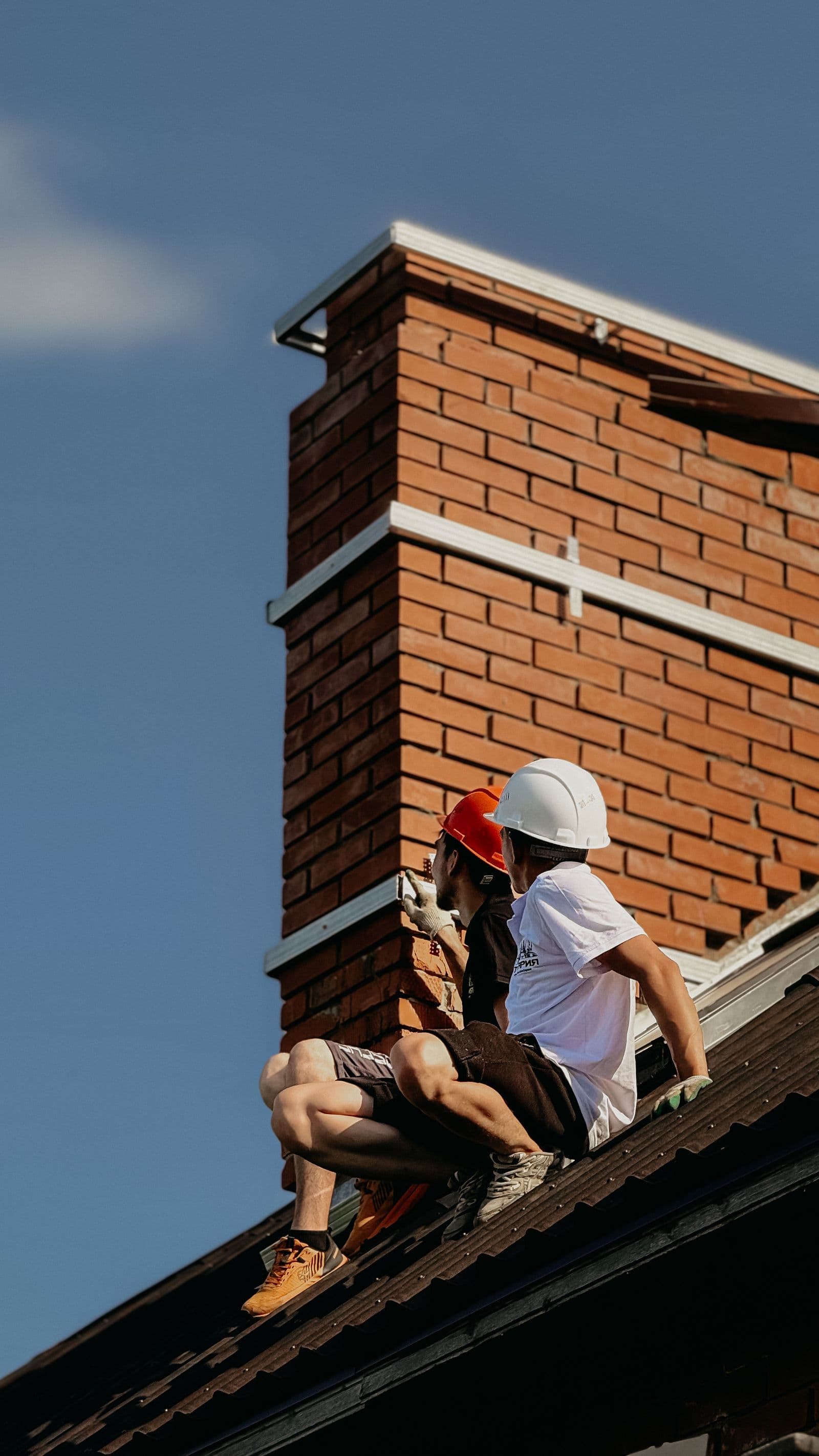
Two Ways to Build One, and What Decides It
A masonry chimney is built on site and stands on its own footing, a poured pad sized to spread the weight of the stack over enough soil to hold it. It is separate from the house slab, which is the point and also the risk: two supports settling at different rates is what puts a lean in a chimney years later. across the service area the bearing soil is largely sand, which holds load only through friction between grains: saturate it under one edge of a new footing and that edge loses capacity while the house alongside stays put.
Sizing the footing and steering roof runoff away from it are the same job.
The other path is a listed factory-built system: a manufactured insulated chimney assembled from sections inside a framed chase, a wood box built onto the house and finished in siding or stucco to match it. It weighs a fraction of masonry, so the load goes into the existing framing instead of into new concrete. What you give up is improvisation: the system was tested as a set, and its components have to stay the ones the manufacturer listed.
Clearance to Combustibles, and the Firestop at Each Level
A chimney gets hot, and nearly everything it passes on the way up is wood. The protection is an air gap. On a masonry chimney the framing is held off the brick, headers framed around the opening so no joist or rafter bears on the stack or is built into it, and the gap stays open the full height. On a factory-built system the gap is stated by the manufacturer and measured from the outer wall of the pipe. Neither may be packed with insulation, because the air moving in it is what does the work.
At every floor and ceiling the chimney passes through, that open gap is also a hole running from one story into the next. A firestop closes it: a noncombustible piece fitted at each level that seals the opening and, on a metal system, holds the pipe centered so the gap stays even all around. Leave it out and the chase becomes a flue of its own, giving a fire downstairs a clean vertical path to the attic. It is the least visible part of the install and one of the first things an inspection looks for.
The Roof Penetration Is Two Pieces of Metal, Not a Bead of Sealant
Where the chimney comes through the roof plane, the flashing is two overlapping parts, not one. Base flashing goes down with the roofing and turns up against the chimney; counterflashing laps over it, cut into a mortar joint on a masonry stack, or taking the form of a storm collar on a metal system. The two are never fastened together, by design: house and chimney move on their own schedules, so a single rigid seal across the joint tears itself open. Sealant finishes a top edge, it does not make the connection.
A wide chimney on a slope also gets a cricket, a wedge framed onto the uphill side so runoff never stands against new masonry. It all goes in as the roofing goes on, which is why the chimney and the roof get scheduled together.
Where the Chimney Finishes, and Why That Is Not a Style Choice
The reason is what air does over a roof. Wind climbing a slope separates near the ridge and rolls into a turbulent pocket beyond it, and a flue ending inside that pocket has pressure shoved down it in exactly the weather that matters. The second reason is plainer: embers leaving the top should land somewhere other than the roof. Florida sharpens both. A single-story house gives the flue little height indoors, so most of it has to be built above the roof, and a stack standing that clear in a hurricane wind zone is a lever on everything below.
This Page, or One of the Two Beside It
Three services sit close together here, and it is worth knowing which one you are shopping. If you have already picked the appliance and the venting is whatever that unit requires, you want fireplace installation. If you already know the answer is a listed insulated metal chimney, that is the metal chimney installation page. This one comes before both: there is no flue in the house yet, and the first decision is whether the new one is masonry on a footing or a listed system in a framed chase. Call (754) 328-2421 for a free estimate visit.
Free estimate visit
Chimney Repair Service is family-owned and proudly American-owned. A technician can visit the property and give you a free estimate. If you approve paid work, a deposit is required. If you later cancel after paying the deposit, the company keeps the deposit.
Chimney Installation availability in your area
Chimney Installation should be scoped at the property. A technician reviews the request and accessible condition before paid work, materials, or formal deliverables are proposed.
For chimney installation, the proposed scope depends on the existing structure, appliance, venting, local exposure, and applicable requirements. Weather exposure, moisture, system type, materials, and access vary by property. The technician assesses accessible conditions at your address before a scope is proposed.
How chimney installation pricing works in your area
Chimney Installation does not have one fixed sitewide price. These are the property-specific factors that can change an estimate:
- whether the proposed work is a partial rebuild or a larger structural scope
- chimney height, roof pitch, staging, access, and safe work conditions
- the existing structure, appliance, liner, roof connection, and components that can remain
- materials compatible with the observed system and conditions at the address
- permit, engineering, and inspection requirements confirmed with the jurisdiction
A technician can look at the chimney or fireplace and give you a free estimate for the requested service.
How to request chimney installation
Call (754) 328-2421 or use the estimate form. The company confirms the address and current availability. A technician can then visit the property and give you a free estimate.
If you approve paid work, a deposit is required. If you later cancel after paying it, the company retains the deposit.
Chimney Installation for your area's varied housing stock
A chimney installation can differ between older masonry construction and a newer framed or factory-built system. The structure, roof connection, venting, exposure, and applicable requirements must be assessed before a scope is approved.
Choosing a chimney installation contractor
When comparing chimney installation companies or contractors, ask what the estimate visit includes, what condition the recommendation addresses, and what happens before paid work is scheduled.
Chimney Installation in your area
Coverage and availability depend on the service address and requested scope. If you are not sure the company covers your address, call (754) 328-2421 and the company will check before confirming an appointment.
The estimate visit is free.
Questions to ask before booking chimney installation
Call (754) 328-2421 or use the estimate form to request availability and a free estimate visit for chimney installation.
- Family-owned and proudly American-owned company.
- Coverage and availability confirmed for the service address.
- Free estimate visit.
- Deposit policy: approved paid work requires a deposit, which is retained if the customer later cancels.