

How a chimney rebuild is priced
Every rebuild quote is really an answer to one question: where does the demolition stop? Relaying the courses above the roofline is a contained job. Taking the stack down to the roof plane and rebuilding from there is a larger one. Going down to the firebox is larger still, because it crosses into the protected masonry inside the house. Nothing about that ladder is arbitrary: the depth of deterioration draws the line. Scattered spalled faces sit at the shallow end; joints you can rake out by hand, or units shedding their faces, push it down.
What the pro finds on site moves the tier more than anything visible from the yard. Storm surge drives salt into the base courses of a coastal stack, and contaminated masonry keeps failing under new mortar, so that one finding can push the scope deeper than the view from the ground suggested. Material grade matters too: matched brick, or matched stucco on block, quality mortar, and stainless rather than galvanized metal up top. A new crown and cap belong in the same scope: the staging is already up, and buying that top work as a separate trip later means setting the access up all over again.
Read the quote for what it names. A complete one states where the demolition stops and why, lists the brick or block and the mortar, includes the crown, cap and flashing, and prices access and debris removal as their own lines. A vague one gives a lump sum for "chimney rebuild" and leaves the stopping point unwritten, which is exactly where a suspiciously low bid hides. The corner that gets cut on this job is depth: relaying the top courses over masonry that is still failing underneath, so the new work sits on the problem it was bought to remove.
- Where the demolition stops (above the roofline, at the roof plane, or down to the firebox) is the single biggest lever on the price.
- Ask what happens if sound masonry turns up lower than expected, and how that change gets priced and approved before the crew keeps going.
- Confirm the crown, cap and flashing sit inside the same scope; rebuilding a stack under a failed top leaves the top work to come back around as its own job.
- Near the coast, ask whether the base courses were checked for salt contamination and whether the specified metal is stainless.
- Get the stopping point, proposed materials, debris-removal responsibility, and job terms in writing before work starts.
One word, two very different jobs
When a pro says a chimney needs to be rebuilt, that can mean anything from re-laying the top few courses of brick to taking the entire structure down to its footing and starting over. The price difference between those two jobs is enormous, which is why quoting a chimney rebuild sight-unseen is impossible and why the ranges you find online seem to contradict each other. They are describing different jobs that happen to share a name.
The dividing line that matters most is the roofline. The section of chimney above the roof is the part that takes all of Florida’s weather: the daily summer soakings, the wind-driven rain, the sun that cooks moisture out of saturated masonry every afternoon. It is also the part a crew can dismantle and re-lay without touching the living space below. Everything above the roof deck is, structurally speaking, a self-contained stack sitting on the sound masonry beneath it. That is why the overwhelming majority of Florida rebuilds are partial rebuilds: the weather destroys the top of the chimney long before it reaches the protected masonry inside the house.
The partial rebuild: above the roofline
A partial rebuild means dismantling the stack from the top down until the crew reaches masonry that is still sound (usually somewhere between a few courses and the roof deck), then re-laying new brick on that solid base, pouring a new crown, and re-doing the flashing where the rebuilt stack meets the roof. Done properly, the job replaces every component that Florida weather attacks hardest in a single visit, which is exactly why it is often the smarter buy than a string of patches on a stack that has already failed.
What a specific partial rebuild comes to depends on how many courses come down, whether the crown and flashing are included (they should be: the staging is already up), and how hard the brick is to match. On an older home with discontinued brick, sourcing a close match takes real legwork, and the most prominent masonry on the house is a poor place to economize on appearance. The free estimate is what fixes the number, because the true depth of the damage only shows once someone has probed the joints and courses up close.
The full rebuild: when the whole stack comes down
A full rebuild (demolishing the chimney down to the firebox or the foundation and reconstructing it) is a different order of project. It is rare, and it is reserved for chimneys that have failed structurally from top to bottom: a stack that is leaning, masonry that has separated from the house, or damage that runs the full height rather than concentrating at the top. It is the most expensive work in the trade by a wide margin, and quotes for it spread far apart because the job is really several trades in one: demolition and debris removal, masonry reconstruction, a new crown and flashing, and often interior finish work wherever the chimney passes through the house.
Full rebuilds also bring paperwork that partial rebuilds usually escape. Structural work at this scale typically involves permits and inspections, and the requirements vary by municipality: what your city or county asks for is a local question, so verify with your building department or let the pro handling the job walk you through what applies at your address. Budget time for that process as well as money: unlike a partial rebuild, which is commonly done in a day or two, a full rebuild is a scheduled project with stages.
What actually drives the number
Height and access come first. A short stack on a gentle single-story roof is a fundamentally cheaper job than a tall chimney rising past a steep two-story roofline, because everything (demolition, brick, mortar, crew time) moves up and down that access route, and taller work needs proper staging or scaffolding rather than a ladder. Two rebuilds using identical materials can land far apart on price purely because of where the chimney stands.
Materials are the second driver. Brick matching on older homes, as noted, can add real cost. Florida’s housing stock adds a wrinkle of its own: many chimneys here are not exposed brick at all but concrete block finished in stucco, matching the CBS construction of the house. Rebuilding one of those is block-and-stucco work rather than brick-laying, with its own cost profile, and the stucco finish has to be matched and cured properly or the repair announces itself from the street. Finally, the metal components that top off the rebuild (cap, chase cover, fasteners) should be stainless rather than galvanized anywhere near the coast, a small premium that prevents the new work from starting to corrode within a few seasons.
How storm damage changes the picture
Most chimney damage in Florida accumulates gradually, which gives homeowners the luxury of scheduling. Hurricanes remove that luxury. Hours of wind loading against the tallest, most exposed masonry on the house is precisely the force that turns a weakened stack into a shedding one, and once a storm has cracked or shifted the upper courses, the rebuild stops being a someday project. An open or broken stack takes on water with every afternoon storm that follows, and each soaking pushes damage deeper into masonry that was sound before the hurricane.
Storm damage also changes the money conversation. Sudden, storm-caused damage is often a different animal for insurance purposes than gradual deterioration, and a written, itemized estimate documenting what the storm did (as distinct from what age and weather were already doing) is exactly the paperwork that conversation runs on. If a named storm has come through, get the chimney looked at even if it appears fine from the yard: shifted courses and cracked crowns are hard to spot from the ground and easy to spot from the roof, and a free estimate costs nothing either way.
Rebuild or repair: where the line sits
The decision comes down to which part of the masonry has failed. Mortar is the sacrificial layer (it is designed to weather first so the brick does not), and as long as the failure lives in the joints while the bricks stay sound, repointing and crown repair can genuinely save the stack and keep the job out of the rebuild tier entirely. That window is real, and a trustworthy pro will tell you when you are still inside it.
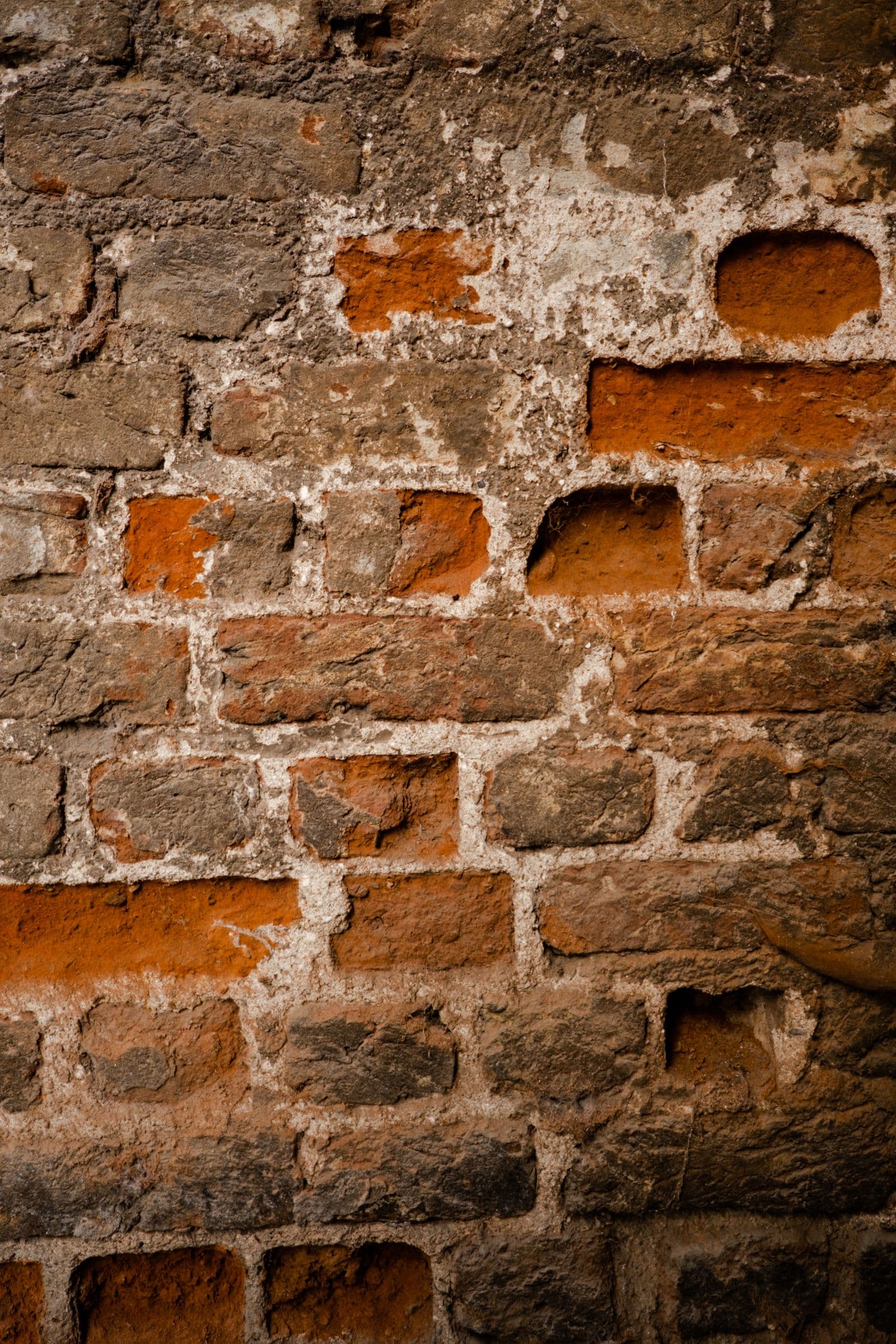
The window closes when the bricks themselves go. Faces spalling off across multiple courses, bricks that have gone soft and saturated at the core, courses that rock under hand pressure, or a stack that has started to lean. At that point, new mortar is being packed around failed brick, and every patch is a payment on a repair that cannot hold. The honest arithmetic is cost per year of life gained: a rebuild that resets the clock on the entire exposed stack beats a series of patches that each buy a season or two. When two or three of those signs show up together, the rebuild is usually the cheaper path over any horizon longer than a year.
Rebuilding to coastal spec
If your chimney lives near the Atlantic or the Gulf, the rebuild should be built for the environment that destroyed the original. Salt air is the reason so many coastal stacks fail young: chloride carried on the breeze settles into porous masonry, and salt crystallizing inside joints and brick pries them apart from within while it corrodes every piece of ordinary steel on the chimney. Rebuilding a coastal chimney with the same materials and calling it done just restarts the same clock.
Coastal spec means stainless for every metal component (cap, chase cover, fasteners), quality mortar mixed and tooled for full, sealed joints, and a breathable water repellent applied once the new masonry has properly cured, so the stack sheds salt-laden moisture instead of drinking it. It also means taking wind exposure seriously: an oceanfront stack catches hurricane wind with nothing to break it. None of this transforms the price (it is a modest step up in materials), and it is what separates rebuilding a chimney from rebuilding one that survives where yours stands.
Getting to a real number
The path to an accurate rebuild price is the same as for any major masonry work: a free estimate from someone who has actually been up on the roof. A good estimate for a rebuild is itemized (demolition, brick or block, crown, flashing, staging) so you can see where the money goes and whether anything can be phased. It should also state plainly where the rebuild will stop, because "down to sound masonry" is the honest answer and a specific course count promised from the ground is a guess dressed up as precision.
Treat outlier bids carefully in both directions. A rebuild quote far below the others may cover a narrower scope rather than the same rebuild. Ask the qualified chimney professional to explain what was found, why repair or rebuilding is proposed, and what the price covers. Any warranty applies only if its terms appear in the job agreements. On a job this size, that paper trail matters.