

Spalling, in plain language
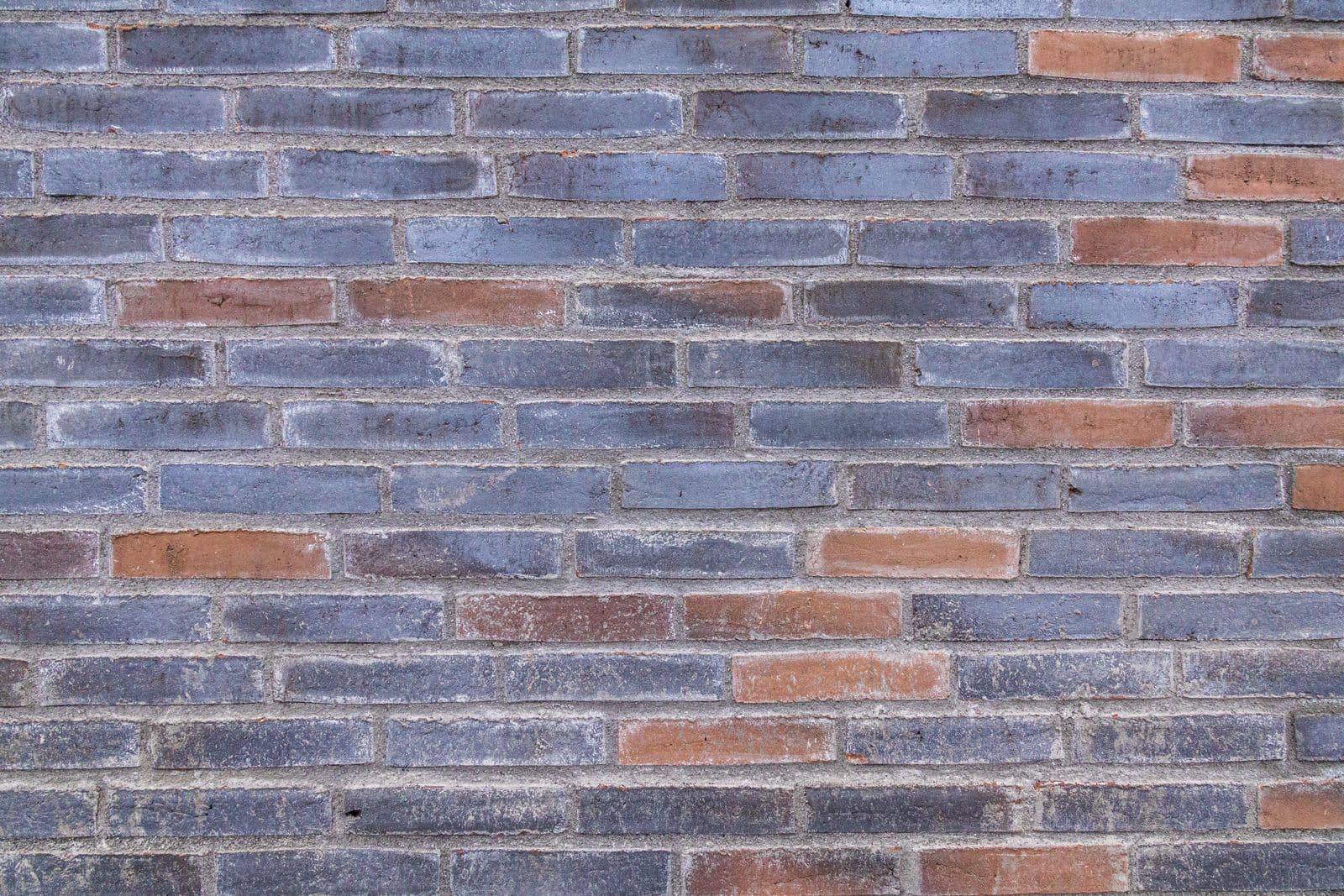
Spalling is what masons call it when the face of a brick (the hard outer skin) flakes, chips, or pops off in a sheet, leaving a rough, pitted crater behind. You will often find the evidence before you spot the damage: reddish-orange flakes and shards collecting on the roof, in the gutters, or on the ground around the chimney’s base. Look up and you will see bricks that appear scooped out, crumbly, or strangely pale where the face has gone and the softer interior is showing.
The face matters far more than its thickness suggests. When a brick is fired, the surface develops a dense, hardened skin, the most weather-resistant layer the brick has. Everything behind it is softer and more porous. Once the face is gone, the brick has lost its armor: the exposed core drinks water faster, weathers faster, and sheds material faster. That is why spalling is self-accelerating. A brick that has just started to spall is not a brick with a cosmetic scratch; it is a brick that has begun to fail, and the pace only picks up from there.
The mechanism: water goes in slowly and comes out violently
Every spalled brick tells the same story: water got into the masonry and then left through the face. Brick and mortar are porous, laced with microscopic channels that pull moisture in through capillary action. In Florida, the supply side of that equation never rests: near-daily summer storms, wind-driven rain, year-round humidity, and any leak at the crown, cap, or flashing keep feeding water into the stack. The masonry stores it deep in its pores, and the only way out is evaporation at the surface.
Here is the destructive part. Water moving through masonry does not travel clean. It dissolves minerals along the way, mostly salts from the mortar and the brick itself. When that water reaches the face and evaporates, the salts stay behind and crystallize. Crystallize on the surface and you get efflorescence, the chalky white staining that looks bad but is mostly a messenger. Crystallize just beneath the surface (which happens when the face dries faster than moisture arrives from behind) and the growing crystals act like thousands of microscopic wedges, prying the face away from the body of the brick. Each wet-dry cycle drives the wedges a little deeper, until one day a section of face simply lets go.
Why Florida spalling is a humidity story, not a freeze story
The familiar cold-climate version of spalling starts when water soaks into brick and freezes. In Florida, persistent humidity, repeated summer storms, and rapid surface drying can damage masonry even without that same freeze pattern. The mechanism differs, but the visible result can look similar: a damp core and faster-drying face concentrate stress near the surface.
Along the coasts, the engine gets extra fuel. Within a few miles of the water, humid air carries dissolved sea salt that soaks into the masonry from outside, adding to the salts already being dissolved from within. That is why beachside chimneys spall visibly sooner than their inland twins: the same disease with more of the active ingredient. Hurricane season contributes too: hours of wind-driven rain during a named storm can push water deeper into a chimney than a year of ordinary weather, and the spalling that shows up months later is often traceable to that one saturation event.
The one part of the state where ice does join the story is the Panhandle. From Tallahassee westward, a genuine hard freeze arrives a few times each winter, and it hits masonry that Florida’s humid season has already loaded with moisture. A northern chimney enters winter relatively dry; a Panhandle chimney enters its rare freeze soaking wet, so each freeze does outsized damage. Everywhere else in Florida, though, if your chimney is spalling, moisture and salt did it without any help from the cold.
Early stage versus advanced: reading the damage
Early-stage spalling is subtle. A fine web of hairline cracks on a few brick faces. Thin flakes (think potato-chip thickness) lifting at the edges or collecting below. Efflorescence blooming and returning after rain, which tells you water is actively moving through the masonry. At this stage the bricks are still structurally sound; they have lost skin, not body. This is the stage where the least invasive fixes still work, and it is also the stage almost nobody notices, because it is happening thirty feet up and the flakes are small.
Advanced spalling announces itself. Whole faces gone from multiple bricks, leaving deep, crumbly craters. Bricks that look shorter than their neighbors because they have lost real depth. Mortar joints failing around the damaged bricks, since water moving through exposed cores attacks the joints from behind. In the worst cases, bricks loosen enough to shift or fall, and the top courses of the stack, which take the most weather, begin to rack or lean. At that point the conversation is no longer about protecting bricks; it is about replacing them, and possibly about rebuilding the section of chimney they belong to.
A practical way to judge where you are: count and probe. A handful of affected bricks with faces mostly intact and firm cores is early. Widespread face loss, soft or sandy material where you would expect hard brick, or any movement when a brick is pressed is advanced. If you cannot get close enough to tell (most people sensibly cannot), that is exactly the question a chimney inspection answers.
The other culprits worth ruling out
Weather is the engine of Florida spalling, but two other causes show up often enough to check. The first is a past repair done with the wrong mortar. Mortar is designed to be the softer, sacrificial material. When a previous repointing job packed modern, extra-hard mortar into an older chimney built with softer brick, the system reverses: the rigid joints stop absorbing stress and moisture movement, and both get pushed into the brick faces instead. The telltale is spalling concentrated on bricks bordering obviously newer, harder mortar. The second is the brick itself: salvaged brick, interior-grade brick, or simply a soft batch will spall in a climate this wet no matter how good the workmanship around it was.
And always look above the damage. Spalling clustered near the top of the stack usually points to water entering from overhead: a cracked crown, a missing or undersized cap, or a failed chase cover letting rain pour into the masonry from above, saturating it far faster than sideways rain ever could. Spalling low on the chimney, near the roofline, often traces to failed flashing holding water against the base. This matters because the water source has to be fixed first: replace bricks under a leaking crown and you have installed fresh bricks into the same waterfall that killed the old ones.
Repair paths, from lightest touch to full rebuild
The right repair depends entirely on the stage, which is why a proper look comes before any work. For early-stage spalling on structurally sound brick, the play is to stop the water and let the masonry dry out: repair whatever is admitting water (crown, cap, flashing, failed joints) and then apply a breathable, vapor-permeable waterproofing treatment. The breathable part is not a detail; it is the whole point. The right treatment blocks new liquid water from soaking in while letting the moisture already inside the masonry escape as vapor, which slows the salt-crystallization engine at both ends. A film-forming sealer does the opposite (more on that below).
Once faces are gone and cores are exposed, sealing preserves damaged bricks rather than restoring them, and the honest fix is replacement. A pro cuts out each spalled brick, cleans the pocket, and lays in a matching brick, matched for hardness and porosity, not just color, for the same reason mortar has to be matched: pairing hard new material against soft old material just relocates the failure. Scattered replacement works while the damage is scattered. When spalling has spread through whole courses, when the top of the stack has deteriorated broadly, or when bricks have loosened, replacing them one by one stops making sense and a partial rebuild (typically from the roofline or some sound course upward) becomes the durable answer.
Those three paths are genuinely different sizes of job, and which one you are on is decided by the masonry rather than by preference. Stopping the water and treating sound brick is the lightest of them. Cutting out and relaying bricks that have lost their cores is heavier, and it scales with how many bricks are actually gone rather than how many look bad. A partial rebuild is heavier again, and it moves with how high on the stack the deterioration reaches and how hard the chimney is to reach and stage. The honest number for your chimney comes from a free estimate after someone has actually probed the masonry. Spalling you can see from the driveway is rarely the full extent of it.
Why painting over spalling backfires
Painting a spalling chimney is the most tempting wrong move in Florida masonry, because for a few months it works: the chimney looks uniform and fresh, and the flaking seems to stop. But standard exterior paint is a film. It seals the brick faces, and the moisture load already inside the masonry (plus whatever keeps entering through the unfixed crown, joints, or flashing) can no longer escape by evaporating through the surface. The water table inside the brick rises, the salt wedging continues behind the paint where nobody can see it, and pressure builds at exactly the layer that was already failing.
The result is predictable: the paint blisters and peels, usually taking more brick face with it than would have been lost otherwise, and the chimney comes out of the experiment worse than it went in: still spalling, now wetter, and wearing a failing coat of paint that must be stripped before real repair can happen. If the goal is protection, the answer is the breathable waterproofing described above, which is invisible and lets the masonry exhale. If the goal is looks, fix the spalling first; paint over a moisture problem is a countdown, not a finish.
What to do this week if your chimney is shedding flakes
Start from the ground. Walk around the chimney and collect what you find: brick flakes and shards near the base or in the gutters confirm active spalling. Step back, use binoculars if you have them, and note where the damage clusters: top of the stack points at the crown and cap, low near the roof points at flashing. Take photos. In a climate that runs the damage cycle as fast as Florida’s, a photo from today is the baseline that makes next season’s comparison meaningful.
Then get eyes on it that can actually probe the masonry. The distinction that decides everything (faces failing versus cores failing) cannot be made from the driveway, and it is the difference between a sealing job, a brick-replacement job, and a rebuild. A qualified chimney professional can make that call, explain it in plain language, and put the fix in writing as a free estimate stating the proposed price. The one thing spalling never does in this climate is wait: every wet season the exposed cores drink more, and the repair that would have been modest this year is rarely modest two years on.