
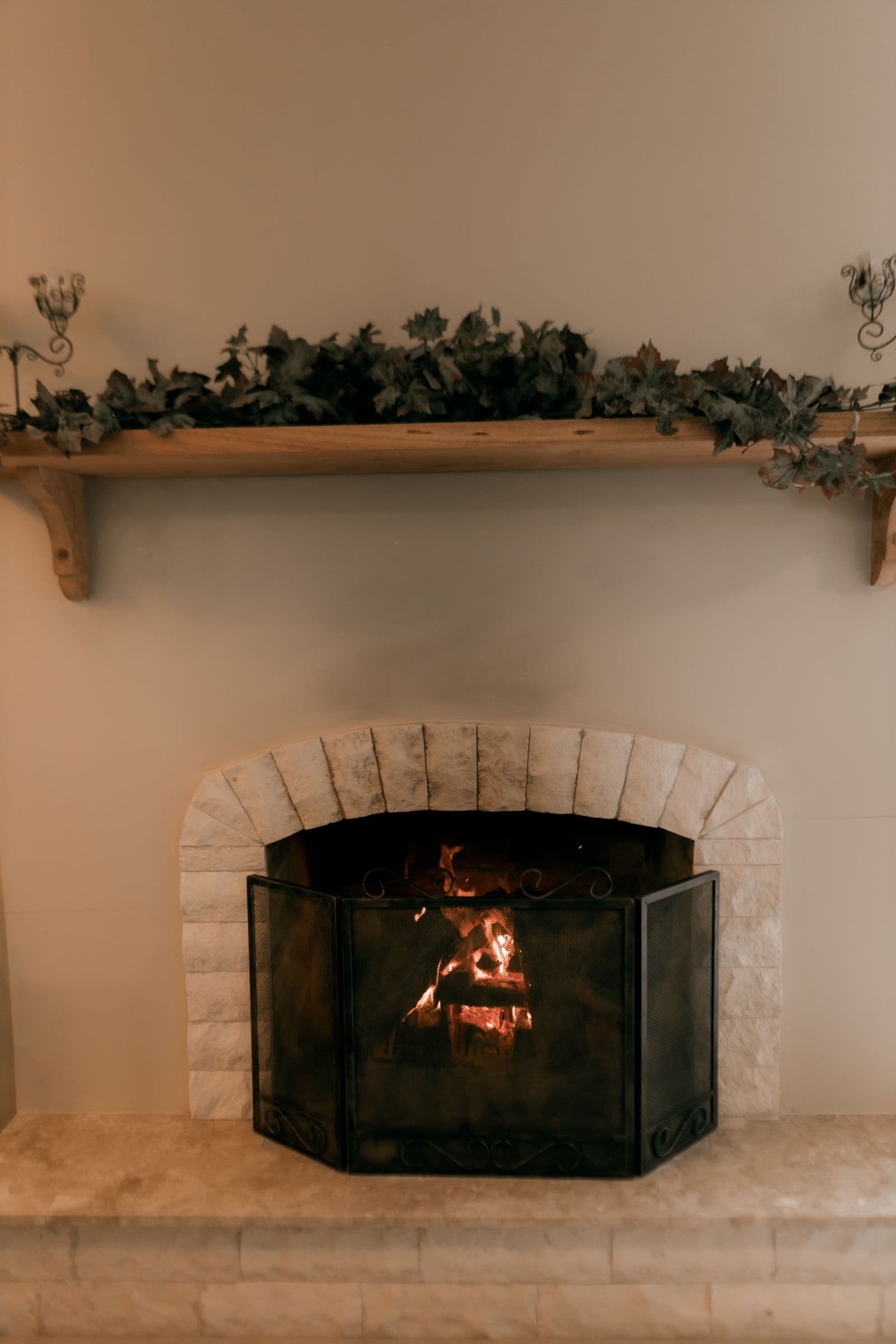

What smoke chamber parging is, and where it happens
Smoke chamber parging is the repair that coats the inside of the smoke chamber with a smooth layer of heat-rated mortar, turning a rough, stair-stepped interior into a clean funnel. A pro works through the firebox and damper opening to do it, and in the typical case nothing is demolished to reach the chamber.
Every masonry fireplace has three main spaces. There is the firebox, where the fire burns, the part you see. There is the flue, the long vertical passage that carries smoke up and out, the part you picture when you think "chimney. " And between them, hidden directly above the damper, sits a transition zone almost no homeowner has ever laid eyes on: the smoke chamber. It starts as wide as your firebox and narrows as it rises until it matches the much smaller opening of the flue.
Nothing about the smoke chamber is visible from the living room, and nothing about it is visible from the roof. To see it at all, you would have to crouch inside the firebox, open the damper, and shine a light up past it. At its base, behind the damper, is a flat ledge called the smoke shelf, which catches debris and helps deflect downdrafts. Above that, the chamber does one of the hardest jobs in the whole system, and in a great many older fireplaces, it was built in a way that makes that job harder than it should be.
A funnel job: what the chamber is supposed to do
The smoke chamber’s job is to take hot gases spreading up from a wide firebox and gather them smoothly into a narrow flue. Think of pouring water through a funnel: a smooth-walled funnel channels everything through cleanly, while a rough, stepped one makes the flow tumble and splash. Smoke behaves the same way. Draft (the upward pull that keeps smoke out of your living room) depends on the gas column moving quickly and smoothly, and every bit of turbulence inside the chamber bleeds momentum out of it.
Here is why this matters more in Florida than almost anywhere else. Draft strength comes from the temperature difference between the hot gas inside the flue and the air outside, and we light fires on evenings that are merely cool, not cold. A northern chimney starts every fire with draft to spare; a Florida chimney starts with a weak engine and needs everything downstream to be efficient. A rough, badly shaped smoke chamber wastes draft that a cold-climate fireplace could afford to lose, which is why the same construction that goes unnoticed in Vermont shows up here as a sluggish, smoky fireplace.
The corbelled problem: stair steps where you want a slide
For most of the last century, masons built smoke chambers by corbelling: stepping each course of brick a little further inward than the one below it, so the chamber narrows as it rises. It was the practical way to shrink a masonry passage without special forms, and it worked: the smoke does eventually find the flue. But the result is an interior that looks like an inverted staircase: dozens of ledges, edges, and exposed mortar joints, all facing directly into the smoke path.
That geometry creates two immediate problems. The first is turbulence. Instead of gliding up a smooth funnel, smoke tumbles over each step, swirling and slowing on its way to the flue, and as we just saw, a Florida fireplace has no draft to spare for that. The second is that every step is a shelf. Smoke carries fine unburned particles, and each ledge in a corbelled chamber is a place for them to land, settle, and build.
There is a third, quieter problem. Corbelled chambers were commonly built with ordinary mortar and joints that were never fully parged over, and decades of heat, Florida humidity, and acidic deposits eat at that mortar. As joints erode, gaps open in a surface that sits closer to the fire than any other part of the chimney above the firebox. And on the far side of that brick is often the wood framing of the house. A chamber full of open joints is a chamber with pathways for heat that were never supposed to exist.
Why the worst creosote in the house ends up here
Creosote is the residue left when smoke cools and its unburned compounds condense onto a surface, and it is flammable. It forms fastest where smoke is slow, turbulent, and cooling, which is a precise description of a corbelled smoke chamber: the first stretch of masonry the smoke meets after the flames, full of eddies and landing ledges. The chamber routinely collects some of the heaviest deposits in the entire system, right above the fire.
Florida makes this worse in a way that surprises people. Our fires tend to be occasional and cool (lit for atmosphere on a mild evening, often smoldering rather than roaring), and cool, smoky fires deposit far more creosote per burn than hot ones. Add that many Florida fireplaces go years between sweepings because they are used so lightly, and a chamber can quietly accumulate decades of buildup. Worse, a corbelled surface is genuinely difficult to sweep even when a sweep does come: brushes ride over the steps, and deposits packed into the ledges and joints stay behind, baking harder with every fire.
The safety math is straightforward to state plainly. The smoke chamber sits directly above the firebox, so it is the first surface that sparks and peak flame heat reach. A chamber lined with built-up creosote is a place a chimney fire can start, and open joints in corbelled brickwork are a way for that heat to reach the structure around the chimney. This is exactly the combination (fuel plus gaps plus proximity to flame) that makes chimney pros pay so much attention to a part of the fireplace its owner has never seen.
Parging, in plain language
Parging is the fix, and the concept is simple: coat the inside of the smoke chamber with a smooth layer of heat-rated mortar, turning the staircase into a slide. A pro works through the firebox and damper opening (no demolition in the typical case), troweling or applying a refractory parge coat over the corbelled steps, filling the eroded joints, rounding the ledges into a continuous funnel shape, and blending the surface smoothly into the damper area below and the flue above. Purpose-made insulating parge mixes are common, which adds a benefit beyond smoothness: an insulated chamber keeps smoke warmer, and warmer smoke pulls harder.
The order of operations matters, and it is worth knowing so you can recognize careful work. The chamber must be cleaned down to sound masonry first. Parging over a layer of creosote would seal flammable material inside the new coat, which defeats the entire point. The material must be rated for the heat it will live with, applied at a consistent thickness, and finished smooth. Done properly, the result is a chamber that behaves the way the funnel was always supposed to: smooth surfaces for the smoke, sealed joints toward the house, and far fewer places for the next decade of deposits to grab onto.
When parging gets recommended, and why you have never heard of it
Because the smoke chamber is invisible in ordinary life, its condition is discovered essentially one way: a pro looks up past the damper during a sweep or an inspection. That is why the first time most homeowners ever hear the word "parging" is on an inspection findings list. It is not an upsell reflex. It is a genuinely common finding, because the corbelled construction that needs it was the standard way to build for decades, and modern chimney-safety practice calls for smoke chambers to be smooth-surfaced.
The situations where it is legitimately recommended cluster into a few patterns: a corbelled chamber with heavy or glazed creosote that keeps coming back; eroded, gapped mortar joints in the chamber walls; a chamber being brought up to current practice as part of a larger project like relining; or restoration after a chimney fire has been cleaned up. One honest caveat: parging is a masonry-fireplace repair. Plenty of Florida homes, especially in our CBS housing stock, have factory-built fireplaces with metal chambers behind the wall, and those are serviced entirely differently. Whether you have a true masonry smoke chamber is itself something an inspection settles.
If a pro recommends parging, ask them to explain what they saw in plain terms: how rough the chamber is, whether joints are open, how much buildup is sitting on the ledges. A good pro can describe the condition concretely and tell you whether the work is urgent or simply worth planning. And because requirements for fireplace work vary by municipality in Florida, any related permitting questions are worth verifying locally rather than assuming.
What you gain, and what shapes the job
The payoff of parging lands in three places at once. Draft: a smooth, insulated funnel wastes less of the modest pull a Florida flue generates on a mild evening, which means less smoke drifting into the room and a fire that behaves better from lighting to embers. Safety: sealed joints close the heat pathways toward the framing, and a smooth surface gives creosote far fewer ledges to build on. Maintenance: every future sweeping actually works, because the brush is cleaning a smooth surface instead of skipping over steps, so the chamber stays cleaner between visits instead of compounding.
What the job takes depends on the chamber size and shape, surface preparation, joint condition, access through the firebox and damper opening, and whether the work is part of a larger project such as relining. Those factors cannot be priced responsibly without seeing the system. Ask a qualified chimney professional to explain the proposed scope and price in writing, and confirm whether the written agreement includes any job terms.