

Why the fireplace is the remodel that changes the whole room
In most Florida homes the fireplace is not really a heater. It is the focal wall of the main living space, lit on a handful of cool evenings each winter and looked at every single day of the year. That ratio is what makes a fireplace remodel such good value here: you are not upgrading an appliance so much as redesigning the one wall every sofa in the room points at. And a large share of the state’s fireplaces date from the building booms of the seventies through the two-thousands, which means orange-brown builder brick, heavy raised hearths, and brass-and-glass doors that quietly date everything around them.
Before the ideas, one distinction worth keeping in mind the whole way through: fireplace remodels split into cosmetic work and functional work. Cosmetic work changes surfaces: paint, tile, stone, mantels. Functional work changes what the fireplace burns, how it vents, or what holds it up. The first category is largely open to a capable homeowner. The second is pro-and-permit territory almost everywhere, for reasons this guide gets into near the end. Knowing which side of that line your wish list falls on is the difference between a satisfying weekend project and an expensive do-over.
Refacing: tile, stone veneer, and the stucco-smooth look
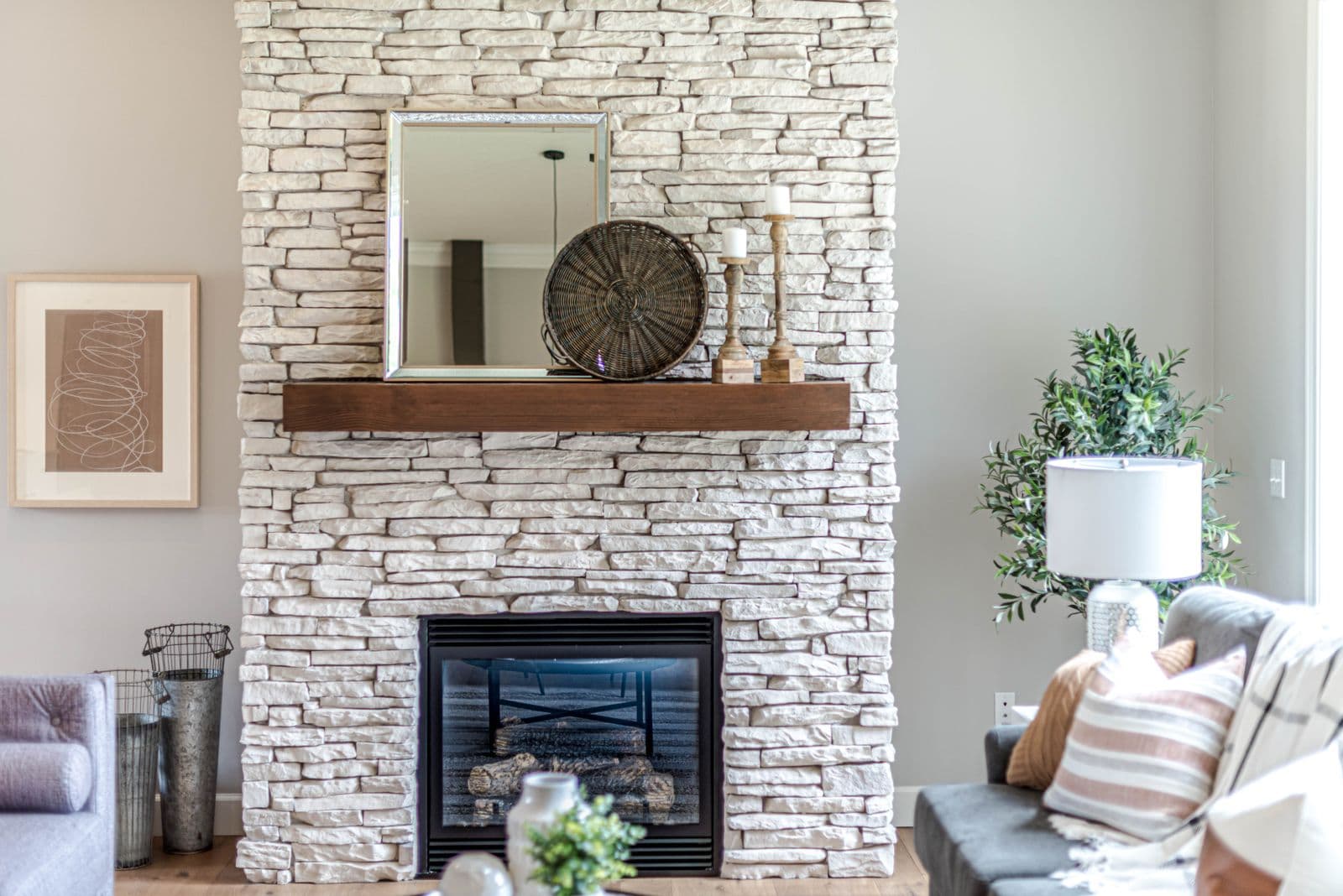
Refacing means giving the existing masonry a new skin, and it is the biggest visual transformation short of tearing the fireplace out. Three directions suit Florida houses especially well. Large-format porcelain tile delivers the marble or poured-concrete look without the maintenance of the real thing: dense, stain-resistant, indifferent to humid rooms. Manufactured stone veneer brings organic coastal texture at a fraction of the weight of full-bed stone. And the trowel-smooth stucco or plaster finish (the whole chimney breast rendered as one clean sculptural mass) is having a genuine moment because it matches the state’s CBS and stucco architecture instead of fighting it.
A few rules keep a reface from failing early. The substrate has to be sound and dry: setting new tile over spalling, damp, or effloresced brick seals moisture behind an impermeable skin, and the bond fails from behind: the new face pops loose while the old problem keeps working. Materials at the firebox opening must be noncombustible and set with mortars and adhesives made for heat, not general-purpose mastic. And weight is a real variable: porcelain and manufactured veneer sit happily on sound masonry, but full-bed natural stone is heavy enough that whether the existing structure can carry it is a question for a pro, not a guess.
Painted brick: the honest pros and cons
Painting the brick is the cheapest dramatic change available, and white or warm off-white painted brick anchors half the coastal-modern rooms you have ever admired. The catches deserve equal airtime. First, it is effectively a one-way door: stripping paint back out of brick pores is miserable work that rarely finishes clean. Second, standard film-forming paint seals a material that was built to breathe. Masonry with any moisture path (a weathered crown, a humid interior wall, a slow flashing leak) dries through its face, and paint that blocks that drying blisters and peels. In Florida’s humidity, that failure shows up in seasons, not decades.
There are finishes that deliver the look without the trade-off. Limewash and mineral stains bond into the masonry and react with it rather than filming over it, so the brick keeps breathing; they weather gracefully instead of peeling, and they cost about the same. Two rules apply whatever you choose: never put ordinary paint inside the firebox, where heat calls for products made for it, and if the brick shows damp patches or the chalky white staining called efflorescence, water is moving through the masonry right now. Fix the water first. Otherwise the new finish is simply the next casualty.
Mantels, surrounds, and built-ins
After paint, a mantel swap changes the most for the least disruption. A floating reclaimed-wood beam suits the relaxed coastal direction most Florida remodels lean toward; a painted shaker surround suits a traditional room; skipping the mantel entirely completes the stucco-minimal look. Flanking the chimney breast with built-in shelving turns a dated wall into a designed one, and a raised hearth that eats floor space can often be resurfaced or reworked into a flush hearth as part of the same project.
One thing a mantel project must respect: clearance. Wood and every other combustible near a firebox opening are limited in how close they can sit, and the limits come from the fireplace’s listing and local rules rather than from taste. The mechanism is worth understanding: radiant heat from an opening does not ignite nearby wood in a night; it chars it slowly over years, gradually lowering the temperature at which it can eventually catch. That is why mounting height and depth are safety decisions, not just aesthetic ones, and why a television above the fireplace often depends on a deeper mantel to deflect rising heat. Requirements vary by appliance and municipality, so verify before anything gets bolted to the wall.
The modern direction: linear fireplaces and inserts
The fastest route from nineteen-eighties to current is an insert set into the existing opening. A linear gas insert (the wide, low ribbon of flame behind glass) reads unmistakably modern and pairs naturally with a tile or stucco reface. Because a sealed insert draws its combustion air from outside and sends less conditioned air up the flue than an open hearth, it also makes practical sense in a house you air-condition nine months of the year: you get real flame on a cool night without pumping the room’s cold air out through the chimney.
An electric insert is the simplest move of all (no gas line, no venting changes, plug-in installation in many cases), and it is honest about what it is. For the many Florida fireplaces that exist almost entirely as a visual centerpiece, that is a defensible choice, not a compromise. And if you are remodeling a wood-burning fireplace anyway, folding a wood-to-gas conversion into the project is common sense: one round of disruption instead of two. Any conversion starts with an inspection, because the new appliance inherits whatever condition the existing flue is in. Then the gas line, insert, and venting follow, all of it squarely in the pro-and-permit category covered below.
Coastal looks that actually survive Florida humidity
The coastal palette is easy to pick; choosing materials that still look good in five humid years is the actual skill. Porcelain that mimics marble or limestone beats the natural stone it imitates in a Florida living room: porous stone absorbs moisture and stains, while porcelain shrugs both off. Grout should be sealed or epoxy-based so it does not darken and shadow in damp air. If the design calls for shiplap or wood paneling near the hearth, use real wood or PVC-based trim finished on all faces; MDF is the material that swells and telegraphs its seams after the first sustained damp spell, and Florida supplies plenty of those.
In homes near the coast, salt air adds its own tax on top of humidity. Raw steel, thin plated brass, and bargain hardware pit and corrode quickly there, so screens, doors, and fixture hardware are worth buying in stainless, powder-coated, or marine-grade versions. Specifying them up front is a far smaller job than pulling corroded hardware back off later. One more quiet tip that applies statewide: matte and honed finishes hide the faint film humid air deposits on every surface far better than polished ones do, which is part of why the soft, low-sheen coastal look ages so well here.
Cosmetic-only vs. permit-or-pro: where the line sits
On the cosmetic side of the line, generally: paint or limewash, refacing over sound masonry, a mantel swap that respects clearances, and hearth resurfacing. Work like this typically does not trigger a permit, but permitting in Florida is municipal, and the rules genuinely vary from city to city and county to county. A short call to your local building department, or a pro who works your area every week, settles the question before you start rather than after an inspector raises it.
On the other side, expect permits and a pro almost everywhere: anything touching gas (a new line, a log set, an insert); anything changing the venting (a liner, a termination, a fuel conversion); structural work (enlarging the opening, removing masonry, taking out a raised hearth that turns out to be integral); and the dedicated circuit some electric inserts require. The logic is simple once you see it: this is the work that changes how combustion products leave your house and how heat reaches its structure. Those failures are invisible until they are serious, which is precisely the kind of risk permitting and professional work exist to catch.
What moves the number, and the smart order of operations
Remodels scale with how much of the fireplace you actually touch. Limewash or paint is a materials-and-a-weekend project many homeowners do themselves. A mantel replacement steps up as soon as carpentry is involved, and further still if the old mantel is built in and has to come out. A full reface in tile or veneer sits above both, because prep and setting are most of the work and the material is only part of it. Adding a gas insert stacks an appliance, a gas line, and venting work on top of all the finish work. Within any of those, substrate condition, material choice, and how much old finish must come off are what move the number. The figure that actually matters is the one on a free estimate stating the proposed price, produced after someone has looked at your specific fireplace.
The order of operations matters as much as the choices: evaluate the system first, repair water and structure second, do any conversion or insert third, and put finishes on last. Run it backwards and the beautiful new tile becomes the thing you demolish to reach the leak it was hiding: a remodel over an unsound chimney does not fix the problem, it entombs it. A qualified chimney professional can assess which options the structure may support. Verify permit requirements with the local authority, and get the proposed scope, price, and job terms in the written agreement before work begins.