
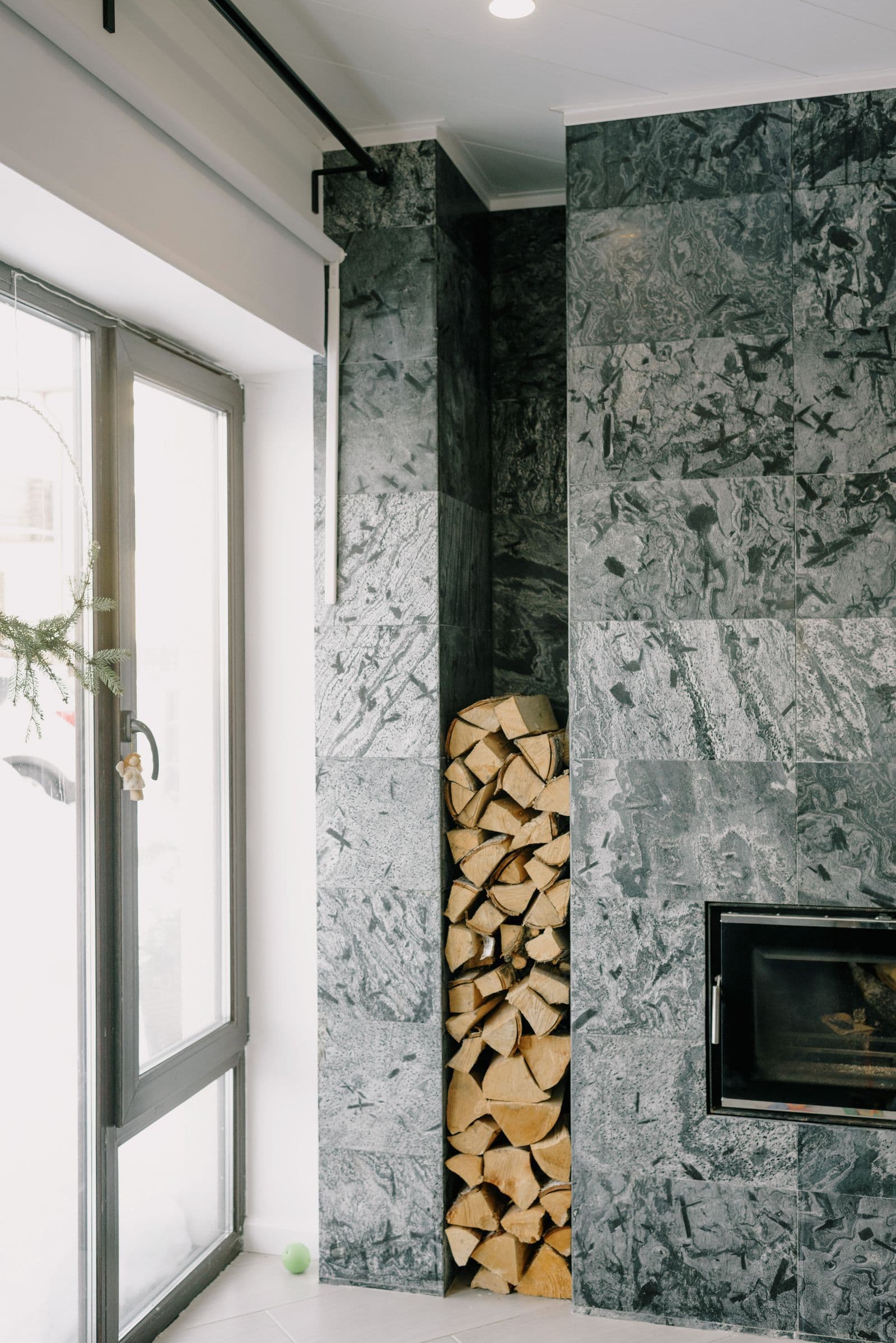
Repair, Insert, or Install: Sorting the Three
Three separate jobs answer to almost the same wording. If you own an electric fireplace and it went dark or stopped heating, that is electric fireplace repair, not installation. If you want real fire in a masonry opening you already have, an appliance that burns fuel and vents up the chimney, that is fireplace insert installation, which brings a liner and hearth work that do not apply here. This page is the third case: a new electric unit placed in a room, with or without an old fireplace. One question sorts all three. Does any part of your project involve a flue?
If it does, you are on the wrong page.
The Circuit Decides More Than the Wall Does
The heating element in a typical electric fireplace is close to the largest continuous load an ordinary household branch circuit was ever meant to carry. A load that runs for hours is allowed only part of a circuit's rating, not all of it, and a room heater sits near that line on its own. Anything else sharing the circuit is spending headroom the fireplace needs. The trouble rarely shows on install day. It shows the first evening somebody also runs a vacuum in the next room.
So the decision is where the receptacle comes from, not only where it lands. A dedicated circuit from the panel gives the fireplace its own capacity, and larger built-ins are hardwired anyway. Adding one is work on the house's wiring rather than on the fireplace, it is permitted work in most municipalities here, and it belongs to an electrician. On a recessed unit the receptacle goes inside the framed cavity, so the factory cord reaches it without crossing the finished face.
A cord is not wiring: dropping one down inside the wall to an outlet below is a hazard, and no factory cord is listed to run inside a wall cavity.
Wall-Mount, Recessed, and Insert Are Three Different Jobs
Format sets the labor. A wall-mount unit hangs on the surface like a heavy picture: a bracket landed on framing rather than drywall anchors, and an outlet where the cord will not show. A recessed unit is framing work, a stud bay opened, header and blocking set, the cabinet hung so its face finishes flush. An insert slides into a masonry firebox that no longer sees fire, where nothing gets built and the questions are the opening's true inside dimensions and how power reaches a hearth with no outlet.
The recessed one carries the trap: manual dimensions describe a rough opening rather than the appliance, and it has to exist before tile or stone goes on. Framed tight, it is corrected with a saw while the wall is open and with a demolition bill after.
Clearances Still Apply, They Have Just Moved
The clearance problem that governs every other hearth appliance is gone: there is no hot flue gas here. What replaces it is a short set of numbers built around the outlet where heated air leaves the cabinet. Most units push that air out the top of the face or straight across the front, and the manual states how much space stays clear above it, how far a mantel shelf may project over it, and how close a television may sit.
Build a deep mantel or a tile ledge directly above that outlet and the failure is not fire, it is a heat trap: warm air curls back into the intake below, the unit breathes its own discharge, and the thermal cutoff protecting the element shuts the heat off. The owner reports a heater that failed. It was framed into a heat trap. Many models allow combustible finish right up to the opening, since the face never approaches firebox temperatures. The keep-out zone above the outlet is often the only number that changes what gets built.
Where It Goes in a Florida House
With nothing to vent, the fireplace is not tied to an exterior wall, which inverts the usual constraint. Many homes here are concrete block under stucco outside, which you cannot recess into without furring the wall out or building a false one, while interior partitions are wood framed and take a recessed unit easily. So it usually wants the wall a combustion appliance could never have, and the limit is the run back to the panel.
One note for a cooling climate: keep the unit clear of the wall thermostat, since a heater discharging a few feet away reads as a warm room and the air conditioning spends the evening answering it.
One item in the insert case is ours. An electric unit dropped into an old wood-burning firebox fills the opening, but the masonry above it is still open to the sky, and now nothing below it will ever run warm enough to dry it out. So the flue gets capped and the throat sealed before the opening is filled, not afterward, when reaching any of it means pulling the appliance back out. That part is chimney work, and it belongs in the same free estimate visit. Call (754) 328-2421 before a unit is ordered.
Free estimate visit
Chimney Repair Service is family-owned and proudly American-owned. A technician can visit the property and give you a free estimate. If you approve paid work, a deposit is required. If you later cancel after paying the deposit, the company keeps the deposit.
Electric Fireplace Installation near you: what local homeowners should know
Reaching out about electric fireplace installation may begin with a visible problem, a maintenance question, or a need for an estimate. A technician can visit and give you a free estimate.
For electric fireplace installation, the fuel, appliance, venting, utilities, manufacturer instructions, and existing installation all matter. Weather exposure, moisture, system type, materials, and access vary by property. The technician assesses accessible conditions at your address before a scope is proposed.
What electric fireplace installation costs, and what changes the number
Electric Fireplace Installation does not have one fixed sitewide price. These are the property-specific factors that can change an estimate:
- fuel, appliance type, model information, and venting configuration
- whether the request is service, repair, replacement, or a new installation
- the existing opening, chimney, utilities, clearances, and room conditions
- compatible parts or equipment and any manufacturer instructions that apply
- permit, utility, electrical, gas, or other trade requirements
A technician can look at the chimney or fireplace and give you a free estimate for the requested service.
How the electric fireplace installation estimate process works
Call (754) 328-2421 or use the estimate form. The company confirms the address and current availability. A technician can then visit the property and give you a free estimate.
If you approve paid work, a deposit is required. If you later cancel after paying it, the company retains the deposit.
Electric Fireplace Installation for different home and system types
Electric Fireplace Installation depends on the existing opening, fuel, venting, utilities, appliance instructions, and the way the homeowner intends to use the space.
Questions to ask an electric fireplace installation company
When comparing electric fireplace installation companies or contractors, ask what the estimate visit includes, what condition the recommendation addresses, and what happens before paid work is scheduled.
Local electric fireplace installation coverage and availability
Coverage and availability depend on the service address and requested scope. If you are not sure the company covers your address, call (754) 328-2421 and the company will check before confirming an appointment.
The estimate visit is free.
What to confirm before accepting electric fireplace installation
Call (754) 328-2421 or use the estimate form to request availability and a free estimate visit for electric fireplace installation.
- Family-owned and proudly American-owned company.
- Coverage and availability confirmed for the service address.
- Free estimate visit.
- Deposit policy: approved paid work requires a deposit, which is retained if the customer later cancels.