
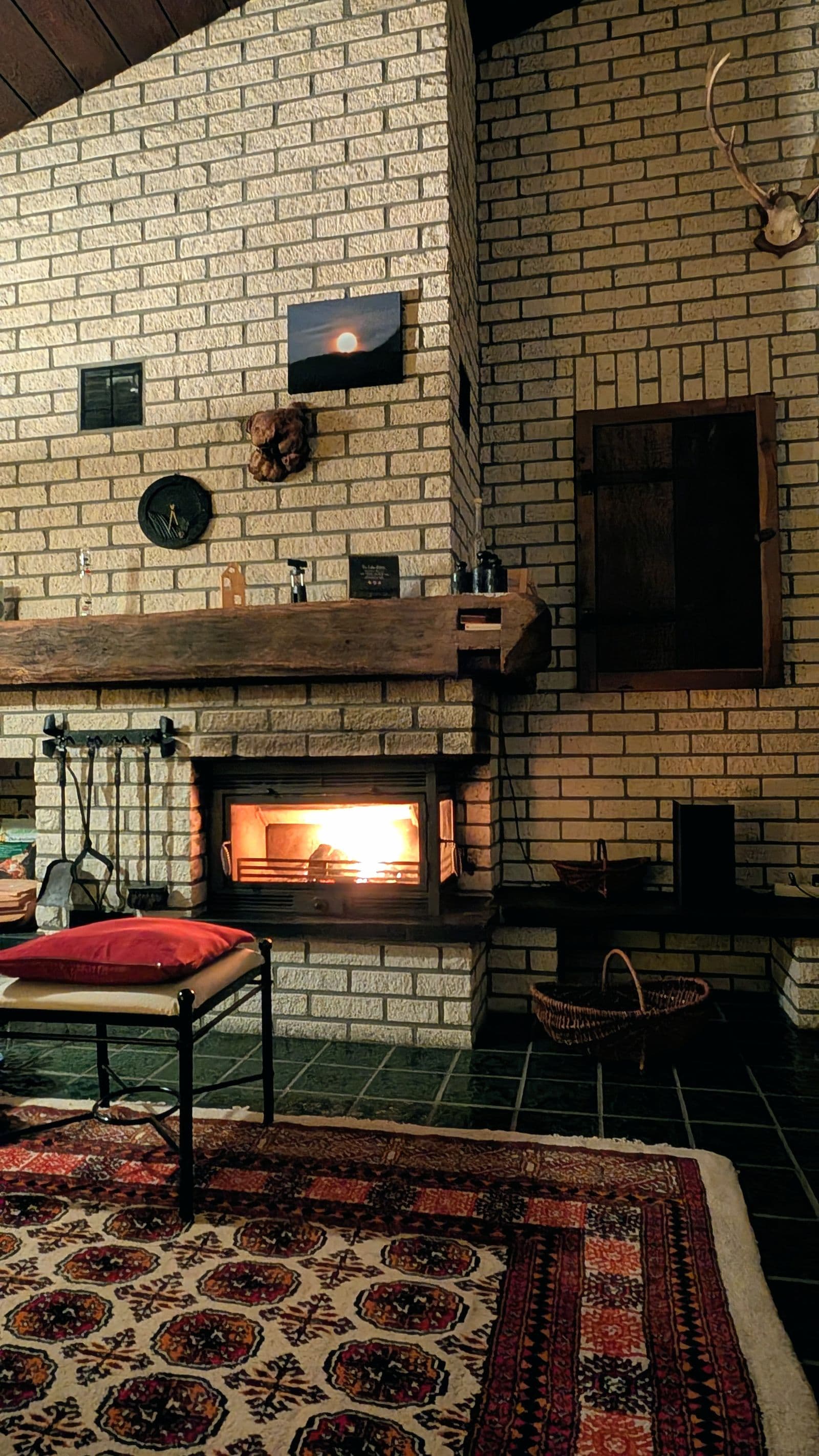

Why the first fire is a ritual in Florida, and a system test
In most of Florida, the first fire of the year happens on the first genuinely cool evening, usually somewhere in November or December, when a front finally pushes the humidity out and the house feels like it wants a fire in it. It is a small ritual, and a good one. But it is worth being honest about what that evening actually is: the annual test of a system nobody has looked at since spring.
A fireplace up north gets eased back into service as fall cools off gradually, and any problem announces itself early in the season. A Florida fireplace goes from months of darkness to lit in a single evening. The flue has typically sat idle since February or March: eight months that span the state’s wettest season, the most active nesting season for animals, and the entire hurricane season. Ten deliberate minutes of checking before you strike the match is not fussiness. It is the whole difference between a ritual and a gamble.
What eight humid months do to an idle flue
Start with the humidity, because it never stopped working while the fireplace did. The soot and creosote coating the inside of a used flue are absorbent: through a Florida summer they soak up moisture from the air like a sponge, which is why an idle fireplace often smells musty or smoky-sour by fall. That damp film is also what you smell burning off during the first fire. Meanwhile, the steel parts of the system (the damper plate, its hinge and handle, the mesh on the cap) have spent those months quietly rusting in the damp.
Then there are the animals. Spring and early summer, the heart of nesting season, fall exactly inside the idle window, and a dark, sheltered, never-used flue is prime real estate. Birds, squirrels, raccoons, and rats all use Florida chimneys, and a nest is two problems at once: a blockage that stops smoke from leaving, and a bundle of dry twigs and insulation parked directly in the path of your fire.
Finally, storm season. Hurricane season runs June through November, which means it ends almost exactly when first-fire season begins. Months of wind and driven rain can loosen a cap, pack its screen with leaves and roof grit, or open up damage higher on the stack, all of it invisible from the couch, all of it directly in the way of that first fire.
Start outside: the two-minute ground check
Before anything happens at the hearth, stand back in the yard where you can see the whole chimney, with binoculars if you have them. You are looking for one thing first: the cap. It should be present, sitting straight, and its screen should look open, not matted over with leaves and debris. A cap that is missing, crooked, or visibly stuffed after storm season is a first-fire stop sign, because it means either rain and animals have had an open door, or your smoke is about to meet a clogged screen.
While you are out there, scan the rest of the stack for anything that changed over the summer: new dark or white staining running down the masonry, cracks you do not remember, flashing at the roofline that looks lifted or wrinkled. Anything leaning or shifted means no fire tonight and a call instead. The tallest masonry on the house does not straighten itself. In practice, this quick look from the yard is often how post-storm chimney damage first gets noticed at all.
Inside: damper, flue, firebox
At the hearth, open the damper fully, and pay attention to how it feels. A steel plate that sat closed in damp air for eight months can be stiff with surface rust, so work it through its whole travel a few times. A little grit that frees up is common; grinding, binding, or a damper that will not lock open is a warning, and a damper stuck shut or half-open is another stop sign. A fire behind a partly closed damper smokes into the room every time.
With the damper open, put a flashlight up the flue and look. Depending on your cap you may not see daylight, and that is fine: what you are checking for is anything that should not be there: dangling twigs, straw, insulation fluff, droppings on the smoke shelf, or a shadowed mass partway up. Nesting material means the fire waits and animal removal comes first; lighting a fire under a nest is how flue fires and smoke-filled living rooms start. Scratching or chirping sounds settle the question even faster.
Last, read the firebox itself like a record of the summer. Flakes of rust that dropped from the damper are routine. Water staining, damp ash, or chalky white deposits on the firebox walls are not: they say water has been getting in up top, which points at the cap, crown, or flashing. Clear out last season’s ash while you are there so the first fire starts clean.
The rolled-paper draft test
A fire does not push its smoke up the chimney; the chimney pulls it, and the pull comes from buoyancy: hot gas is lighter than the air around it, so it rises, and the rising column drags fresh air through the fire. A flue that has sat idle holds a plug of still, heavy air, and until that plug warms up and starts moving, there is nothing pulling. This is why a first fire misbehaves in ways a mid-season fire never does, and why you test the draft before you commit real wood to it.
The test costs one sheet of newspaper. Roll it into a loose torch, light the end, and hold it up inside the fireplace near the open damper. Within a few seconds the flame and smoke should bend upward and get pulled cleanly into the flue. If they do, the draft is alive and you are cleared for a fire. If the smoke stalls, curls, or rolls out into the room, do not light the real fire yet. Something is resisting the flow.
Two fixes are worth trying before you worry. First, remove the competition: turn off bathroom and kitchen exhaust fans and the dryer, and crack a window near the fireplace: a closed-up, air-conditioned Florida house can be depressurized enough to fight the chimney. Second, prime the flue: hold another lit roll of paper up near the damper for half a minute to warm the air column and start it moving, then test again. If the smoke still will not pull, treat it as a blockage until someone looks, because that is usually what it is.
The first fire itself: small, dry, and attended
Make the first fire of the year deliberately modest: a few pieces of genuinely dry, seasoned wood, not the big log-cabin stack the evening deserves. A small fire warms the flue gently, proves the whole system under low stakes, and is easy to let die if something is off. Dryness matters more than people expect here: wood stored outside through a Florida summer has spent months drinking humidity, and damp wood smolders, smokes, and drafts poorly, exactly the behavior you cannot afford while you are still judging the chimney. Wood stored under cover, off the ground, is what you want for this one.
Expect a faint dusty, musty smell for the first burn. That is the summer’s damp film on the flue walls cooking off, and it is normal as long as it fades over the course of the fire. What is not normal: a sharp, acrid smell that builds instead of fading, smoke seeping from anywhere except the firebox opening, or smoke drifting into the room. Stay with this fire from first match to embers: the entire point of the small first fire is that someone is watching how the system behaves.
If smoke comes back into the room: the decoder
Smoke-back on the first fire is information, and the timing tells you which problem you have. Smoke that rolls out the moment you light is almost always the cold-air plug or the damper: the flue never started pulling, or the plate is not truly open. That is the fixable version: let the fire die, re-check the damper, prime the flue, and try the paper test again.
A fire that starts clean and then pushes smoke into the room a few minutes in points higher up: the flue is pulling but something is restricting it: a cap screen matted with debris, nesting material partway up, or a flue that needs cleaning. And a fire that never smokes badly but stays weak, lazy, and sluggish all evening usually means the house itself is fighting the chimney for air; if cracking a window transforms it, you have your answer.
Whatever the pattern, the one wrong move is to keep feeding a fire that is smoking into the room in the hope it sorts itself out. Stop adding wood, open a window, let it burn down, and get the flue looked at before the next attempt. Smoke-back is the chimney failing its annual test: the test worked; now act on the result.
The once-a-year professional look
This checklist is a homeowner’s screen, not a substitute for a real inspection. NFPA 211, the standard fire-safety codes lean on, calls for chimneys to be inspected annually, and the logic lands especially hard in Florida, where the flue spends most of the year idle and unwatched through weather that actively works on it. A pro sees what the flashlight-and-newspaper routine cannot: the condition of the liner, creosote that needs sweeping, hairline cracks in the crown, gaps opening at the flashing. The natural rhythm here is simple: sweep and inspection in the fall, first fire after.
And if the checklist itself turns up a stop sign (a damper that will not open, nesting material, a draft test that keeps failing, smoke-back that will not resolve), that is exactly what a qualified chimney professional is for. A free estimate stating the proposed price turns the mystery into a plan, and the fix is usually far smaller than the problem it prevents. The first cool front of the season is worth enjoying with a fire behind it; the ten minutes of checking is what makes that fire boring, in the best possible way.