
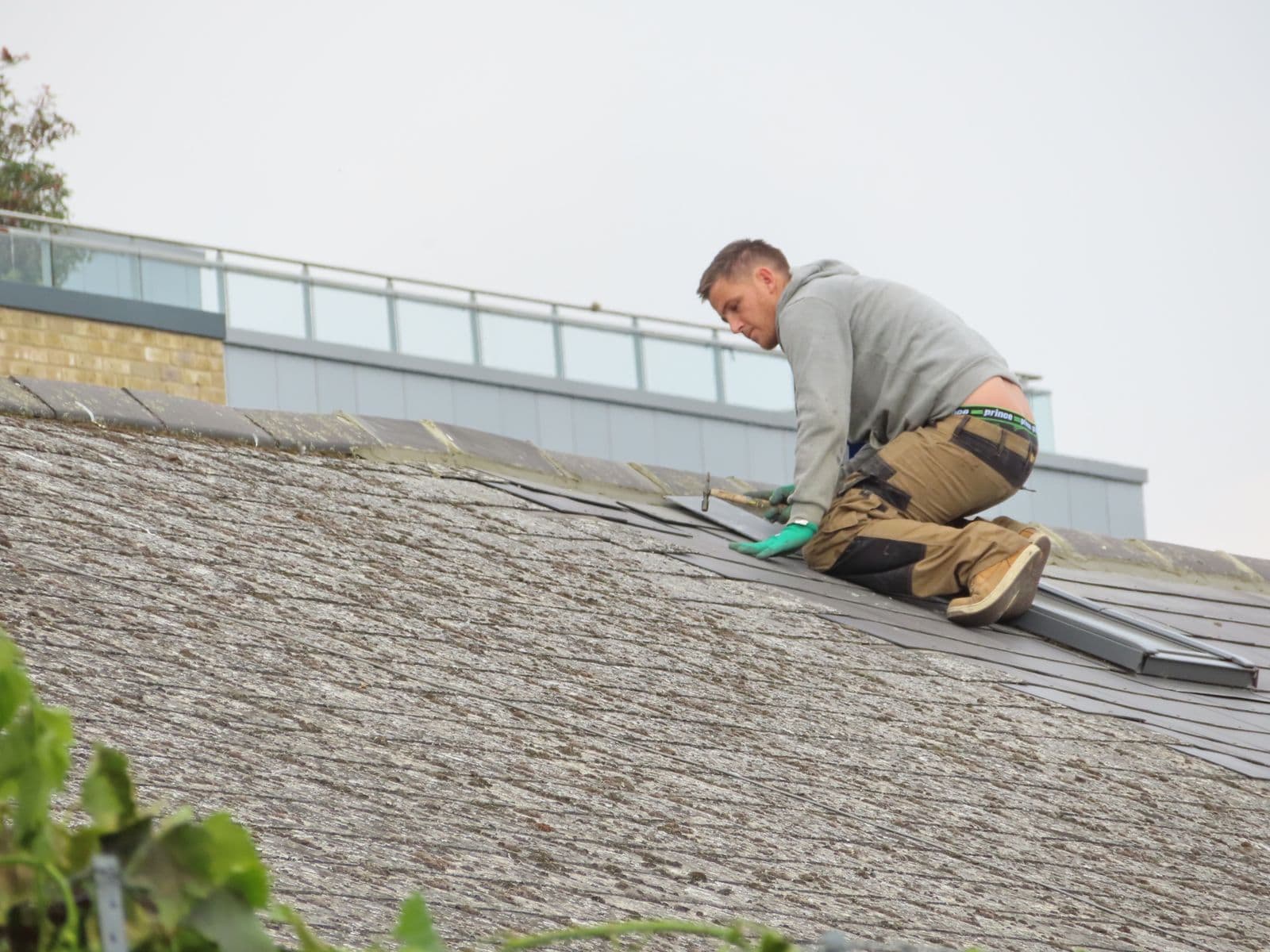

Check the chimney even when the roof “looks fine”
After a hurricane or tropical storm rolls through, most Florida homeowners scan the roof from the driveway, see shingles where shingles should be, and move on to the fence and the pool screen. The chimney deserves its own pass. It stands taller than everything around it, it caught the wind first and hardest, and its damage often hides in silhouette: a cap knocked crooked, a hairline through the crown, flashing lifted a half-inch at one corner.
Storm damage to a chimney also has a nasty habit of staying quiet until the next rain. A cracked crown or lifted flashing may not show inside the house for weeks, and in Florida the next rain is rarely far away. Ten minutes with this checklist, the same day it is safe to go outside, catches problems while they are still small, and while connecting them to the storm is still easy, which matters if an insurance claim is in your future.
Ground rules before you start
Everything on this checklist happens from the ground, inside the attic, or at the fireplace. Do not climb on the roof. Post-storm roofs hide soft decking, wet debris, and loose shingle granules that behave like ball bearings underfoot, and a wind-loosened chimney can be unstable exactly where you would want to grab it. If power lines are down anywhere near the house, stay clear of the whole area until the utility clears it.
One more rule: if the chimney is visibly leaning, has dropped bricks, or has separated from the wall of the house, treat the ground beneath it as off-limits: keep kids, pets, and parked cars away and make the call now rather than finishing the checklist. Masonry that has started to move is heavy, patient, and unforgiving, and a follow-up gust can finish what the storm started.
Step one: the four-sided walk-around
Walk the house and look at the chimney from all four sides. Wind damage is directional, and a chimney that looks perfect from the street can be missing its cap on the leeward face. Check the silhouette against the sky: is the stack plumb, or leaning? Is the cap present, straight, and seated, or bent, racked, or simply gone? Caps are the most commonly lost piece in high wind, and an open flue funnels every drop of the next storm straight into the house.
Now study the top edge: the crown, the concrete slab that sheds water off the masonry. From the ground you are looking for broken corners, visible cracks, or chunks missing from the profile. Then scan the brick courses for anything shifted, stepped, or newly cracked, and check the base where the chimney meets the roof: flashing that has lifted, peeled, or wrinkled often reads as a changed shadow line even from the driveway.
Binoculars or your phone camera at full zoom turn this from a squint into a real inspection. Take photos of every face while you are at it, whether or not you see damage. Dated storm-day photos cost nothing, and they become valuable if a problem surfaces later.
Step two: read the yard
The ground around the house testifies about the roof. Circle the chimney’s drop zone and look for fallen brick, chunks of concrete crown, pieces of chimney cap, or twisted metal that used to be a chase cover. Photograph anything you find where it landed before picking it up. The location is part of the story.
Check the gutters and downspout splash zones for masonry grit and heavy concentrations of shingle granules below the chimney side of the roof. Granules shed hardest where wind worked an edge, and a drift of them beneath the chimney suggests the storm concentrated its attention there. Glance too at fences, screens, and trees: the damage pattern around the yard shows which direction the worst wind came from, and therefore which chimney face deserves the closest look. None of these finds is a diagnosis on its own, but each one is a reason to get a pro’s eyes up top sooner rather than later.
Step three: the attic and the ceilings
Water tells on a damaged chimney before anything else does. Inside the house, examine the ceilings and walls around the chimney on every floor: new stains, bubbling paint, drywall that feels damp, or a musty smell that was not there before the storm. In Florida humidity, wet building materials do not quietly dry out on their own: a new stain is a live problem, not a cosmetic one.
Then take a flashlight to the attic, ideally during daylight. Inspect the framing and decking around the chimney penetration for dark staining, drips, or matted, damp insulation. Turn the flashlight off for a moment and look for daylight around the chimney where there should be none. A thin bright seam means the storm opened the flashing or shifted the structure, and the next rain band will find that opening.
Step four: the firebox
Finish at the fireplace. Open the damper and listen: wind noise where it used to be quiet suggests the cap is gone. Look and feel for standing water, fresh rust streaks, or wet soot smearing the firebox floor; any of those means water is coming down the flue. Debris is evidence too: leaf litter, twigs, granules, or chips of masonry that were not there before the storm all arrived through an opening that should not exist.
Use your nose as an instrument. A sharp campfire smell after a storm means rainwater met the creosote in the flue. Unpleasant, and solid proof of water intrusion. Whatever you find, resist the urge to test the fireplace with a fire. A flue that took storm damage can leak heat and combustion gases where you cannot see, and the season’s first fire should wait for an inspection anyway.
Framed chimneys and gas fireplaces count too
Plenty of Florida chimneys are not brick at all: they are wood-framed chases wrapped in siding or stucco, topped with a metal chase cover and a vent cap. Storms treat them no more gently. From the ground, check that the chase cover sits flat rather than dented into a bowl that will pond water, that the vent cap is present and straight, and that no siding or stucco has cracked, lifted, or pulled away at the corners. A dented chase cover is one of the most common (and most commonly missed) pieces of Florida storm damage.
If your fireplace is gas, add one more check: make sure its vent termination is intact and unblocked before the next use, and if you ever smell gas, skip the checklist entirely: leave the house and call the gas company from outside. Direct-vent gas fireplaces depend on their intake and exhaust staying sealed; wind-driven debris can compromise both while everything looks fine from the street.
Sorting it: what’s urgent, what can wait a few days
For a leaning chimney, falling masonry, suspected gas, fire, or another immediate danger, leave the area and call emergency services or the gas utility first.
Request a prompt assessment for a missing or bent cap, crown damage, lifted flashing, new stains, debris, or water in the firebox. Call to ask about current availability.
A technician can visit the property and give a free estimate. It is not a free inspection, storm-causation report, insurance report, or coverage opinion. Keep your own dated photos and ask the insurer what documentation it requires if you decide to file a claim.