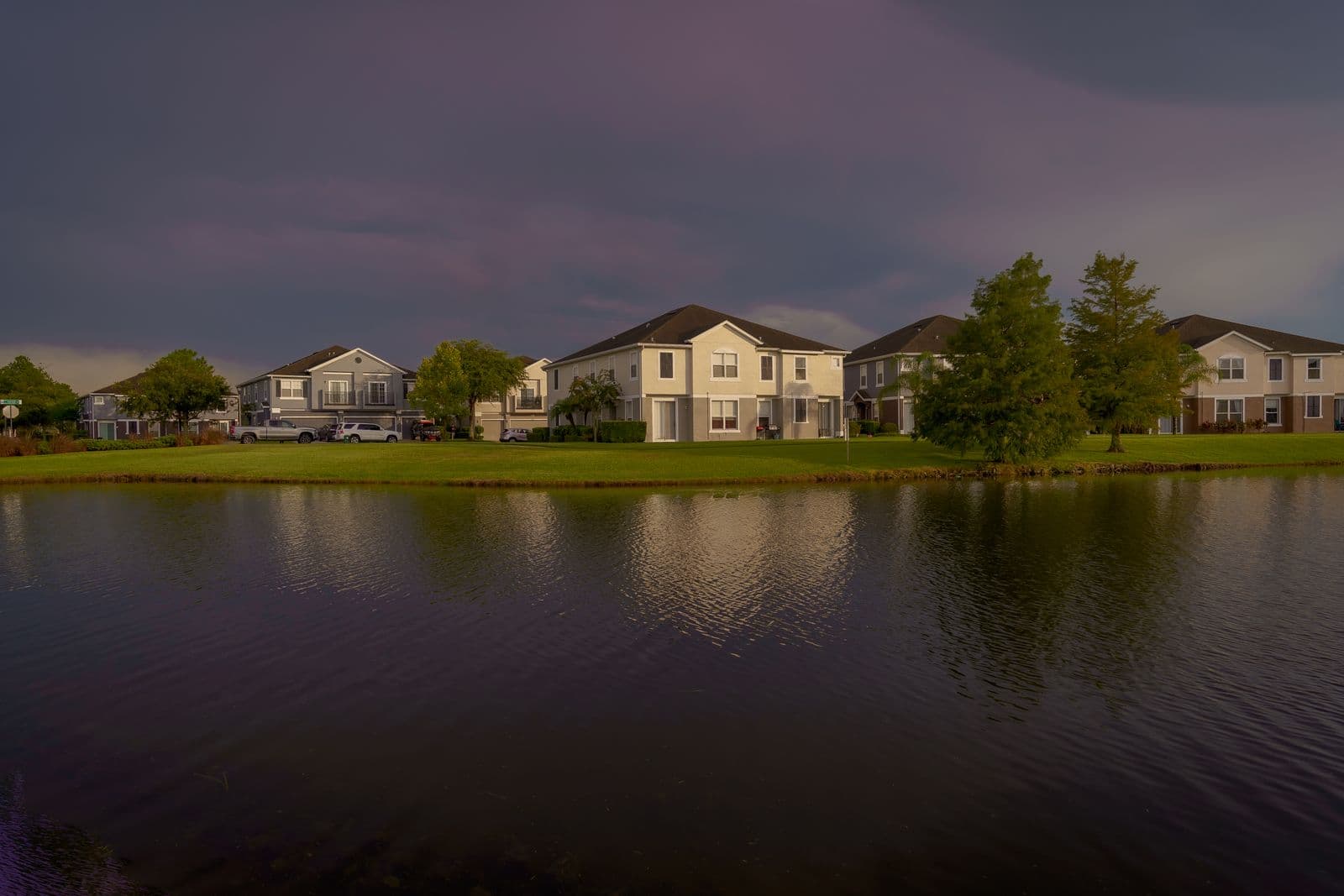
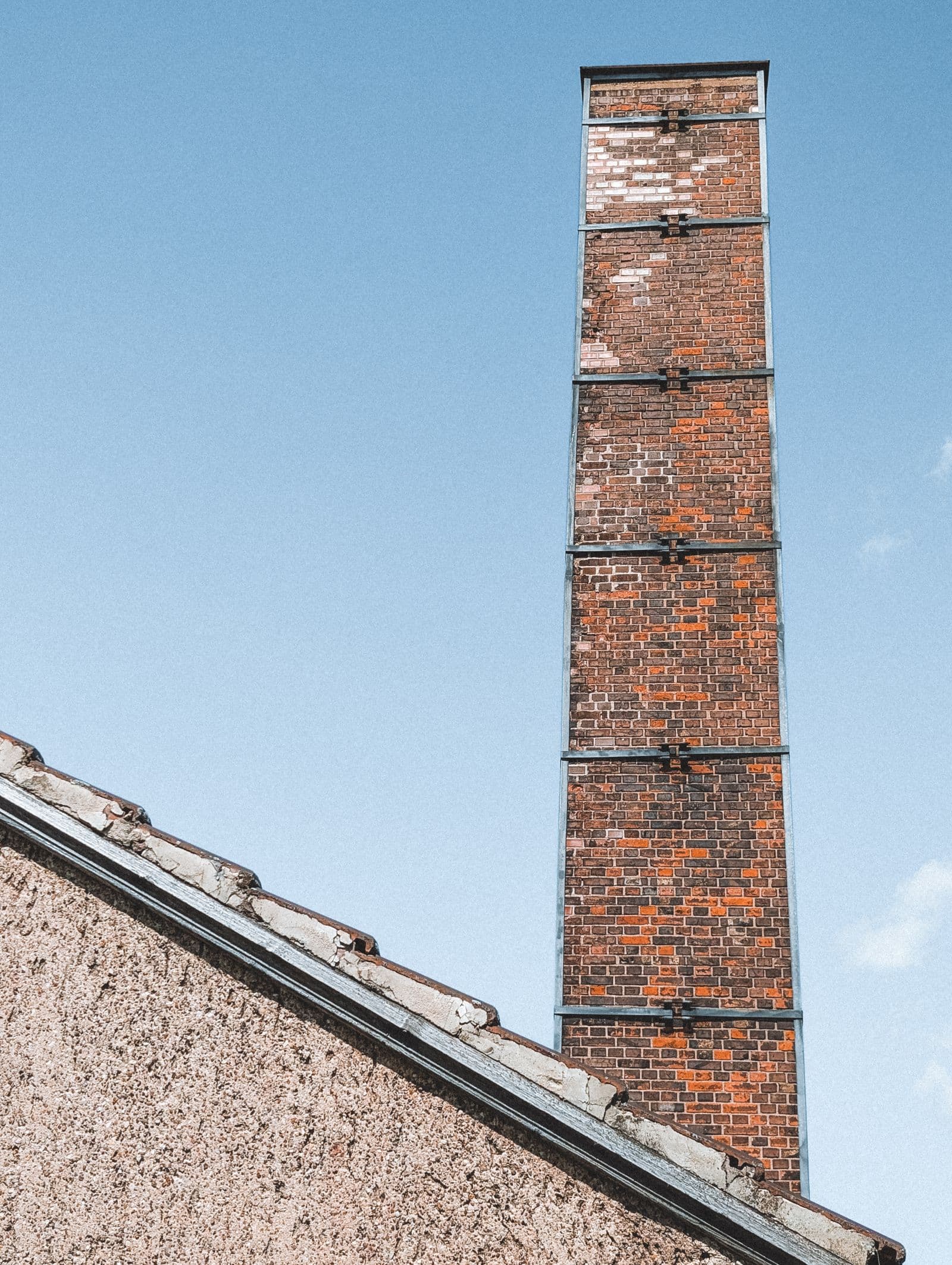
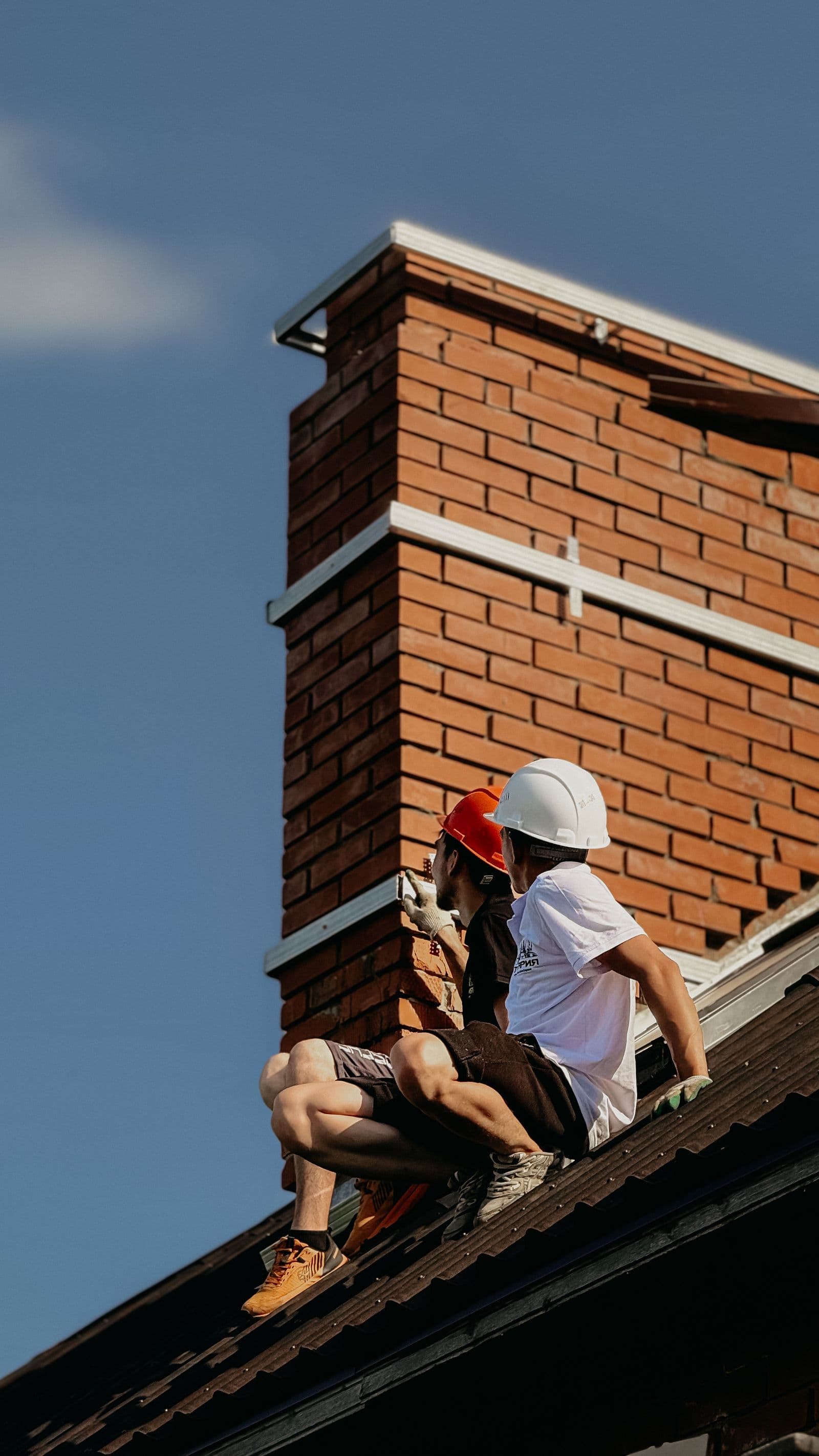
Central Florida is famous as the lightning capital of the country, and Lake County sits squarely in that corridor. From June into September, most afternoons build the same way: heat, towering clouds off the lakes, then a violent hour of rain and lightning. Your chimney is the tallest, most exposed thing on the house, and it takes those storms head-on: wind-driven rain against every face, and the occasional strike close enough to matter. After any storm that felt severe, a two-minute look at the stack from the ground (anything shifted, missing, cracked, or newly stained) is a habit worth keeping.
Water is the everyday enemy. Hairline cracks in the crown let rain into the structure, where it moves through the masonry and shows up somewhere unexpected: a ceiling stain a few feet from the chimney, peeling paint in a corner, a damp smell in a room you rarely use. Chimney leaks almost never announce themselves at the chimney, which is why chimney leak repair starts with finding the true entry point (crown, flashing, cap, or saturated brick), because sealing the wrong spot doesn’t stop the water, it just reroutes it.
The crown deserves particular respect here. It’s the concrete shoulder that sheds weather off the top of the stack, and in a climate that cycles between brutal sun and daily soakings it cracks sooner than most homeowners expect. Catching that early with chimney crown repair is a modest job; letting water work down through the stack for a few seasons turns it into a major one.
Hurricane season runs June through November, and while Tavares’s inland position spares it the coast’s storm surge, crossing systems still drag tropical rain bands and gusty wind across Lake County, enough to strip a loose cap, lift tired flashing, and drive rain sideways into joints that vertical storms never test. For a chimney fire, suspected carbon monoxide or gas, an unstable chimney, or another immediate danger, leave the area and call 911 or the utility first.